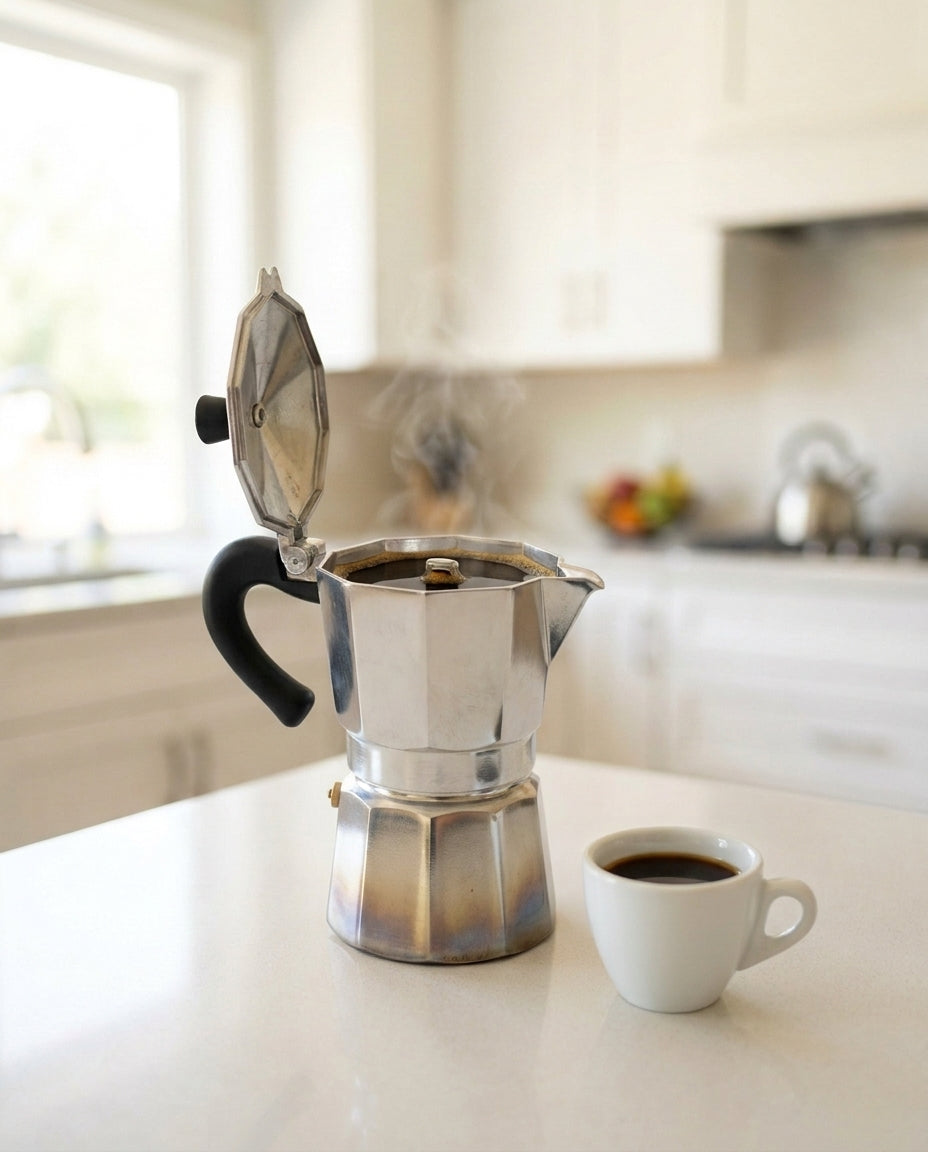
The moka pot has made espresso-strength coffee on stovetops since the 1930s, no pump, no cord, no buttons. Steam pressure pushes hot water up through the grounds, and the whole show takes about five minutes once the heat is on.
The EspressoWorks version brews six small cups per pot, which is the point: moka coffee is made for sharing. Fill the pot, set out the cups, and pour for the table.
The pot on every Italian stovetop
Alfonso Bialetti, an Italian engineer who ran an aluminum workshop, released the first moka pot in 1933. His Moka Express was cast in aluminum with the eight-sided body that still defines the category, named for Mokha, the Yemeni port that shipped much of the world's coffee for centuries. The design worked so well that it has barely changed in nine decades.
It also conquered its home country. The moka pot sits in the majority of Italian households, passed down, re-gasketed, and put back on the burner every morning. That faceted octagonal silhouette is one of the most recognizable objects in coffee, honored in the permanent design collections of major museums.
It survived because it solved a real problem: in 1933, espresso lived in cafes, and the moka pot put espresso-strength coffee in home kitchens for the price of a saucepan.
How the pot actually works

Three chambers, one principle. Heat turns some of the bottom chamber's water to steam, the steam builds pressure, and the pressure pushes hot water up a funnel, through the coffee bed, and out the center column into the top chamber. The pressure peaks at roughly 1 to 2 bars, a fraction of a pump machine's 9-plus, which is why the pot needs no pump or boiler. That's also why the grind and the heat are the only two variables that matter. The grind sets how much resistance the water meets, and the heat sets how fast the pressure builds. Everything in the steps above is about keeping both in the middle.
The safety valve on the bottom chamber is the pot's one moving part that matters: if the grind is too fine or the basket is packed, it vents the excess pressure. Keep the water level below the valve and never let grounds block it.
The hot water start

Filling the bottom chamber from a just-boiled kettle is the single biggest upgrade most moka owners never make. Cold-water starts leave the sealed pot on the burner for minutes while it comes up to pressure, and that whole time the coffee bed sits above what is effectively an oven, cooking toward bitterness before brewing even begins. Hot-water starts halve the stove time and brew noticeably sweeter.
Water from a kettle that has just boiled sits near 200°F, which is already in the extraction zone, so the pot only has to build pressure, not temperature. A gooseneck or standard kettle makes the pour into the narrow base easier, but any kettle works.
Beyond the straight cup
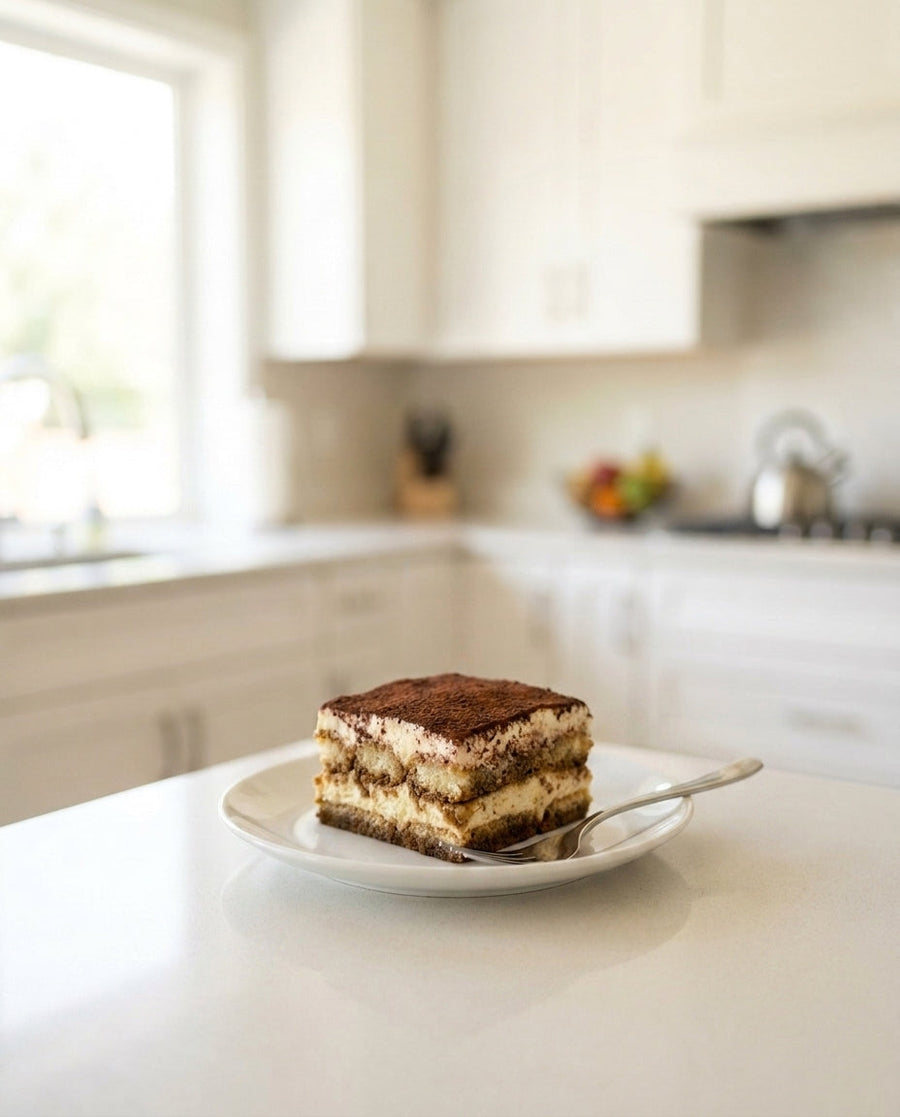
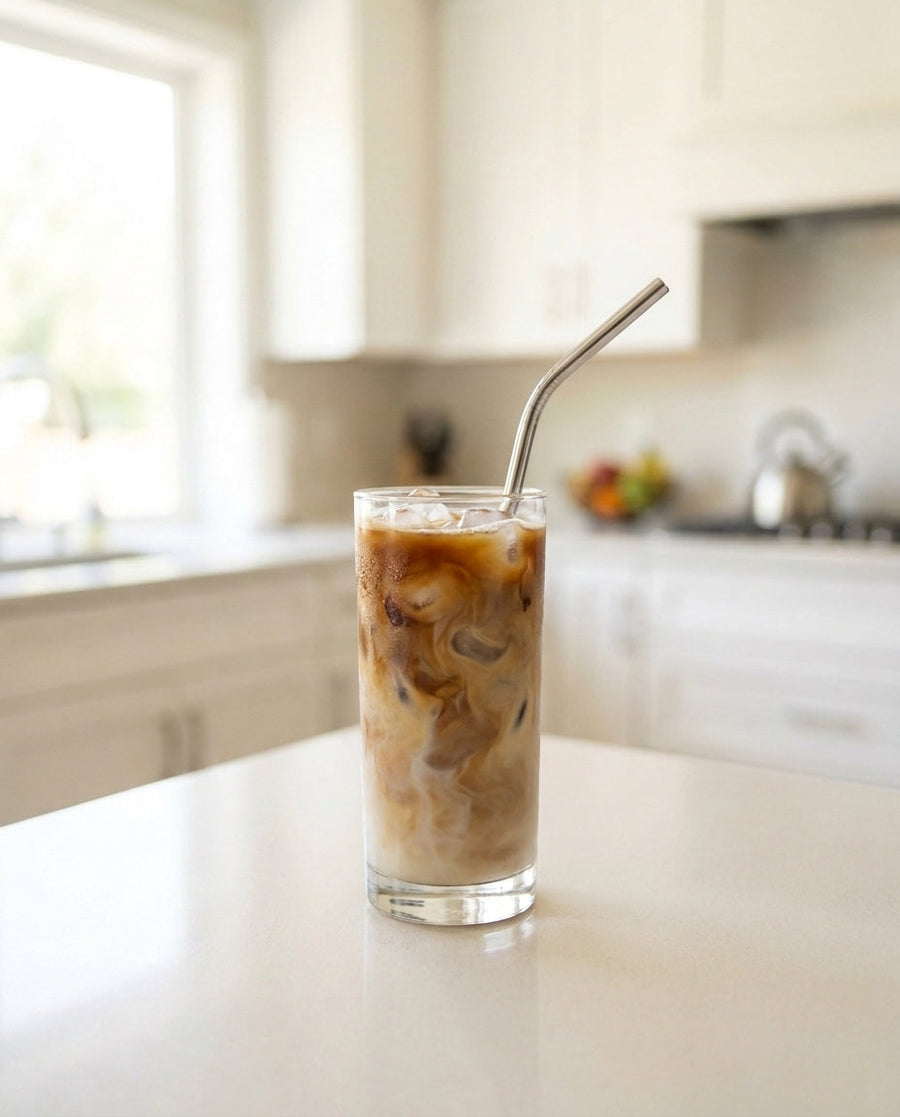
Moka coffee's strength makes it the most versatile brew in the house. Lengthen it with hot water and it drinks like an americano. Pour it over ice and cold milk for a no-machine iced latte. Froth hot milk with a handheld frother and spoon it over for a stovetop cappuccino. And espresso-soaked desserts like tiramisu accept a strong moka brew without complaint.
Moka concentration handles milk better than any other non-machine brew. For a stovetop take on a latte, use one small moka cup to about 6 oz of hot frothed milk. A handheld frother or milk frothing pitcher gets the milk to a loose foam in about 30 seconds. Serve it in glass cups and the layers do the presentation for you.
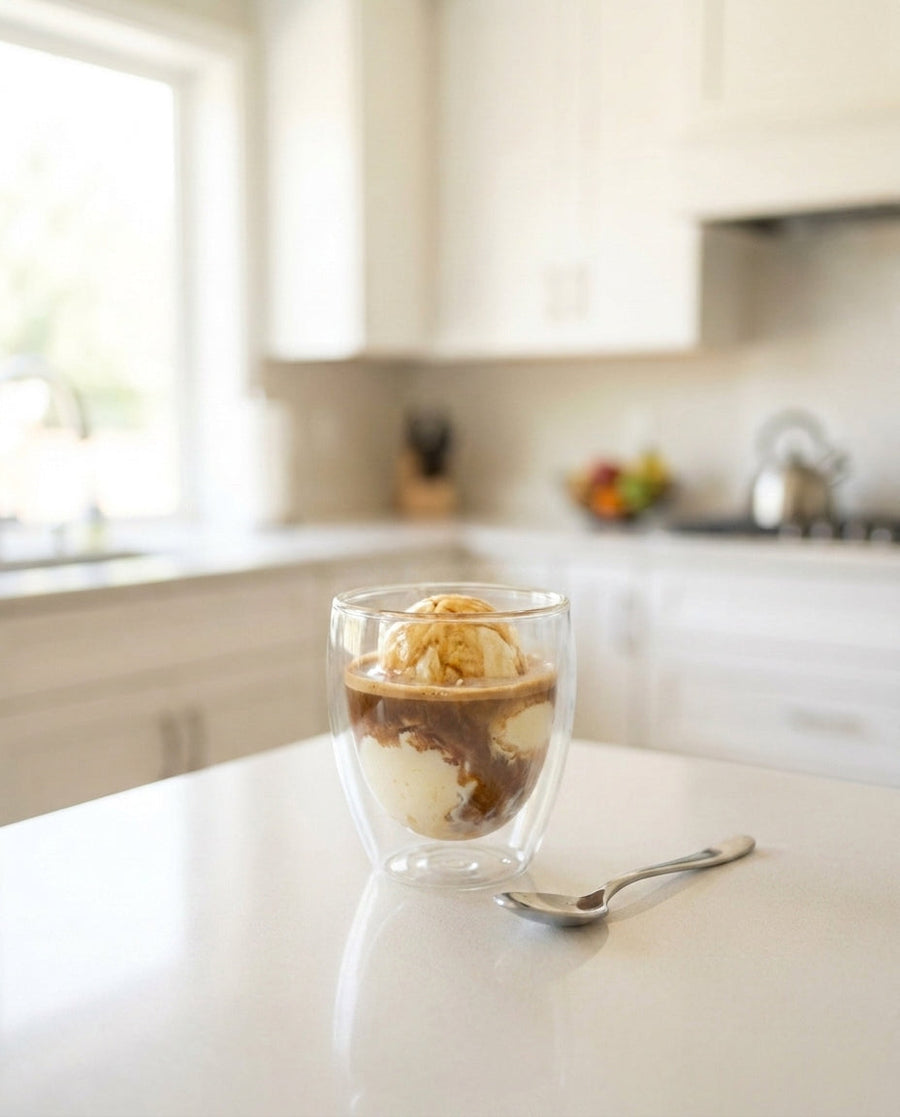
Two more moves worth knowing. Pour a hot moka shot over a scoop of vanilla ice cream and you have an affogato in under a minute. Chill a pot in the refrigerator and it stands in beautifully for the coffee base in an espresso martini.
Dial it in
Bitter and burnt-tasting? Your heat is too high or you let it sputter to the end. Medium heat, and off at the first gurgle.
Weak and watery? The grind is too coarse. Go finer than drip, but stop short of espresso fine, which chokes the pot and can push the safety valve. A burr grinder is what holds that middle setting batch after batch.
Metallic taste from a new pot? Brew and discard the first two or three batches. The pot seasons with use, which is also why the inside never gets soap - hot water rinse only.
Inconsistent from pot to pot? Weigh the dose. The basket takes about 20 g when filled level, but "about" drifts over a week of eyeballing. A small coffee scale locks the dose down.
Troubleshooting at a glance
Almost every moka problem traces back to one of five causes.
| Symptom | Likely cause | Fix |
|---|---|---|
| Burnt, bitter taste | Heat too high, or the pot sputtered dry on the burner | Medium heat, hot water start, off at the first gurgle |
| Weak, watery brew | Grind too coarse, or basket underfilled | Grind finer than drip, fill the basket level with about 20 g |
| Sputtering from the very start | Heat far too high, or too little water in the base | Fill to just below the valve, drop the burner to medium |
| Coffee never rises | Grind too fine, basket tamped, or safety valve blocked | Loosen the grind, never tamp, clear the valve with a pin |
| Leaking at the seam | Worn or stiff gasket, grounds on the rim, or cross-threading | Wipe the rim clean, screw on straight and firm, replace the gasket |
One warning: if the pot hisses and no coffee rises, take it off the heat. That is pressure with nowhere to go, and the fix is a coarser grind or a cleared valve, not more flame.
Maintenance and gasket care
The daily routine takes 60 seconds. Let the pot cool, unscrew it, knock the puck out of the basket, and rinse all three parts with hot water. No soap, no dishwasher. Aluminum pots build a thin coffee seasoning that protects flavor, and dishwasher detergent strips it and can leave aluminum dull and pitted.
Drying matters more than most owners realize. Water left standing in an aluminum pot causes oxidation, the white chalky spots inside a neglected base. Towel the parts off, let them air-dry completely, and store the pot with the top loosely threaded so air circulates.
Two checks keep the pot safe and sealing. First, the rubber gasket in the top half: it hardens with heat cycles, and a tired gasket shows up as steam leaking at the seam. Replace it about once a year with daily use, sooner if it looks cracked or flattened, and check the filter plate above it for packed fines while it's out. Second, the safety valve: hold the base up to the light and confirm the opening is clean. A blocked valve cannot vent excess pressure, and clearing it takes ten seconds with a toothpick.
Caffeine and strength
A small moka cup carries about 60 mg of caffeine, so a full six-cup pot delivers roughly 360 mg. For scale, that is in the same range as two large mugs of drip coffee, which is why the traditional serving is a small cup, not a mug. Drink the whole pot solo and you will feel it.
Strength and caffeine are different things, and moka is a useful place to see the difference. By concentration, drip coffee runs around 1.5 percent dissolved coffee, espresso runs closer to 8 to 10 percent, and moka lands in between, roughly twice the strength of drip. That middle position is the pot's whole character: intense enough to cut through milk and ice, long enough to sip on its own. If crema and true espresso concentration are what you are after, that is the job of a pump espresso machine; the moka pot gets you most of the way there for a fraction of the counter space.
If you want the strength without the heat entirely, cold brew is the other machine-free route to a concentrated base, traded against a 12-hour steep instead of a 5-minute brew.
Worth knowing
Moka coffee is not quite espresso, the pressure is lower, so there is no crema, but it is closer to espresso than anything else without a machine. It also makes an excellent base for an iced latte: brew a pot, pour it over ice and cold milk, done. And because the pot is all metal with no cord, it travels: pair it with a travel mug and any heat source, and the morning routine comes with you to the campsite or the office kitchenette.