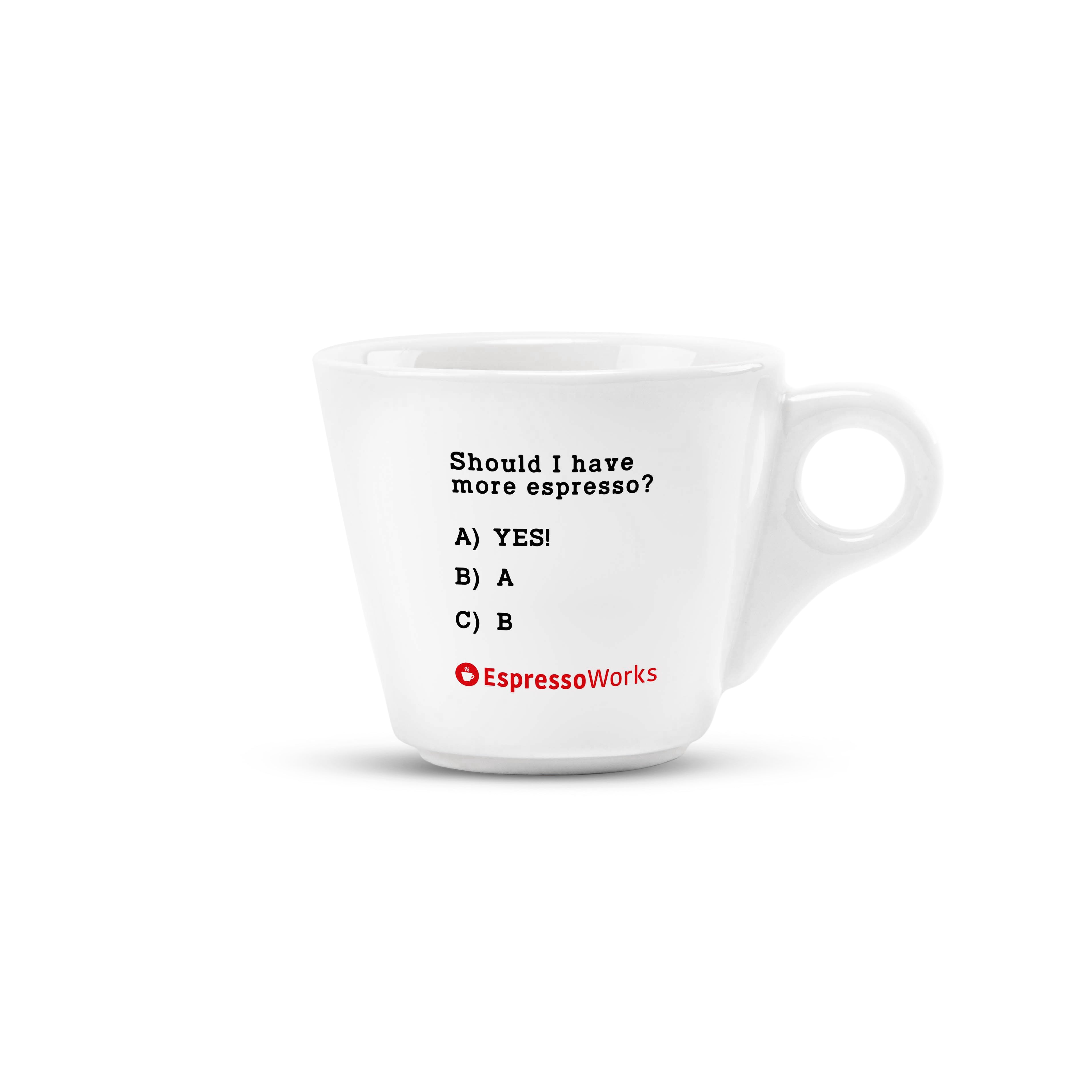
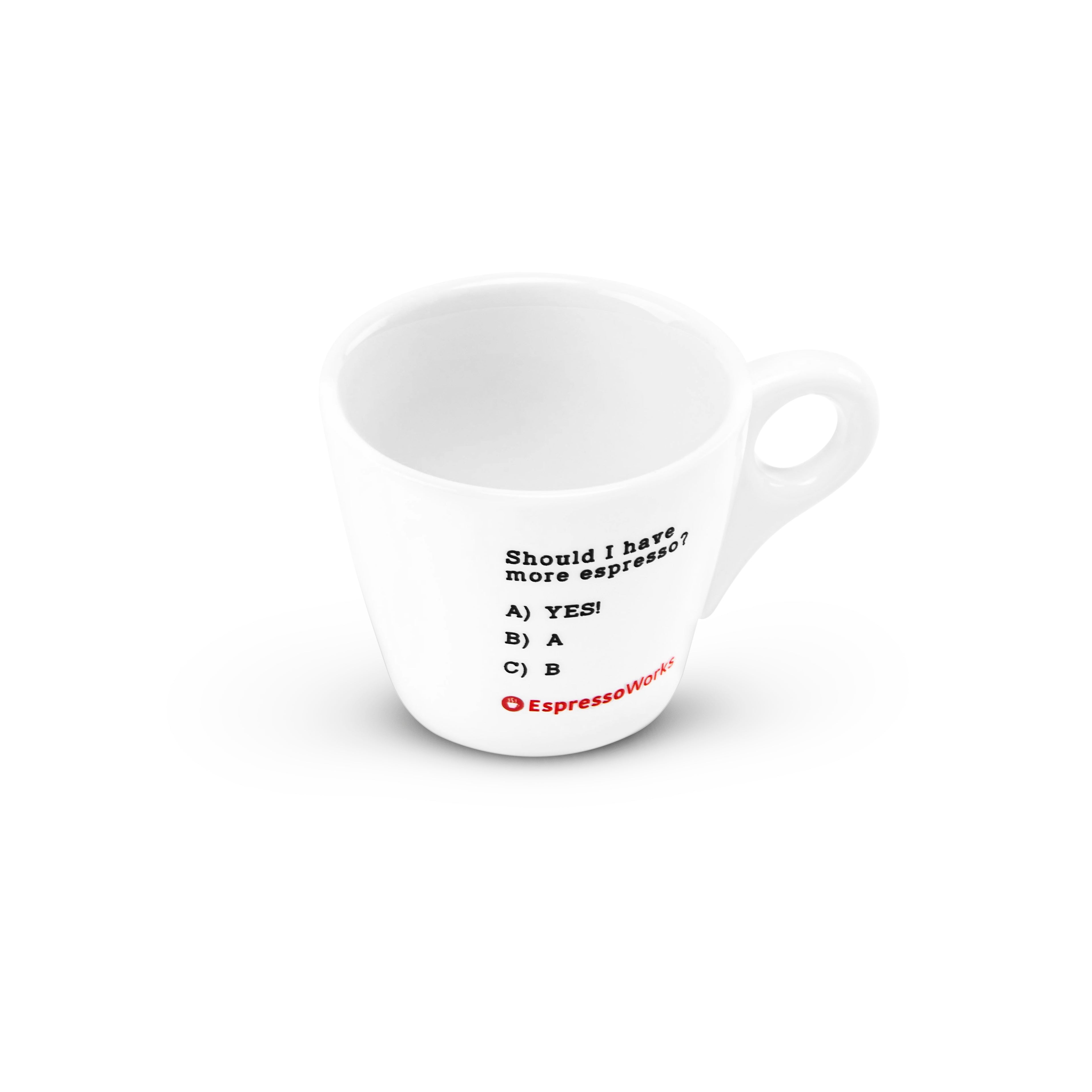
EspressoWorks Ceramic Espresso Cup with "Should I Have More Espresso" Quote
  • 90ml, portioned for espresso
  • Heat-retaining ceramic
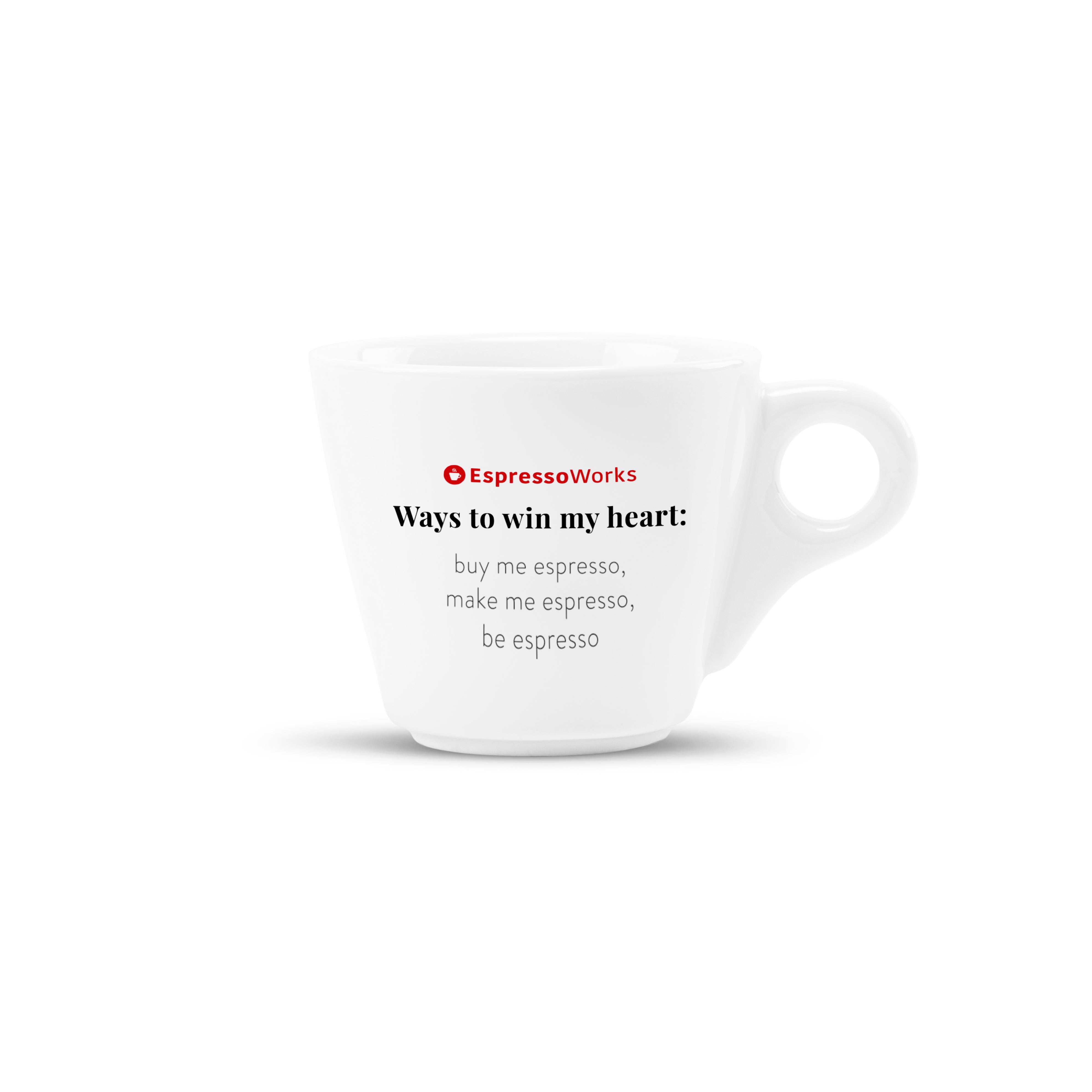
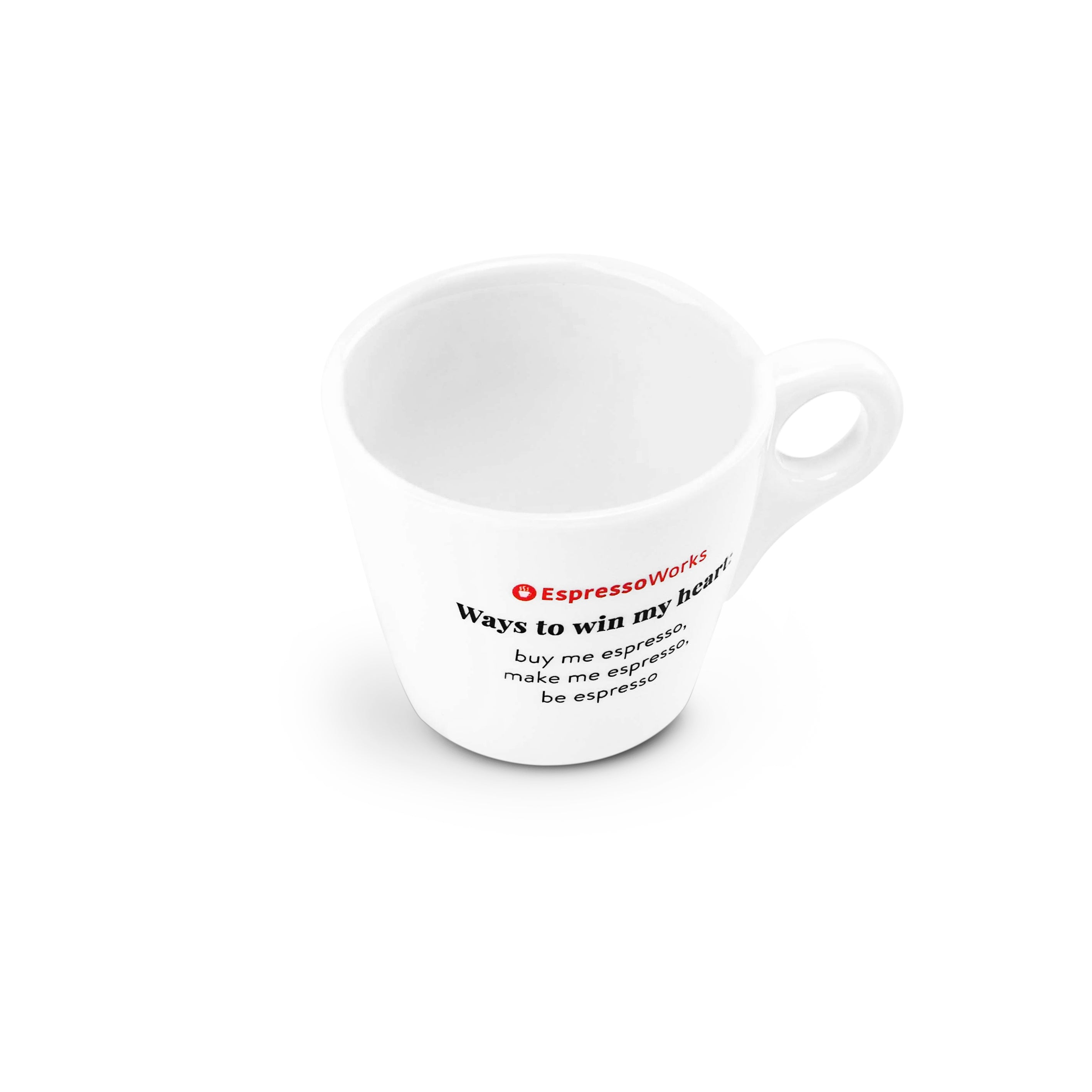
EspressoWorks Ceramic Espresso Cup with "Ways to Win My Heart" Quote
  • 90ml, portioned for espresso
  • Heat-retaining ceramic
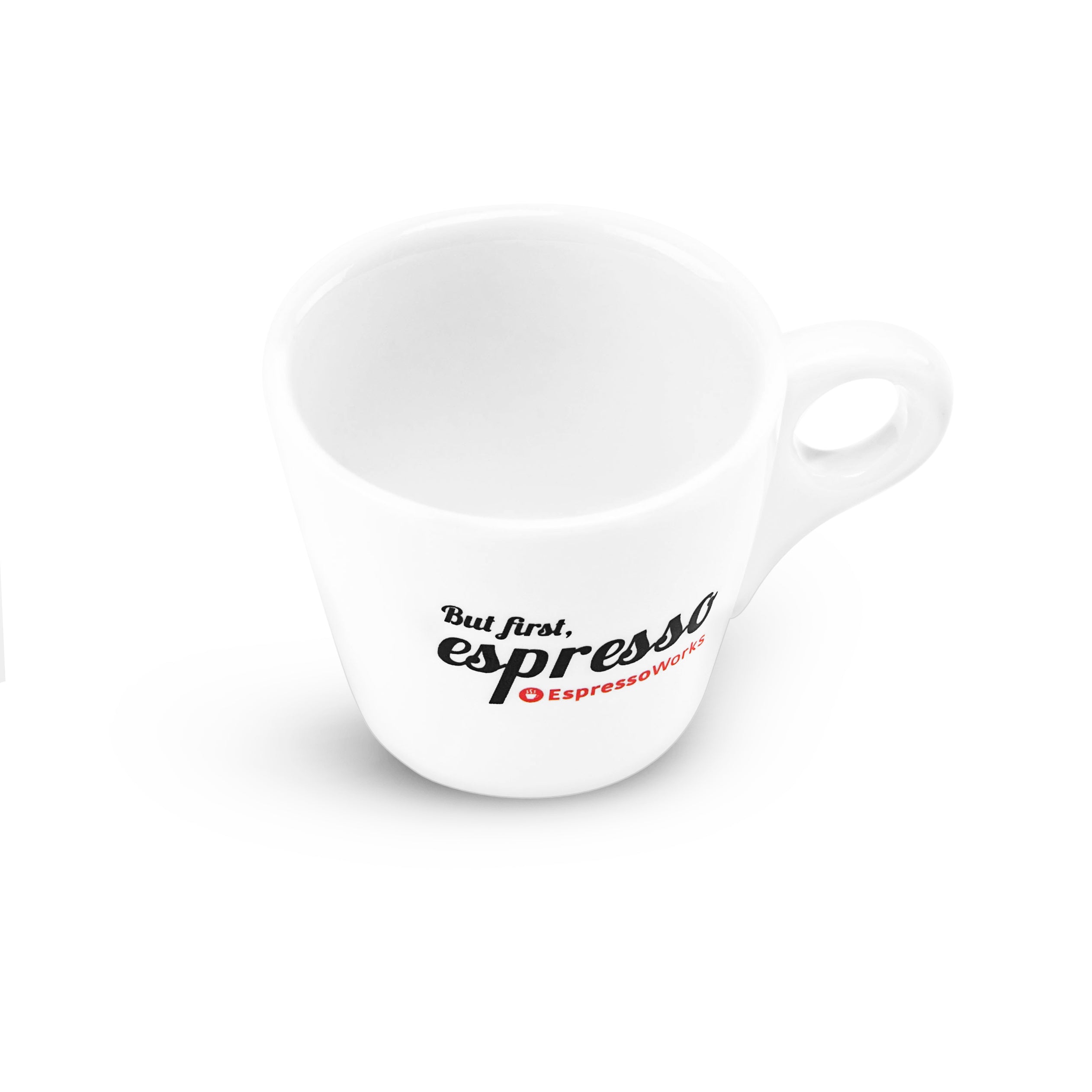
EspressoWorks Ceramic Espresso Cup with "But First, Espresso" Quote
  • 90ml, portioned for espresso
  • Heat-retaining ceramic

Why the Cup Matters More Than You Think

Pour a single shot of espresso into a standard 12 oz mug and watch what happens. The crema spreads paper-thin across a surface three times too wide, the liquid drops temperature in about 30 seconds, and half the aroma dissipates before the cup reaches your mouth.

Espresso is small by design - 1 to 2 oz for a single shot. A cup built for that volume keeps the liquid concentrated, the crema intact, and the heat stable. That's not a style choice. It's a function choice.

Ceramic is the traditional material for a reason. Thick walls absorb and hold heat, so a quick pre-heat under hot water gives you a cup that keeps your shot warm through the last drop. Double-wall borosilicate glass takes a different approach - two layers of glass trap air between them, insulating the espresso without adding weight. You also get to watch the shot settle, which is half the fun of pulling a good one.

Both materials resist staining from daily use and clean up fast. If your machine set came with ceramic cups, those are your starting point. When you want more options or a full matching set, our espresso and coffee drinkware collection has you covered.

How to Pick the Right Espresso Cup

Size is the first decision. A standard demitasse cup holds 2-3 oz - enough room for a single or double shot plus crema. Go smaller (1.5 oz) for ristretto. Go larger (5-6 oz) for a lungo or macchiato where you're adding steamed milk on top. Not sure which drink calls for which size? Our guide to 13 types of coffee drinks breaks down the ratios and volumes.

Material comes next. Ceramic is classic - thick, sturdy, comfortable in the hand. Glass shows off shot colour and layering, and double-wall construction means the outside stays cool while the espresso stays hot.

Shape affects more than looks. A tapered interior, narrower at the bottom and wider at the rim, concentrates aroma and spreads crema evenly. Straight-sided cups give a cleaner pour and simpler cleaning.

Handle or no handle? Traditional cups have handles for good reason - espresso is hot. But double-wall glass stays cool on the outside, so handleless designs work without burning your fingers.

Find the Right Cup for Your Setup

Browse our range and match your cups to how you drink:

  • Ceramic Espresso Cups - Thick-walled, heat-retentive, easy to pre-heat. The go-to for straight shots.
  • Double-Wall Glass Cups - Insulated borosilicate glass that keeps espresso hot and your hands cool. No handle needed.
  • Espresso Cup Sets - Multiple cups in one purchase. Handy when you're making drinks for the whole house or setting up for guests.
  • Demitasse Cups - The traditional 2-3 oz size built specifically for espresso. Right proportions for crema and aroma.
  • Larger Cups for Milk Drinks - Sized at 5-6 oz for cappuccinos, cortados, and macchiatos where steamed milk needs room.

Pair your cups with the right espresso machine accessories - tampers, frothing pitchers, and scales round out a complete home setup. And if you're looking for drink ideas beyond straight espresso, our recipes page has everything from classic cappuccinos to seasonal specials.

Frequently Asked Questions About Espresso Cups

What size espresso cup do I need?

A standard espresso cup holds 2-3 oz, which fits a single or double shot with space for crema on top. For ristretto, a 1.5 oz cup works. If you drink macchiatos or cortados, go with 3-4 oz cups that leave room for a splash of steamed milk.

Is ceramic or double-wall glass better for espresso?

Both do the job well - it comes down to how you like to drink. Ceramic holds heat through thermal mass and feels solid in the hand. Double-wall glass insulates without weight, lets you see the shot layers, and stays cool to the touch so you can skip the handle.

Can I use a regular coffee mug for espresso?

You can, but the shot cools faster in a large mug and the crema spreads too thin across a wide surface. A 2-3 oz cup keeps temperature stable and concentrates the aroma right where you want it. Small swap, noticeable difference.

How do I keep espresso hotter in the cup?

Pre-heat the cup before pulling your shot. Run it under hot water for 15-20 seconds, or set it on your machine's cup warmer if it has one. Thick ceramic and double-wall glass both hold temperature longer than thin porcelain. And drink promptly - espresso is built to be enjoyed fresh.

Do EspressoWorks machine sets come with cups?

The 7-Piece and 10-Piece espresso machine sets both include two ceramic espresso cups in the box, sized for single and double shots. If you need more for your household or want to add glass options, browse the full espresso and coffee drinkware collection.