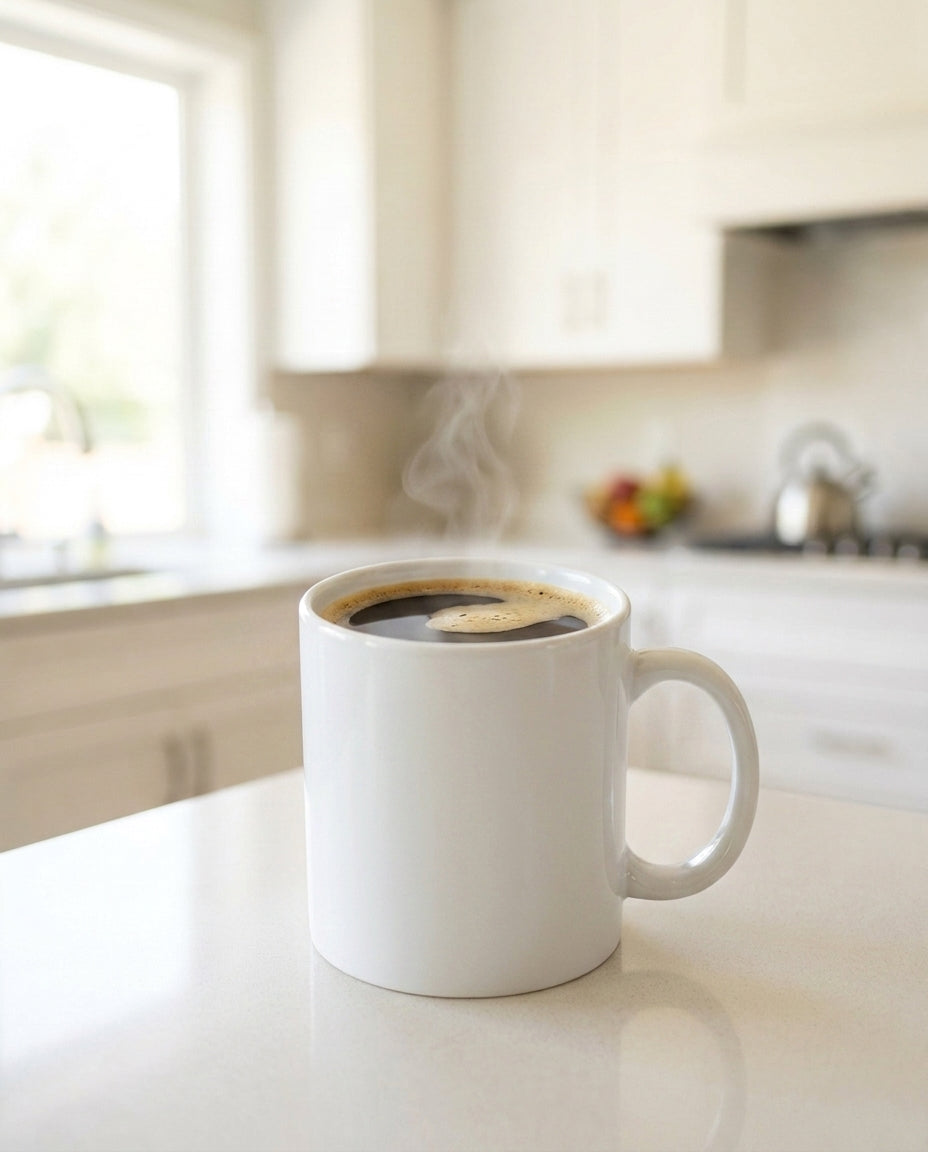
The americano is espresso stretched to the strength of black coffee, one part shot to three parts hot water. What you get is a cup with the body and crema of espresso but the sipping pace of a mug, which makes it the drink for people who want to actually taste what their beans do.
Espresso over water, not water over espresso. It sounds like superstition and it is not: pouring the shot on top preserves the crema as a layer instead of stirring it through, and the first few sips are noticeably richer for it.
The GI story behind the name
The name comes with a story, and it deserves to be told the way it is usually told: as a story, not certified history. During World War II, American soldiers stationed in Italy found the local espresso far more concentrated than the drip coffee they drank at home, so baristas lengthened the shots with hot water until the cup looked and sipped like American coffee. The locals called it caffe americano, coffee the American way, and the name stuck. Nobody can certify the details, and the drink may predate the legend. Either way, the story explains the drink perfectly: espresso brought down to drip strength without giving up anything pressure extraction puts in the cup.
The water is an ingredient

Six ounces of water is three quarters of this drink, so it earns real attention. Use water just off the boil, around 200 to 205 F, not actively boiling; a rolling 212 F pour dulls the aromatics and scorches the crema the moment the two meet. The shot itself arrives in the cup at roughly 160 F, so once espresso and water combine in a room-temperature mug the drink settles near 160 to 170 F, which is right where black coffee reads sweetest and you can start drinking without waiting. Preheat the mug and it holds closer to 180 F instead, so choose based on how patient you feel.
Quality matters as much as temperature. There is no milk here to cover for chlorine or heavy minerals, so filtered water pays off more in an americano than in any milk drink. If your tap water tastes like a swimming pool, your americano will too. A gooseneck kettle gives you the most control over pour speed and lets you stop at exactly 6 oz instead of flooding the mug.
Pick your ratio, keep the shot
The espresso never changes. Every version of this drink starts with the same 2 oz double; only the water moves. That is what makes the americano so easy to dial to taste: you are adjusting dilution, not extraction.
| Ratio | Water added | Total cup | What you get |
|---|---|---|---|
| 1:1 | 2 oz | 4 oz | Intense, close to a long black, espresso-forward |
| 1:2 | 4 oz | 6 oz | Strong but rounded, a small-cup americano |
| 1:3 | 6 oz | 8 oz | The standard build in this recipe, drip strength with crema |
| 1:4 | 8 oz | 10 oz | A full mug, gentle and sippable for an hour |
Start at 1:3 and move one step at a time. If you want repeatability, weigh instead of eyeballing: a double shot runs about 60 g out of the machine, and a small kitchen scale makes the water side just as exact. The difference between a 1:3 and a 1:4 cup is only 2 oz of water, and you will taste it.
Americano vs long black vs lungo vs drip
Four black coffees, four different drinks. The differences come down to how the water meets the coffee, and in one case whether it goes through the grounds at all.
| Drink | How it is built | Typical size | Character |
|---|---|---|---|
| Americano | Water and a double shot combined in the cup, either order | 6 to 10 oz | Drip strength, espresso body, crema on top |
| Long black | Hot water first, shots poured gently on top, never stirred | 4 to 6 oz | Smaller, stronger, crema fully intact |
| Lungo | No added water; 2 to 3 times the water pushed through the grounds during the shot | 3 to 4 oz | More extracted, more bitterness, thinner body |
| Drip | Near-boiling water percolates through grounds by gravity at about a 1:16 ratio | 8 to 12 oz | Clean and light, paper filter removes the oils |
The long black, an Australian and New Zealand standard, is defined by its pouring order: water in the cup first, shots floated on top so the crema survives untouched. Our recipe borrows that order at americano size. A lungo is the one people mix up most: it is not an americano and no water is added afterward. Instead the machine runs a longer extraction, pulling 2 to 3 times the normal shot volume through the same grounds, which drags out compounds a standard 25 to 30 second shot leaves behind and lands bitter. Drip is a different brewing method entirely: no pressure, a 1:15 to 1:17 ratio, several minutes of contact time, and a paper filter that strips out the oils an espresso machine emulsifies into the cup.
Where the americano sits
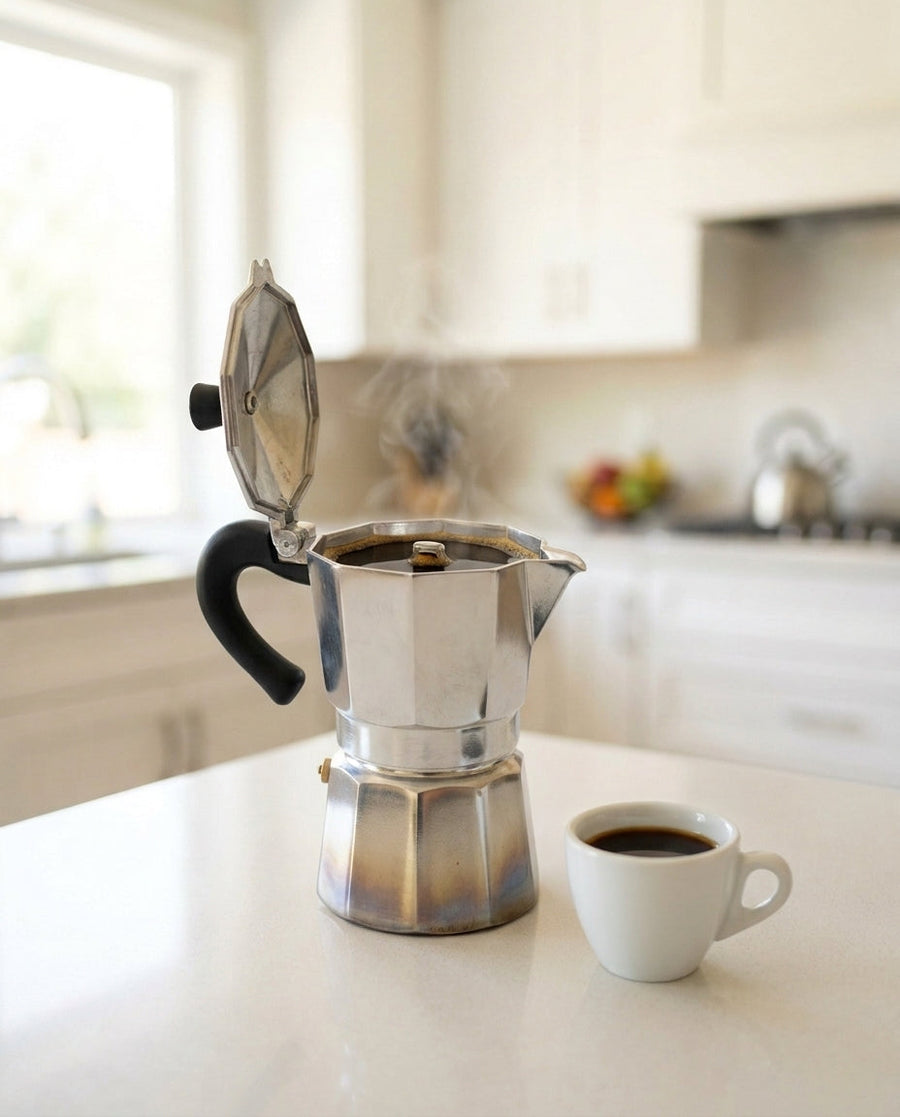
The americano is the bridge drink. It drinks like the black coffee from a moka pot but carries espresso's crema and body, and it's what you order when drip is the only alternative. The same double shot takes you anywhere else on the menu: steam milk and it becomes a latte or a flat white, and in summer the water simply goes cold, or you go all the way to cold brew for something smoother still.
The iced americano
The iced version is not hot americano poured over ice, which melts half the glass and leaves you with weak, lukewarm coffee. Build it cold from the start: fill a 12 to 16 oz glass to the top with ice, add 4 to 6 oz of cold water, then pull the double shot and pour it straight over the top. The order matters for the same reason it does hot: shots poured last float on the surface, so the crema and oils sit as a layer you drink through instead of dispersing into the glass. The espresso chills almost instantly against that much ice, so the drink stays close to full strength.
A clear glass cup earns its place here, because the shot sinking through cold water in slow amber ribbons is half the pleasure. With milk instead, the same build becomes an iced latte, and an insulated travel mug keeps it cold for the road.
Crema, and which way to pour
Crema is a foam of carbon dioxide bubbles and emulsified coffee oils, created by pressure and gone within a few minutes no matter what you do. The pouring order decides what happens in the minutes you have. Pour the shot gently onto the water and the crema rides up and reforms as a layer on the surface: your first sips pass through it and taste noticeably richer. Pour hot water down into the shot and the stream shears the foam apart, dispersing the crema through the cup instead of leaving it on top.
Both are legitimate americanos. Plenty of cafes build water-into-shot because the machine's hot water spout makes it the faster workflow, and some drinkers prefer the crema stirred through anyway, since it carries a bitter edge on its own. But if you are making one at home with thirty extra seconds to spend, water first is the better cup.
Dial it in
Too intense? Add water, the ratio is a preference, not a law. Plenty of people run one-to-four.
Sour or thin? That is the shot, not the water. An americano amplifies whatever the espresso gives it, so fix the grind first: a quality grinder set a notch finer solves more sour shots than any other change, and a consistent tamp does the rest.
Cooling too fast? Warm the mug with the hot water first, then dump and refill it before the shot. An americano has no milk to hold heat, so the mug does that job alone.
Espresso vs drip

An americano is not just weaker espresso or stronger drip. Pressure extraction pulls oils and solubles a filter never sees, and the water just spreads them out. Same beans, different drink - which is the whole case for having a pump espresso machine on the counter even if you drink your coffee long and black.