Turkish coffee has been brewed the same way for centuries, and it asks for almost nothing: a small pot, powder-fine coffee, cold water and five minutes of your attention. There is no filter and no pressure. The grounds and water heat together, the coffee rises under a thick foam, and the grounds settle in the cup.
Our Turkish Coffee Pot is a traditional cezve built for exactly this. The long wooden handle keeps your hand away from the heat, the narrow spout pours a clean stream that keeps the foam intact, and the 400 ml body gives you room to brew for two or more with headroom for the foam to climb.
Coffee that is never filtered
Every other method in your kitchen separates the grounds from the water at some point. A drip brewer filters, a French press plunges, a moka pot pushes water through a basket. Turkish coffee never does. The coffee is ground so fine that it stays suspended while it brews, thickens the body as you drink, and then sinks to the bottom of the cup when you let it rest.
That is what gives it the texture: heavy, velvety and close to syrupy, with a foam cap on top. It is also why the grind, the heat and the pour matter so much. The method is part of the culture, too: UNESCO added Turkish coffee culture and tradition to its list of the Intangible Cultural Heritage of Humanity in 2013, for the hospitality and conversation that surround the cup as much as the drink itself.
Powder-fine or nothing

Turkish coffee needs the finest grind in coffee, finer than espresso, closer to flour or cocoa powder. Rub a pinch between your fingers and it should feel soft, not sandy. Anything coarser won't stay suspended, won't build foam, and leaves a gritty cup.
The simplest route is coffee sold ground for Turkish coffee. Look for "Turkish grind" on the bag, or ask a roaster to grind a medium roast on their finest setting. Powder this fine gives up its aroma fast, so buy small bags, keep them airtight in a cool cupboard, and use them within a couple of weeks of opening.
Why the water starts cold
Cold water is not a quirk of tradition, it is how the method works. Starting cold gives the coffee 3 to 5 minutes of slow heating to extract and for the foam to form before the pot reaches boiling point. Start with hot water and the coffee races to the top before it has built any foam, and you get a thin, flat cup.
The same logic sets the heat. Low heat stretches out that rise, and the foam that forms slowly is fine-bubbled and stable. High heat builds big, loose bubbles that collapse the moment you pour.
Sade, orta or şekerli: decide before the heat
Turkish coffee is sweetened in the pot, not in the cup. Once the foam has formed, stirring sugar in would break it, so the host asks how you take it before brewing. The answers have names:
| Turkish | In plain English | Sugar per cup |
|---|---|---|
| Sade | Plain, no sugar | None |
| Az şekerli | A little sugar | About ½ teaspoon |
| Orta | Medium sweet | About 1 teaspoon |
| Şekerli | Sweet | About 2 teaspoons |
If your cups take different amounts, brew them in separate rounds, or brew sade and offer sugar on the side. A medium roast with chocolate and nut notes handles all four levels; sade shows off the coffee, şekerli turns it into something close to dessert.
The foam is the whole point

The foam, köpük in Turkish, is how a host judges a cup, and a cup without it is considered a miss. It forms from fine coffee particles, oils and tiny bubbles trapped at the surface as the water heats. Three things protect it: the low heat, the single stir at the start, and lifting the pot off before the coffee boils.
Boiling is the foam's enemy. At a full boil the bubbles burst, the foam collapses into the coffee, and the cup tastes flat and bitter. Watch for the moment the foam swells up into the neck and the surface starts to shiver. That is your cue, every time. When you're serving more than one cup, spoon the foam out first so everyone gets a share, then let the pot rise once more for a few seconds and pour slowly down the side of each cup. The pour lifts the foam back to the rim.
Why the cezve is shaped like that
The classic cezve is small, with a wide bottom and a narrower top. The wide base takes the heat; the narrow top squeezes the rising foam into a thick layer instead of letting it spread thin. That shape, plus a handle long enough to keep your fingers off the burner, is what the pot has to get right.
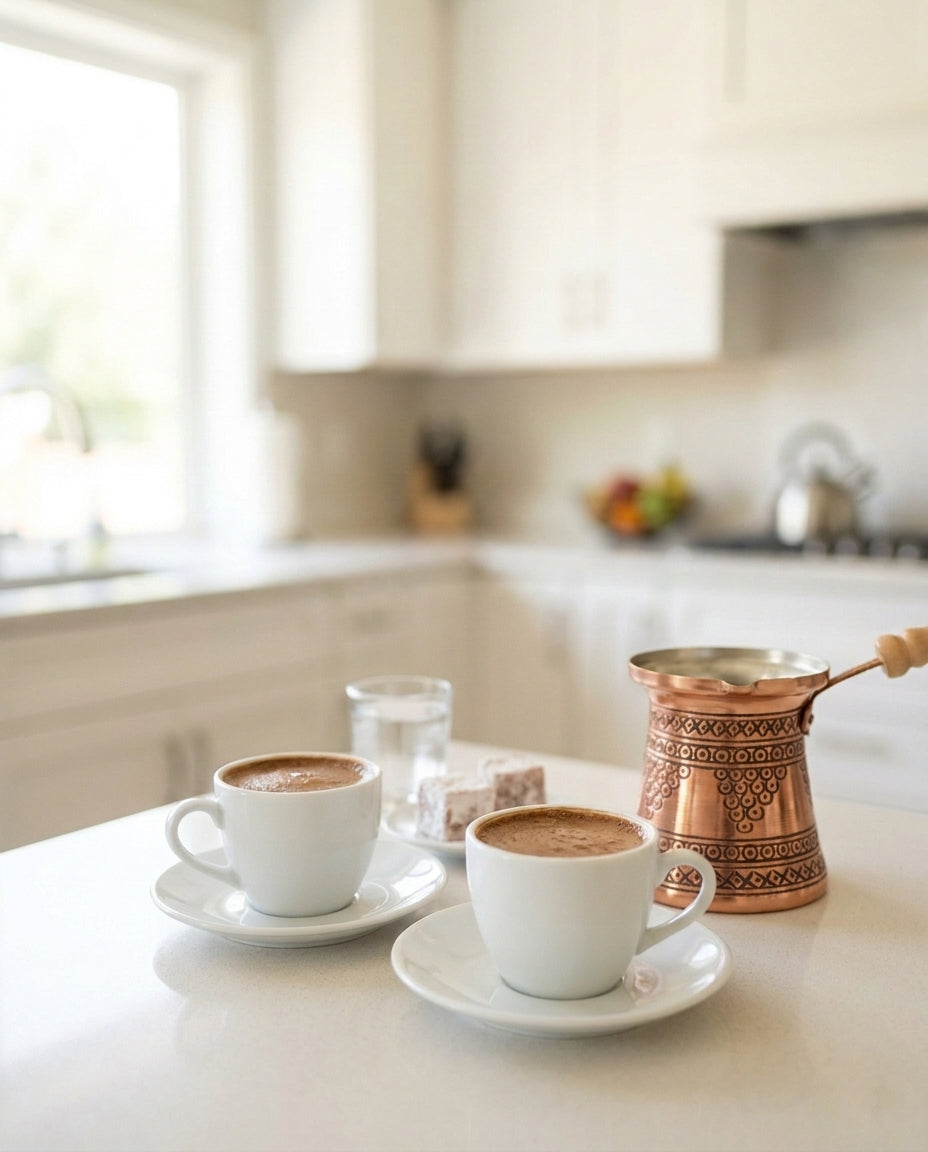
Ours is built around both. The long wooden handle keeps your hand clear of the heat while you watch the rise, and the narrow spout pours a clean stream that carries the foam into the cup instead of breaking it. At 400 ml it brews two cups with plenty of headroom, and up to four when you're pouring for the table. The embossed pattern and warm copper finish make it look good on the stove and in a gift box: it makes a distinctive gift for anyone who already owns a moka pot and wants the next ritual.
A note on names: in English the pot often goes by "ibrik." In Turkey, an ibrik is a tall water ewer, and the coffee pot is a cezve.
Cardamom and other ways to spice it
Ground cardamom is the classic addition, common across the Levant and the Gulf. Add a pinch per cup with the coffee at the start, or crack a pod and drop it in, so it heats with the grounds. It brings a cool, floral lift that suits a medium roast. Some households add a little ground mastic instead, which tastes faintly of pine.
Keep the spice light. A pinch per cup is enough; more than that and it covers the coffee instead of framing it.
How to serve it
Turkish coffee goes into small cups, around 60 to 75 ml, with a glass of cold water on the side. Sip the water first to clear your palate so the first taste of coffee lands clean. A piece of Turkish delight, lokum, often comes on the saucer.
Give the cup a minute before you drink so the grounds settle. Then sip slowly, and stop when you feel the coffee thicken. The layer of grounds at the bottom, the telve, stays in the cup. Don't stir it and don't try to finish it.
Greek coffee, Arabic coffee and the family resemblance
The same method lives under other names across the eastern Mediterranean, the Balkans and the Middle East. In Greece and Cyprus it is Greek coffee, made in a briki and ordered sketos (plain), metrios (medium) or glykos (sweet). Armenian and Bosnian coffee follow the same pattern, each with its own pot, its own customs and its own pride in the foam.
Arabic coffee covers more than one drink. In many Levantine homes it is a close cousin of Turkish coffee, brewed in a long-handled pot and often spiced with cardamom. Gulf-style qahwa is its own tradition: lightly roasted beans, generous cardamom, poured from a tall dallah into small handleless cups, and usually served with dates. Each of these is a distinct coffee culture, and each is worth making the way its own people make it.
Strength and caffeine
Turkish coffee tastes intense, with more body than any filtered cup, because the grounds stay in contact with the water for the whole brew and the fines stay in the cup. Per cup, though, the caffeine is in the same range as a single shot of espresso, since the serving is small and the dose is about 7 g.
If you like that intensity but want a bigger pot for a group, the moka pot brews six small cups of concentrated coffee at once, and a stovetop percolator fills mugs for the whole house.
Troubleshooting at a glance
| Symptom | Likely cause | Fix |
|---|---|---|
| No foam, or very little | Heat too high, hot water start, or coffee not fine enough | Cold water, low heat, Turkish-grind coffee |
| Foam collapses when poured | The coffee boiled | Lift off at the first swell into the neck |
| Bitter, flat cup | Boiled, or left on the heat too long | Off before the boil, pour straight away |
| Gritty mouthful | Drank too soon, or drank into the telve | Rest the cup a minute, stop when it thickens |
| Thin and weak | Too little coffee | About 7 g, a heaping tablespoon, per cup |
| Boiled over | Heat too high, or walked away | Low heat and stay with the pot, the rise happens fast |
Caring for your cezve
Rinse the cezve with hot water as soon as it cools, and wipe out the grounds with a soft sponge and a drop of dish soap. Skip abrasive pads, which scratch the finish. Dry it straight away, inside and out, and keep the wooden handle out of soaking water so the wood stays sound. Stored dry, it is ready for the next round.