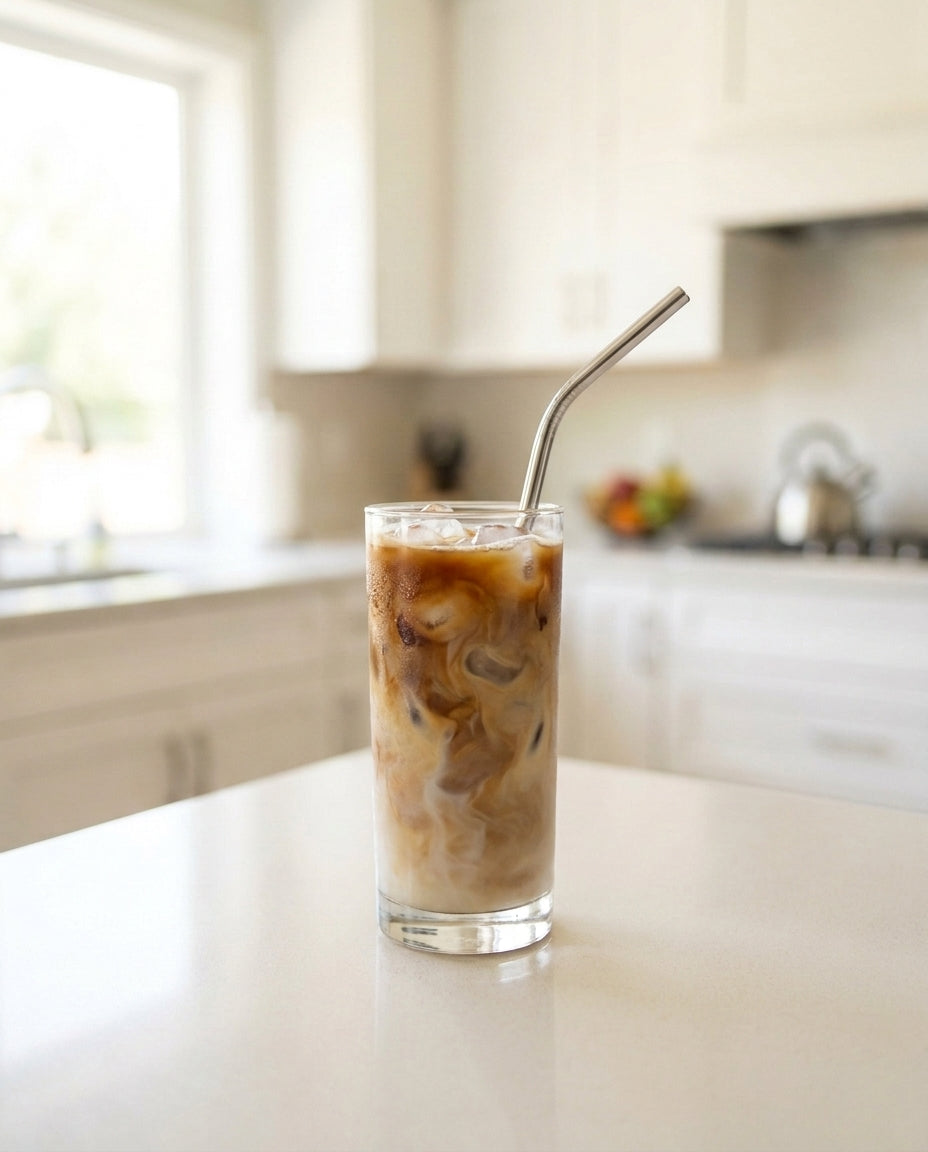
The iced latte is the easiest drink in this book: no steam wand, no milk temperature, no technique. Cold milk, ice, espresso, done. Which is exactly why the coffee matters more here, there is nothing to hide a weak shot behind.
Pull a double. Ice and cold milk mute flavor the way cold mutes everything, and a single shot disappears into 6 oz of milk. The double keeps the coffee present from first sip to last.
The shot deserves two minutes of attention too. A stale pre-ground shot that would slide by in a hot latte tastes flat once chilled, so grind right before you pull - a burr grinder is the upgrade that changes this drink most, and any of our espresso machines will pull the 2 oz double this recipe is built around.
Hot shot, cold drink

Pouring hot espresso over ice sounds like it should taste diluted, but the numbers work out fine: two ounces of hot liquid meeting a full cup of ice chills in seconds and melts surprisingly little. What the hot shot brings that cold coffee can't is crema - those oils marble down through the milk and carry most of the aroma. This is why an iced latte made to order beats anything that's been sitting in a fridge carton. It's also why you pull the shot last: espresso that sits loses its crema. Taking it with you? A glass travel mug and a steel straw turn it into the commute version.
Iced latte vs iced coffee vs cold brew
Three different drinks that get confused daily. An iced latte is espresso and cold milk. Iced coffee is brewed drip poured over ice, thinner and sharper. Cold brew is steeped cold for 12 hours, which makes it the smoothest and least acidic of the three, usually drunk black. If you like this recipe in winter, the same ratio steamed hot is simply a latte.
| Drink | Coffee base | Milk | Time to make |
|---|---|---|---|
| Iced latte | 2 oz espresso | 6 oz cold milk | 3 minutes |
| Iced coffee | 6 to 8 oz hot drip over ice | Splash, optional | 5 minutes |
| Cold brew | Grounds steeped in cold water | Usually none | 12 hours |
The iced latte wins on richness and speed. Cold brew wins on smoothness if you plan ahead. Want espresso over ice without milk? That is an iced americano - the same double shot, cold water instead of milk.
Dial it in
If your iced latte tastes watery by the halfway mark, the fix is more ice, not less. A full glass of ice chills the drink fast and then melts slowly. A half-full glass does the opposite.
Want it sweet? Syrup blends into cold milk far better than sugar does. Add it to the milk before the espresso goes in.
Milk splitting into curdled flecks? That's acid meeting delicate non-dairy milk. Barista-blend oat holds up; regular almond sometimes doesn't. Pour the shot slower and colder-side if you're using it.
Coffee fading behind the milk? Drop the milk from 6 oz to 5 oz before adding a third shot - a small cut in milk reads as a big jump in coffee. Like that stronger balance? You are drifting toward flat white territory, a fine place to end up.
Five flavors worth keeping in the fridge
The rule for all of these: flavoring goes into the milk before the espresso, never on top after, or it sinks to the bottom until the final sip. Start at 0.5 oz of syrup per drink and stop at 1 oz - past that the coffee is decoration.
- Vanilla. The default for a reason. 0.5 oz into the milk gives you the drive-through iced vanilla latte at a fraction of the price, with every milk on this page.
- Caramel. Thin caramel syrup stirs straight into cold milk. Thick caramel sauce clumps in cold liquid, so stir sauce into the hot shot first and let the espresso carry it down.
- Brown sugar. Make a brown sugar syrup (the 1:1 method below, brown sugar instead of white) and add 0.5 to 0.75 oz. A pinch of cinnamon in the warm syrup turns this into the shaken-espresso flavor of the summer.
- Mocha. Chocolate needs heat to dissolve, so this one breaks the milk-first rule: stir 0.5 oz of chocolate syrup into the hot espresso, then pour that over the milk. Iced mocha, none of the grit.
- Honey. Straight honey seizes into a lump in cold milk. Dissolve it in the hot shot first, or make a honey syrup with equal parts honey and hot water and pour 0.5 oz like any other.
The sweetener guide
Granulated sugar fails in this drink: sugar dissolves slowly in cold liquid, so the crystals sink through the milk and you drink an unsweetened latte followed by one syrupy mouthful. Hot drinks hide this because heat dissolves sugar in seconds. Cold drinks do not.
The fix is syrup, and you do not need to buy it. Simple syrup is equal parts sugar and hot water - 1 cup of each, stirred until clear. Let it cool, bottle it, and it holds two weeks in the fridge. Half water means half as sweet by volume as straight sugar, which is why 0.5 to 1 oz is the working range instead of a teaspoon. Buying instead? Most cafe-style pumps dispense about 0.25 oz, so two pumps is the bottom of the range.
Non-dairy milks, ranked
Every plant milk works here, but not equally - a hot, acidic shot hitting cold plant protein is the exact condition that makes some of them split.
- Barista oat is the winner and it is not close. The added fat and stabilizers shrug off the acid, the texture is closest to whole milk, and the natural sweetness of oats means many people skip syrup entirely. Around 90 calories for the 6 oz pour.
- Almond is the lightest - unsweetened runs about 20 calories per 6 oz, bringing the whole drink in under 40 - but it is the most likely to curdle into flecks when hot acid hits it. Pour the shot slowly, down the inside wall of the glass.
- Coconut lands in the middle at roughly 35 calories per 6 oz, with a thinner body and a flavor that either belongs in your latte or does not.
The slow pour helps all three - give the shot three or four seconds instead of one and the proteins take far less shock.
Iced lattes for four
Making four at once is barely more work than making one. For four drinks: 8 shots of espresso (about 16 oz), 24 oz of cold milk, and four tall glasses packed with ice.
Set up all four glasses first: ice to the top, 6 oz of milk each, syrup stirred in for anyone who wants it. Pull the shots in pairs into a small pitcher, then split them across the glasses, about 2 oz each, pouring slowly for the layer. Under ten minutes, start to finish.
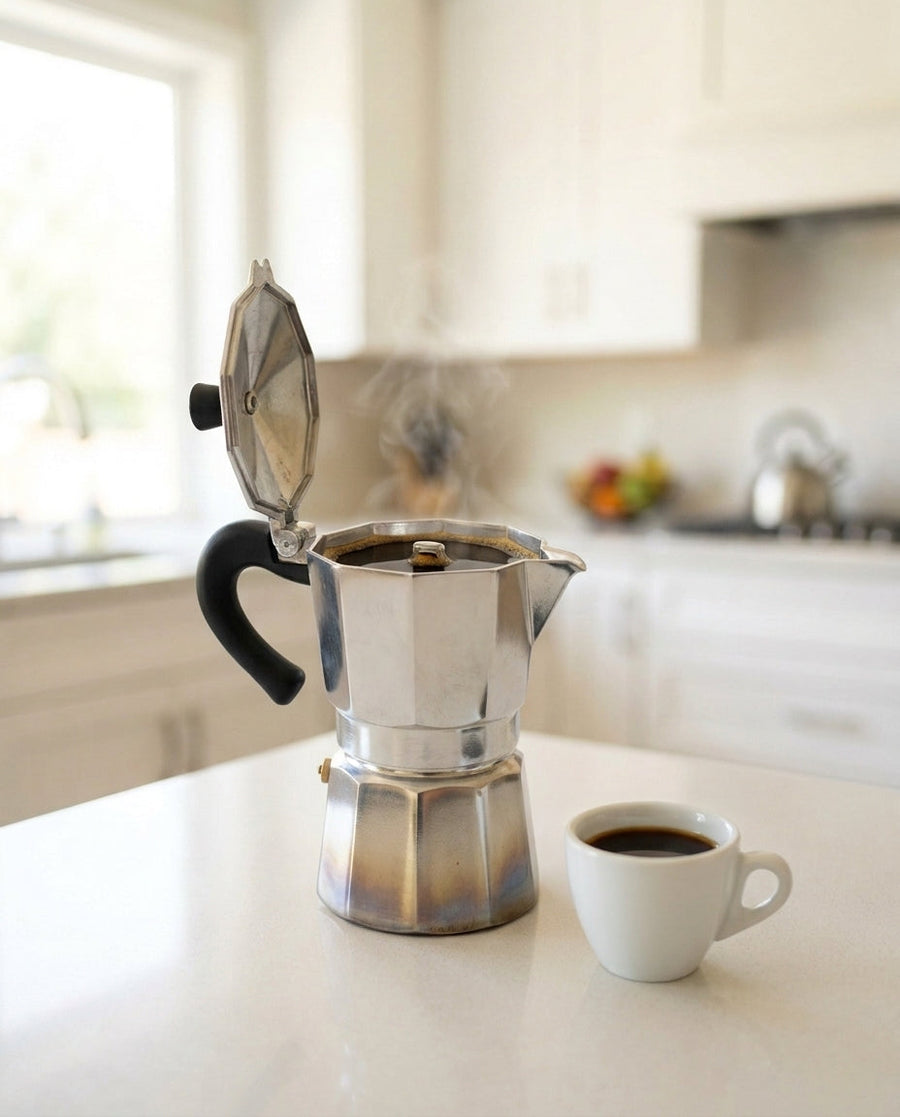
Eight pulls too many? A large moka pot brews strong, concentrated coffee in one go - a 6-cup pot yields roughly the 8 to 10 oz a round of four needs. And a kitchen scale from our scales and measuring range beats eyeballing 24 oz of milk in a pitcher.
The glass is half the drink
An iced latte built in a mug is the same drink, but nobody photographs it. The layered pour - white milk, amber espresso marbling down through it - only exists if you can see through the glass. A tall, clear glass in the 12 to 16 oz range gives the ice room and keeps the layers on display; our glass cups are made for exactly this.
Tall also beats wide: a narrow column of ice melts slower than the same ice spread across a squat tumbler. And drink it through a straw, which pulls from the bottom where the mixed drink lives instead of the milk-heavy top layer.
One better

Freeze leftover espresso into cubes on a Sunday. Iced lattes made with espresso ice never dilute, they just get stronger.
A standard tray holds about 1 oz per cube - roughly 14 shots banked. Swap half the regular ice for espresso cubes and the drink intensifies as it sits, or drop three cubes into 6 oz of cold milk and let it become a latte over ten lazy minutes. They also make a serious espresso martini - shake with them instead of plain ice and the cocktail never thins out.