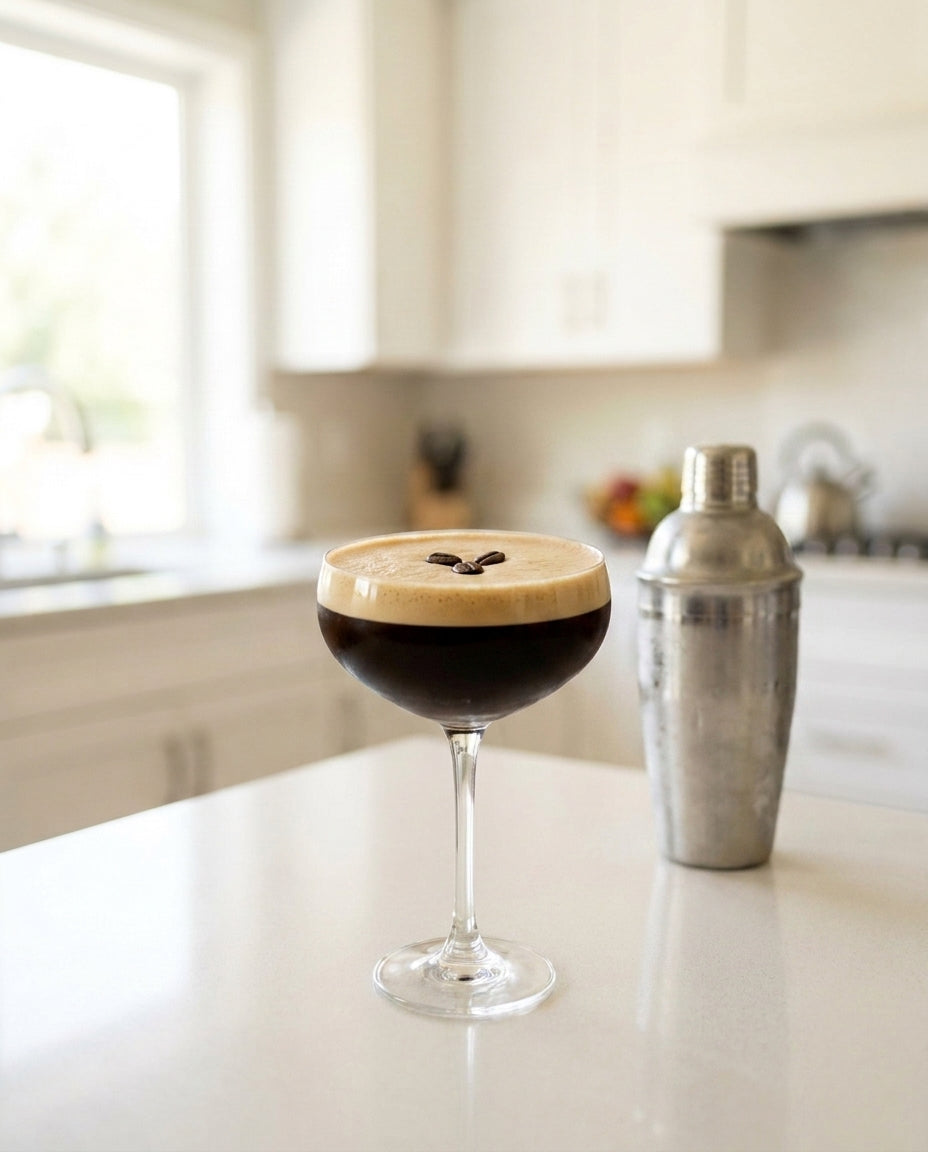
The espresso martini is the reason to pull a shot after dark. Cold, strong, a little sweet, with a foam top that only happens when real espresso meets a genuinely hard shake, there is no faking it with cold coffee from the fridge.
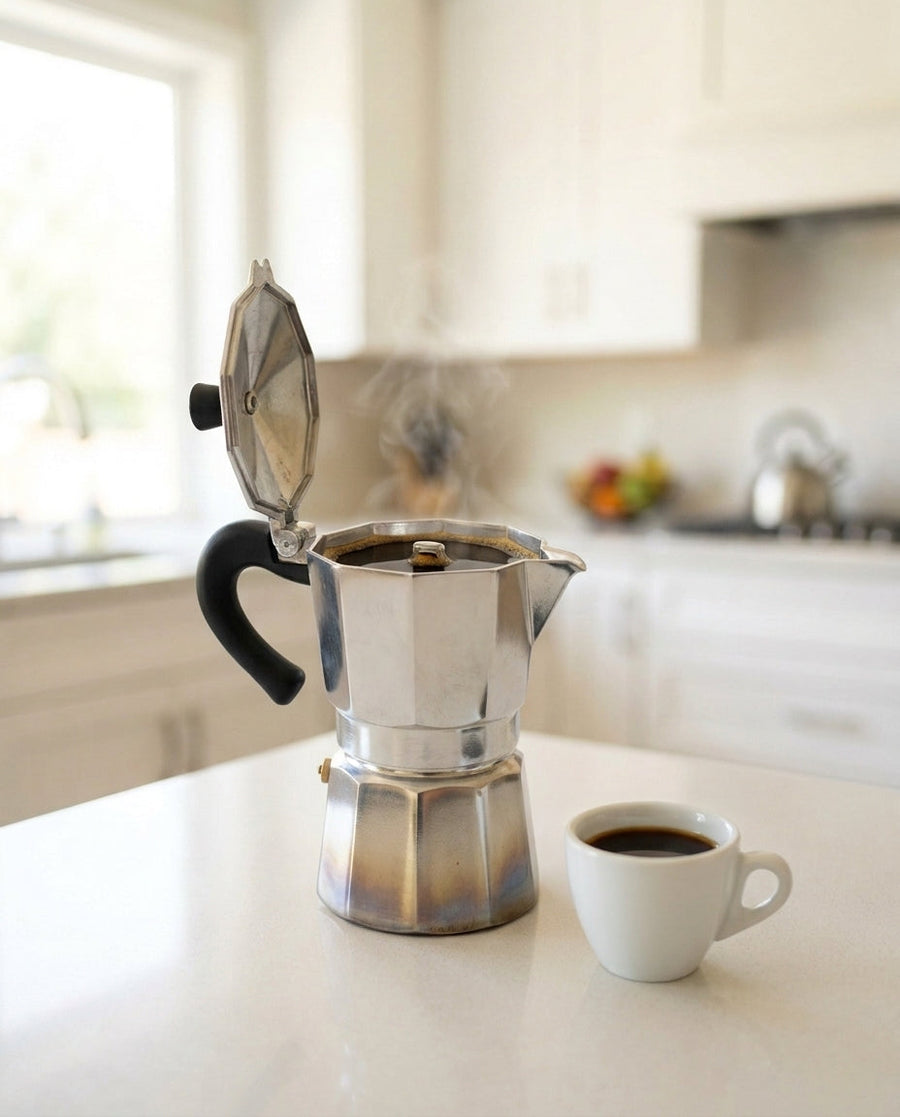
Fresh espresso is the whole game. Crema is an emulsion of coffee oils, and shaking it with ice is what creates the drink's signature layer. Espresso that has sat for ten minutes has already lost it - which makes an espresso machine the one bar tool this cocktail genuinely cannot do without.
That single fact shapes everything in this guide: the history, the technique, the batching math, even the glass. Get the shot right and shake like you mean it, and the rest is a 5-minute assembly job.
Born in a London bar
The espresso martini was created by London bartender Dick Bradsell in the 1980s, behind the bar of the Soho Brasserie. The origin story is bar-industry legend, retold in a hundred versions: a famous young model walked in and asked for a drink that would wake her up first, phrased in language considerably saltier than we can print here. Bradsell's station happened to sit next to the espresso machine, so he pulled a fresh shot, shook it with vodka, coffee liqueur, and sugar, and handed over the answer.
He called it the Vodka Espresso. The name we use now arrived in the 1990s, when the martini-glass craze swept cocktail bars and the drink migrated into the V-shaped glass it still wears. The DNA has not changed in four decades: 1 shot of espresso, a spirit, a coffee liqueur, a hard shake, three beans on top.
The detail worth noticing in the legend is the machine. The drink was invented because fresh espresso was within arm's reach. That is exactly the advantage you have at home.
Why fresh espresso wins the shaker
Most bars that sling dozens of espresso martinis a night quietly batch them with cold brew concentrate or chilled coffee, because pulling a shot per drink slows service. You do not have that problem. One drink, one shot, pulled 30 seconds before it hits the shaker.
The difference shows up in the glass. Crema - the tan layer on a fresh shot - is an emulsion of coffee oils, dissolved proteins, and CO2 driven out of the beans during a 25 to 30 second pressurized extraction. Those oils and proteins act as surfactants: they wrap around air bubbles during the shake and hold them in place, which is what builds a foam cap thick enough to support three coffee beans. Cold brew is steeped in cold water for 12 hours or more, which extracts a smooth, low-acid coffee but very little oil and no dissolved gas. Shake it as hard as you like; the drink pours flatter and the head fades in a minute.
Crema is also perishable. It starts collapsing within minutes of extraction, and grinding matters for the same reason: pre-ground coffee has already vented much of its CO2, so beans ground fresh in a burr grinder build noticeably more crema than a bag opened last month. Fresh beans, fresh grind, fresh shot, straight into the shaker while it is still hot. That chain is the entire recipe.
The foam, explained

That dense cap is the same physics as steamed milk foam, done with a shaker instead of a wand. Shaking forces air into the espresso's oils and proteins, and the ice chills the mixture fast enough for the bubbles to set instead of popping. This is why the shake has to be violent and why the espresso has to be fresh: no crema, no oils, no foam. Double straining - through the shaker's strainer and a fine mesh - catches the ice shards so the surface settles glassy instead of slushy. Cocktail ratios punish eyeballing, so measure the shot in a marked espresso measuring glass before it goes in.
A proper foam layer runs about a quarter inch deep and holds for the length of the drink. Watch it as you sip: a well-made espresso martini leaves rings of foam down the inside of the glass, the same way a well-poured stout does. If the foam vanishes before your second sip, the next section is your checklist.
The hard shake, step by step
The shake is where home espresso martinis usually die. Politeness has no place here. The full sequence:
- Put the glass in the freezer 10 minutes before you start. A warm glass murders foam on contact.
- Pull the shot, measure it, and get it into the shaker with the vodka, liqueur, and syrup while it is still hot.
- Fill the shaker at least two-thirds with ice. More ice chills faster and dilutes less, which is the opposite of what most people assume.
- Seal and shake as hard as you physically can for 15 to 20 seconds. The outside of the shaker should frost over, and your forearms should file a complaint.
- Double strain: open the shaker's built-in strainer over the glass and pour through a fine mesh strainer held between them.
- Let it stand 30 seconds. The foam separates and settles into a clean, defined cap. Then garnish.
One more thing the hard shake does that nobody thanks it for: dilution. A 15 to 20 second shake melts roughly 25 percent of the drink's volume in water, and that water is not a flaw, it is an ingredient. You are combining 2.5 oz of spirit and liqueur with 1 oz of hot, intense coffee; without the melt, the result is hot-tasting and syrupy. Dilution rounds the alcohol, opens the coffee aromatics, and drops the temperature to just above freezing. Bartenders build recipes assuming it. So do we.
Glassware and temperature
An espresso martini is served up, meaning no ice in the glass, so the glass itself is doing all the insulation. Freeze a coupe or martini glass for 10 minutes before you shake and the drink stays cold to the last sip; pour into a room-temperature glass and it is lukewarm inside 5 minutes.
Between the two shapes, the coupe wins on practical grounds: the rounded bowl is harder to spill and shows the foam cap beautifully, while the classic V-shaped martini glass is the drink's historical home and looks the part. Either way, aim for a 5 to 6 oz glass, since the finished drink lands around 4.5 oz after dilution and the foam needs headroom. The freezer trick is worth stealing for the rest of your coffee drinks too - a chilled glass does the same favor for an iced latte, and if you keep glass cups for layered drinks, 10 minutes in the freezer sharpens those layers as well.
The three beans

The garnish is traditional, said to stand for health, wealth, and happiness. The custom echoes an older Italian habit of floating three beans in sambuca, so the espresso martini inherited a superstition along with its coffee. Practically, they tell your nose what the drink is before the first sip. Drop them in a loose cluster on the settled foam; they'll hold.
If the beans sink, that is information, not bad luck: the foam is too thin, which points back at a stale shot or a soft shake.
Dial it in
No foam? Either the espresso was not fresh or the shake was polite. The shaker should frost over and your arms should notice.
Too boozy? Drop the vodka to 1 oz before you add syrup. Sweetness hides balance problems, less alcohol fixes them.
Too bitter? Check the liqueur, not the shot. Coffee liqueurs range widely in sweetness, and a drier one may need that optional quarter ounce of syrup after all.
Too watery? You under-iced. A half-full shaker melts fast and over-dilutes; two-thirds full or more melts slower while chilling harder.
Variations worth making
The base recipe takes modification well, because the espresso-plus-hard-shake engine underneath does not change.
| Variation | What changes |
|---|---|
| Decaf | Pull the shot with decaf beans. Decaf builds crema like regular espresso, so the foam is identical and the party can run past 10 pm. |
| Vanilla | Swap the 1.5 oz of vodka for vanilla vodka, and skip the simple syrup on the first try; most vanilla vodkas carry sweetness of their own. |
| Salted caramel rim | Wet the outer rim of the chilled glass with caramel sauce and roll it in a mix of sugar and a pinch of flaky salt before you strain. The salt sharpens the coffee. |
| No vodka | Drop the vodka entirely and raise the coffee liqueur to 2 oz. The liqueur carries the drink at roughly half the strength, and the shake still builds a full foam cap. |
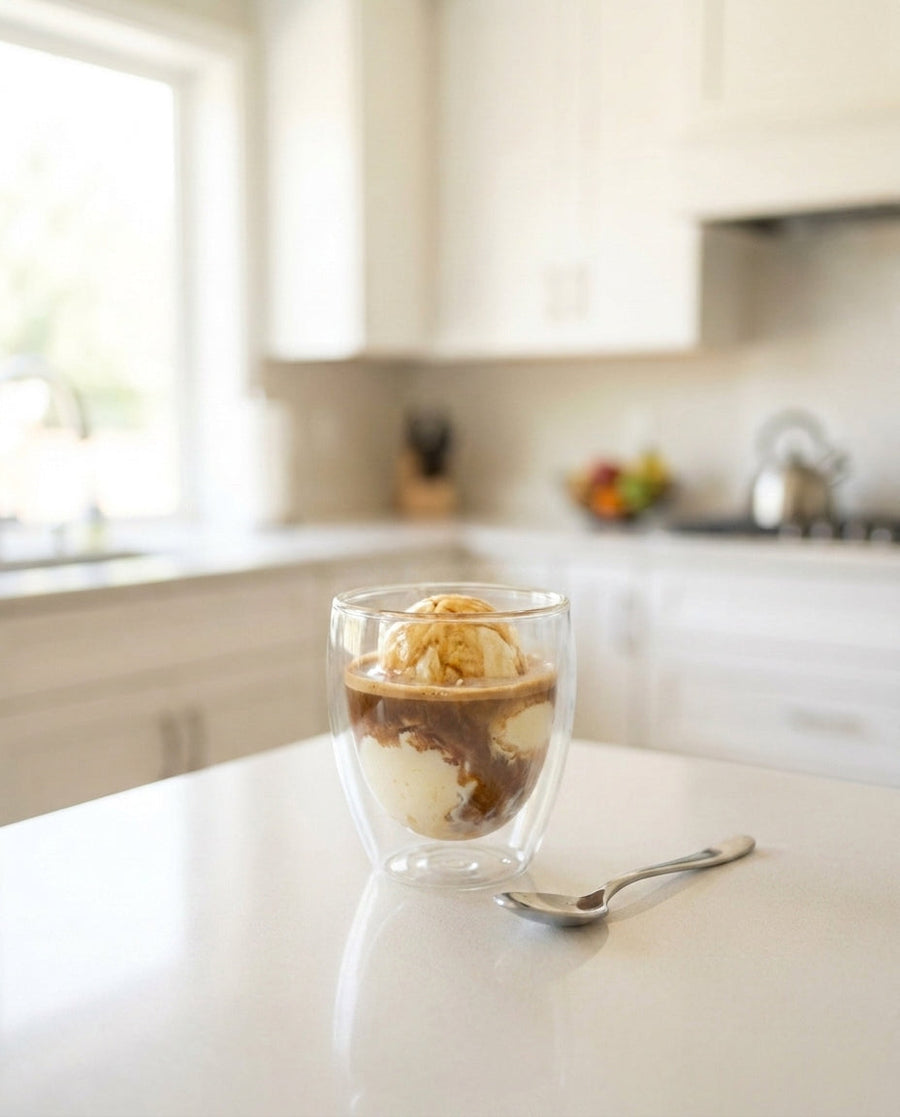
Resist stacking variations. One change per drink keeps the balance readable, and the classic spec is the control you measure everything against. And if what you actually want at 9 pm is the coffee without the cocktail, an affogato scratches a similar itch with zero shaking.
After-dinner pairings
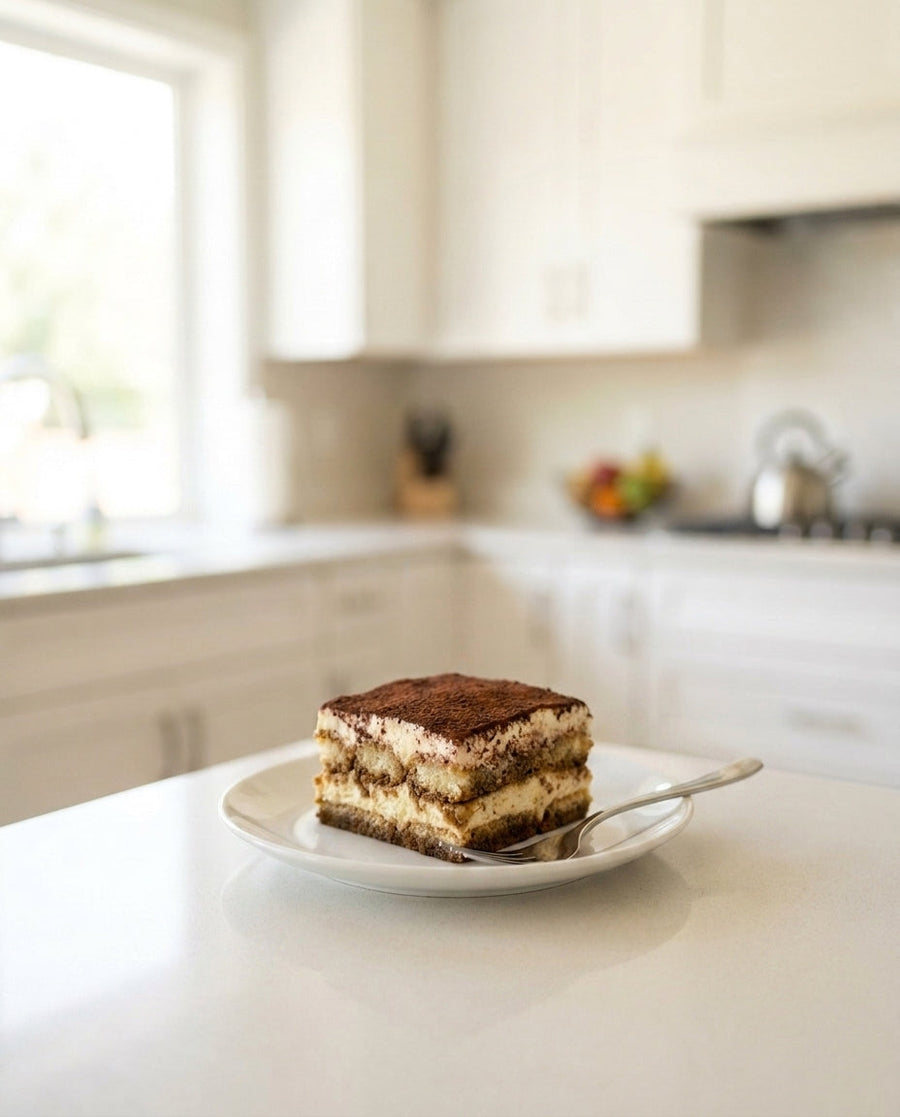
The espresso martini is the drinkable half of an after-dinner spread. Put it next to a square of tiramisu or an affogato and one machine has produced the entire dessert course. For the guest who wants coffee but not a cocktail, pull two extra shots and offer an americano alongside; the machine is already hot.
Batch it for company
Espresso, vodka, and liqueur hold together in the fridge for a few hours, so mix ahead and shake to order. The foam only ever comes out of the shaker, so resist the pitcher shortcut: a pre-shaken pitcher pours flat, every time.
For a party of four, the working math looks like this:
| Ingredient | 1 drink | 4 drinks |
|---|---|---|
| Espresso | 1 oz (1 shot) | 4 oz (4 shots) |
| Vodka | 1.5 oz | 6 oz |
| Coffee liqueur | 1 oz | 4 oz |
| Simple syrup (optional) | 0.25 oz | 1 oz |
Pull 8 shots before guests arrive: 4 for the first round and 4 banked for the refills that always follow. Combine each round's shots with the spirits in a sealed jar and refrigerate for up to 2 hours. Be honest with yourself about the clock, though - crema degrades as shots age, so a batch shaken at the 2 hour mark foams noticeably softer than one shaken at 20 minutes. Fresher is always better; 2 hours is the ceiling, not the target.
Then shake in two rounds of two. A standard home shaker holds two drinks comfortably, about 5 oz of batch plus ice, and overfilling it kills the violence the foam depends on. Two glasses in the freezer, half the batch in the shaker, 15 to 20 hard seconds, double strain, repeat. Four bar-quality drinks in under 4 minutes.