
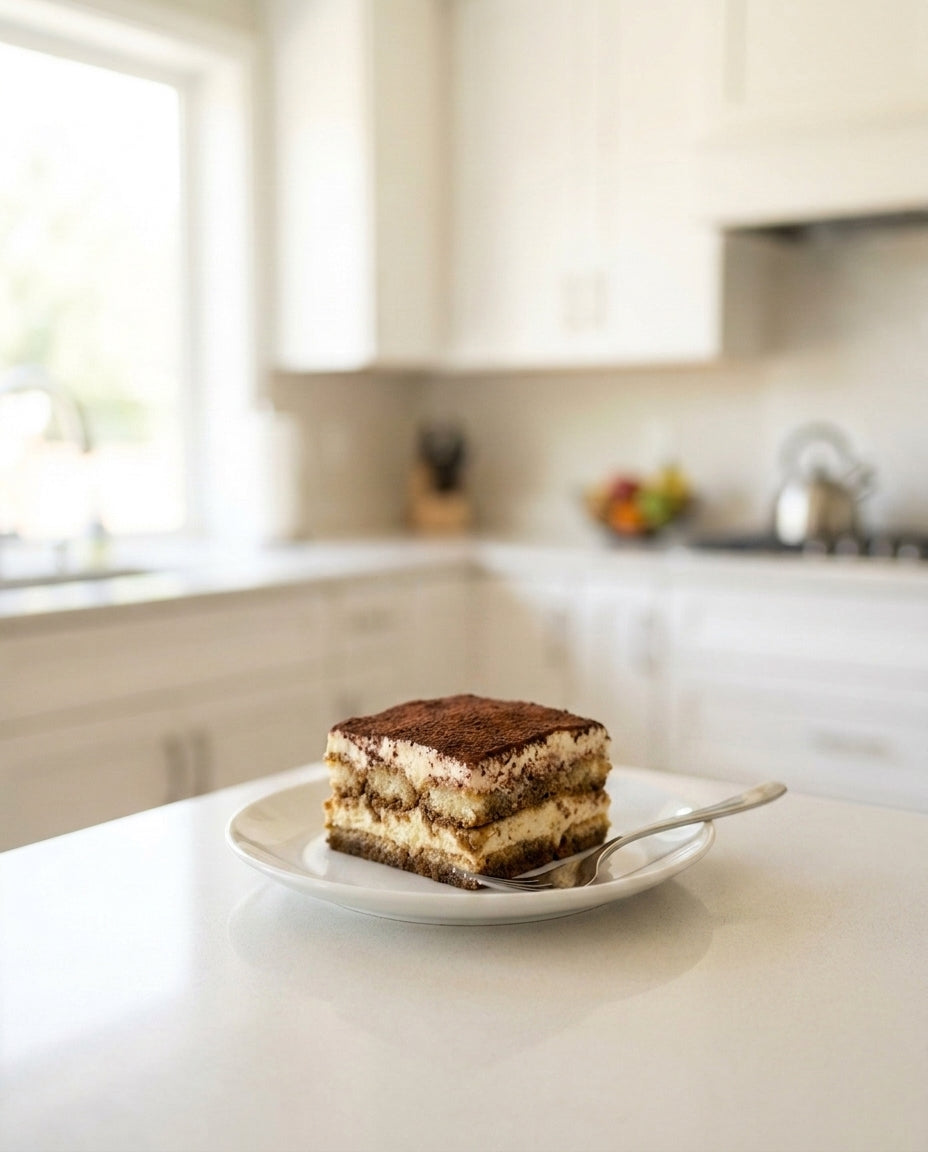
Tiramisu is the reason to pull espresso shots after dinner. The whole dessert is built on coffee, and the difference between good and unforgettable comes down to using fresh shots instead of instant granules or leftover drip. If you own a machine, this is the dessert your machine was waiting for.
Here's the thing about the classic recipe: the traditional version uses raw egg yolks. This one doesn't. Mascarpone folded with whipped cream gives you the same rich, sliceable filling with none of the raw-egg hesitation, and it comes together in half the time. Thirty minutes of hands-on work, 3.5 hours in the fridge, eight clean squares.
Fresh espresso vs instant espresso powder
Most tiramisu recipes online call for instant espresso powder stirred into hot water. It works, in the sense that the dessert comes out brown and vaguely coffee flavored. It is also the single biggest reason homemade tiramisu tastes flat next to the version at an Italian restaurant.
Instant powder is brewed coffee that has been dehydrated, and the drying process burns off the volatile aromatics that make coffee smell like coffee. What survives is the bitterness plus a faintly dusty aftertaste that no amount of cocoa can cover. Fresh espresso is the opposite: a shot extracted in 25 to 30 seconds concentrates flavor and aroma into about 1.5 oz of liquid, capped with crema that holds the oils instant coffee lost at the factory. In a dessert where coffee is the headline flavor, that gap is the whole difference.
Concentration matters just as much. Ladyfingers can only absorb so much liquid before they collapse, so every drop has to carry flavor. The 12 oz of espresso in this recipe delivers far more dissolved coffee per ounce than the same volume of drip, which is how the finished pan ends up tasting like coffee instead of like sweet cream that once met coffee.
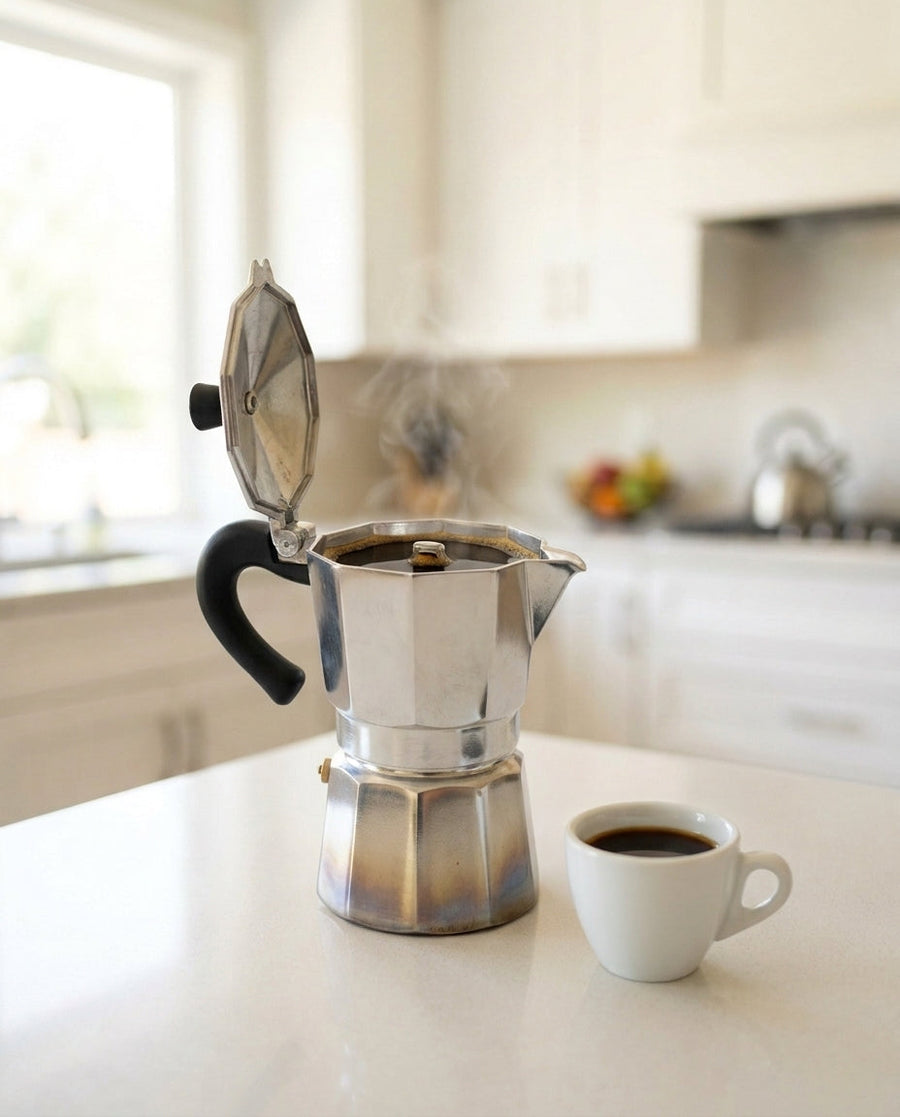
No machine? Moka pot coffee is the traditional Italian home substitute. Brew 12 oz on a stovetop moka pot, cool it, and proceed exactly as written - it lands closer to espresso strength than any drip brewer will.
The right ladyfingers to buy
There are two very different cookies sold under the name "ladyfingers," and picking the wrong one sinks the dessert before the espresso is even poured.
You want savoiardi, the dry Italian type. They are hard, pale, finger-length biscuits that snap cleanly when you break one, usually sold in 7 oz sleeves near the Italian imports or in the cookie aisle. Their dryness is the point: they act like sponges with structure, drinking up espresso while keeping the layers defined. A standard package holds around 24, exactly what an 8x8 dish needs for two layers.
The other kind is the soft, cakey ladyfinger sold near the bakery case for strawberry shortcake. Skip those here. They are already moist, so one pass through the espresso turns them to paste and the layers slump into each other. If the cookie bends instead of snapping, it belongs under strawberries, not in tiramisu.
The one-second dip

The most common tiramisu mistake happens at the espresso bowl. Ladyfingers are dry sponge cookies, and they drink liquid fast. One second per side leaves them soaked through by serving time, because the espresso keeps migrating toward the center of each cookie for hours in the fridge. Three seconds leaves you with a puddle. Count it out loud if you have to.
Roll the cookie: in on one flat side, straight over to the other, straight out. The surface should look darkened but the cookie should still feel firm in your fingers. It will seem underdipped. Trust it - by hour four the middle of every cookie is espresso-soaked and the base still holds a clean slice.
Why the espresso matters

Six shots sounds like a lot until you taste what they do. Espresso's concentration means big coffee flavor without waterlogging the cookies, and the crema carries aromatics that flat black coffee doesn't have. Pull your shots first, before anything else, so they have time to cool while you whip the cream - six shots back to back is a five-minute job on any of our espresso machines.
Cooling is not optional. Hot espresso wicks into a ladyfinger noticeably faster than room-temperature espresso, which shrinks your margin for error from one second to almost nothing. Pour the shots into a wide, shallow bowl so they cool in 15 to 20 minutes instead of an hour, and dip only when the bowl no longer feels warm.
Mascarpone without lumps
Cold mascarpone is the hidden cause of most grainy tiramisu. Straight from the fridge it is stiff, and stiff mascarpone forces you to beat rather than fold - and beating is exactly what this high-fat cheese cannot take. Overworked cold mascarpone splits into a grainy, buttery mess that no amount of stirring brings back.
The fix costs nothing but patience. Set the mascarpone on the counter for 30 to 60 minutes before you start, until a spatula drags through it easily. Loosen it with a few strokes, add the pinch of salt, then fold the whipped cream through in two additions and stop the moment the mixture looks smooth. Every extra stroke past smooth pushes it toward split.
One substitution warning: do not swap in cream cheese. It is tangier, saltier, and stiffer, and it turns the filling into something closer to cheesecake batter. Mascarpone's mild, sweet-cream flavor is the flavor of tiramisu. If the store is out, wait a day rather than fake it.
The classic version, and the boozy upgrade
Traditional tiramisu builds its cream from raw egg yolks whipped with sugar until pale and thick, often with a splash of Marsala wine, then folded with mascarpone. It is a great dessert and the raw yolks are why many home cooks hesitate to make it or serve it.
Our version swaps whipped cream in for the eggs, and we state that plainly as a choice: you trade a little of the custardy richness for a filling that whips up in 3 minutes, holds a cleaner slice, and can go in front of kids, pregnant guests, and anyone else without a conversation. The coffee, cocoa, and mascarpone - the flavors people actually remember - are untouched.
Want the grown-up edition? Stir 2 tbsp of Marsala or dark rum into the cooled espresso before you start dipping. That is the entire modification. The alcohol perfumes every cookie without making any single bite boozy, and it is the fastest way to close the gap with the restaurant version.
Troubleshooting
Five things go wrong with tiramisu, and every one of them has a specific cause.
| Symptom | Cause | Fix |
|---|---|---|
| Soggy, collapsing layers | Cookies dipped too long, or espresso still warm | One second per side in fully cooled espresso; use dry savoiardi, never soft sponge cookies |
| Grainy or curdled cream | Cold mascarpone beaten instead of folded | Rest mascarpone at room temperature 30 to 60 minutes; fold gently and stop at smooth |
| Slices that run on the plate | Cream underwhipped or dessert underchilled | Whip to firm peaks, about 3 minutes; chill at least 3.5 hours, ideally overnight |
| Bitter, damp top | Cocoa dusted hours ahead so it absorbs moisture | Dust cocoa in the final minutes before serving, with a light hand |
| Weak coffee flavor | Drip coffee or watery brew in the dip | Use fresh espresso, or a moka pot brew at full strength |
If the cream has already split, fold in 2 to 3 tbsp of cold heavy cream with a spatula. It often smooths a slightly broken mixture enough to save the batch.
Make it ahead
Tiramisu is better on day two. Overnight, the espresso migrates evenly through the cookies, the cream firms against the layers, and the whole pan slices like cake instead of spooning like trifle. If you are making it for a dinner, build it the night before and you have done tomorrow's dessert in tonight's spare half hour.
It keeps covered in the fridge for 3 days. Press plastic wrap against the surface or use a lidded dish, because the cream picks up fridge odors quickly. Hold the cocoa dusting until serving day if you can - a fresh dusting looks and tastes sharper than one that has sat.
Do not freeze it. Whipped cream is a foam, and freezing drives ice crystals through that foam's structure. When the pan thaws, the ruptured cream releases its water, the liquid weeps into the cookies, and you get slumped layers sitting in a shallow pool. Three days of fridge life covers almost any plan; make it fresh inside that window instead.
Serving
Dust the cocoa just before the pan hits the table. Cocoa sitting on the cold, moist surface absorbs humidity within an hour and turns from a dry, bittersweet powder into a damp layer - the last-minute dusting is what gives you that clean, dark finish.
For sharp squares, dip your knife in hot water and wipe the blade between every cut. Eight cuts, eight clean faces.
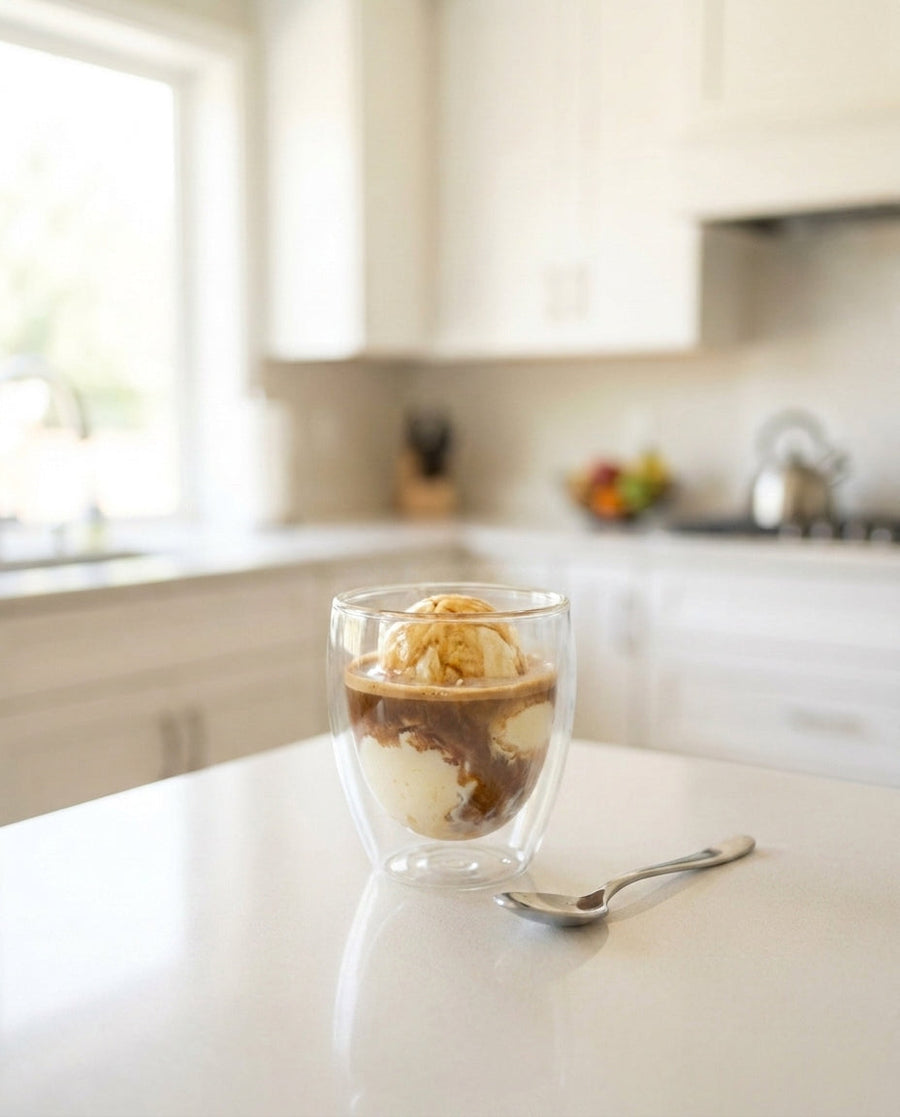
Pair the plate with more coffee. A fresh hot shot in a glass espresso cup beside the cold, creamy square is the classic contrast, and an affogato doubles down on the espresso-and-cream theme for anyone who wants dessert twice. For a cocktail-hour crowd, an espresso martini uses the same shots you pulled for the pan - the machine covers the whole evening.