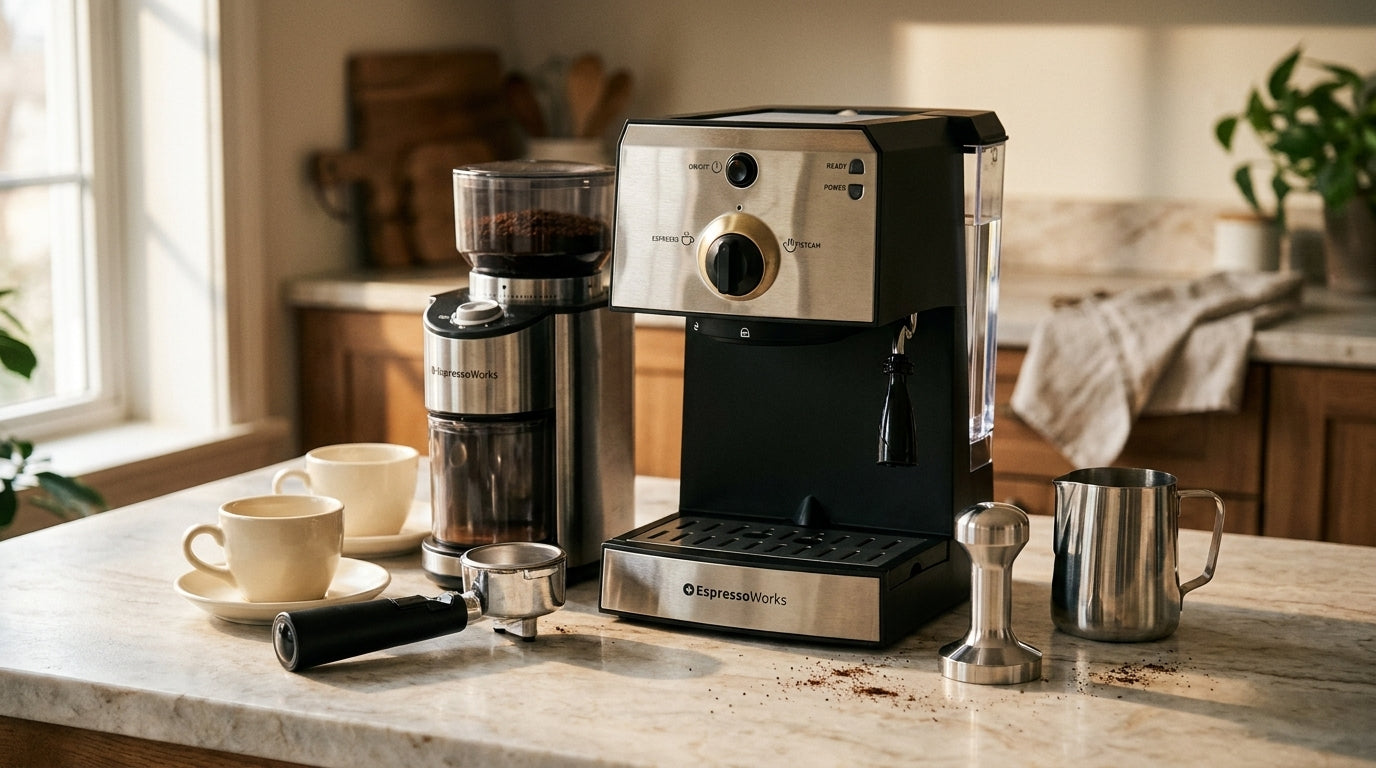

A clean espresso machine is the cheapest performance upgrade you'll ever make. Better-tasting shots, more consistent crema, longer machine life. None of that requires a new piece of kit, just fifteen minutes a week and the right cycle at the right time.
Coffee oils don't sit idle. Left in the brew head and portafilter, they oxidise into the bitter, ashy aftertaste that makes you wonder if your beans have gone stale. They haven't. Your machine has. Limescale does the same thing from the other side, with minerals from your water baking onto the inside of the boiler and pipes, slowly choking pressure and flattening flavour.
This guide covers the routine that keeps any home espresso machine running properly, plus the exact button sequence for cleaning and descaling each EspressoWorks model. If you own one of ours, find your machine below.
What a Clean Machine Actually Does for Your Espresso
A clean machine does three things for you. It protects your flavour, it protects your function, and it protects your investment.
Flavour first. The oils in roasted coffee are aromatic when fresh and rancid within a few days when left on warm metal. That residue accumulates on the brew head screen, inside the portafilter, in the basket holes, and on the steam wand tip. Your next shot extracts through all of it. The taste shifts from clean and round to bitter and ashy, and most people blame the beans.
Function next. Mineral buildup from your water is a slow strangulation. Pressure drops, brew time creeps up, your espresso comes out weaker and more steamed than pulled. Pull a couple of shots a day for six months without descaling and the difference is obvious.
Lifespan last. With proper cleaning, a quality home espresso machine runs well for 8 to 10 years. Without it, you'll be replacing parts inside two.
Signs your machine is overdue: slower brew, weaker shots, more steam than usual, a yellow indicator light if your model has one. Those are the cues to stop putting it off.
Your Daily, Weekly, and Monthly Cleaning Schedule
Three windows. Daily, weekly, and every few weeks. Get the rhythm right and the work disappears into your morning.
After every shot: Unlock the portafilter, knock out the puck, rinse the basket and dry it. Wipe down the steam wand with a damp cloth immediately after frothing - milk dries fast, and dried milk is a different problem entirely. Run a quick blank shot of water through the brew head to flush any loose grounds.
Daily: Empty the drip tray. Wipe down the housing. Rinse your milk pitcher in hot water.
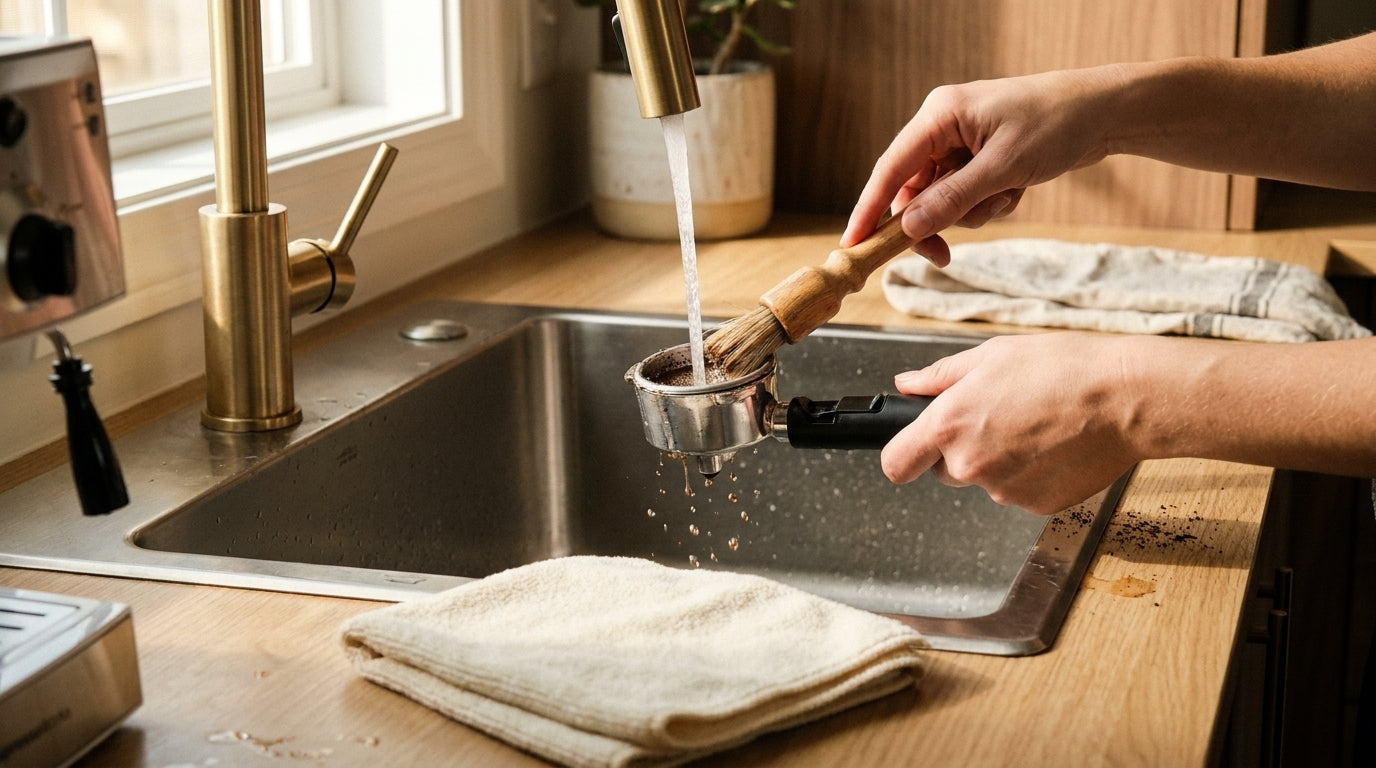
Weekly: Pull out the portafilter and baskets and soak them in hot water with espresso cleaning powder for fifteen minutes. Use a small brush on the brew head screen to lift any caked oil. Rinse the water tank. Wipe the steam wand more thoroughly.
Every 4-6 weeks in hard water, every 2-3 months in soft water: Run a full descale. This is where the internal pipes and boiler get treated, not the parts you can see.
Water hardness is the single biggest variable. Your local water utility publishes the figure, or you can pick up a test strip for under five dollars.
What You Need to Clean Your Espresso Machine
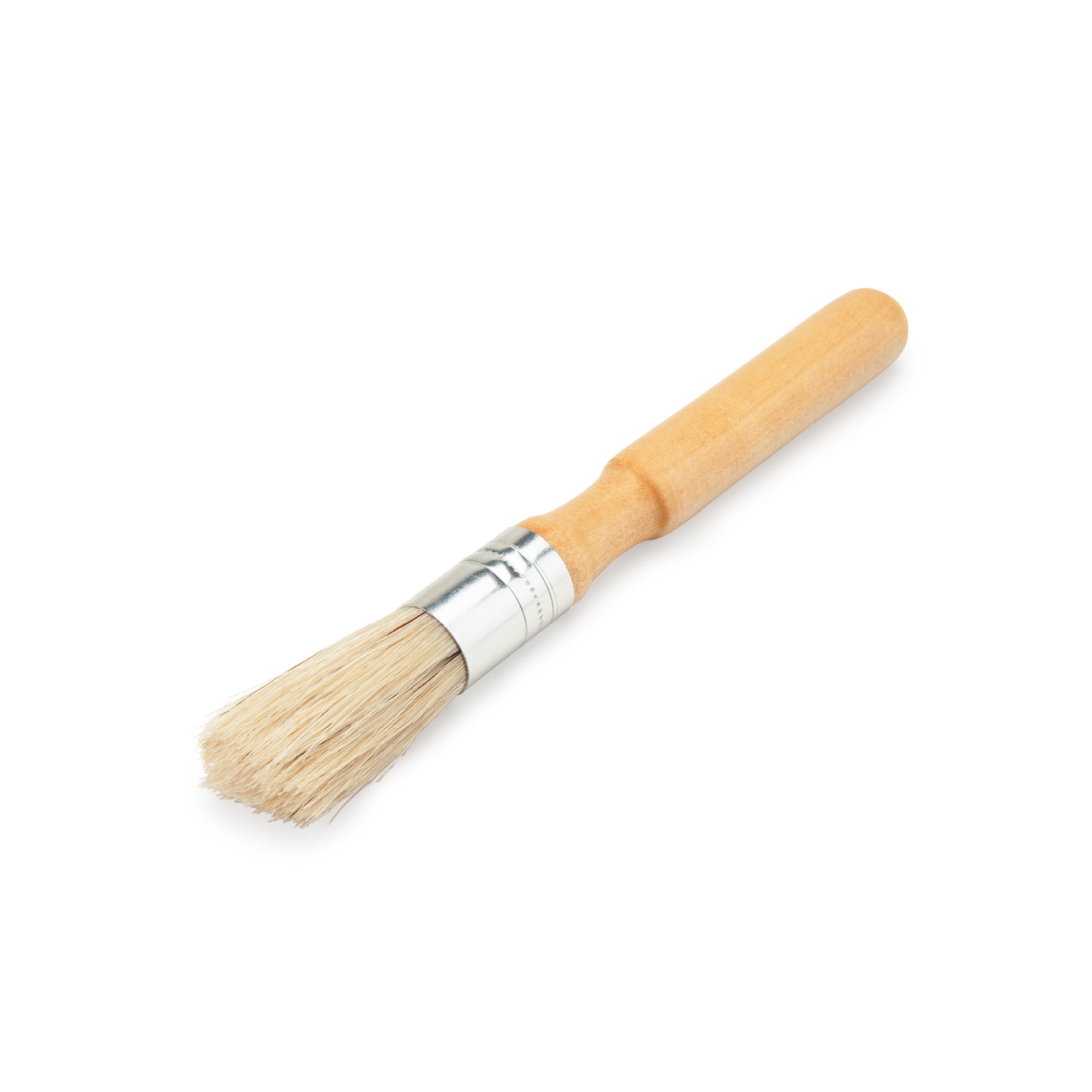
You don't need much. A short list covers ninety percent of the work.
- Espresso machine cleaning powder. A small scoop dissolves in hot water for soaking portafilters and baskets, or for the occasional intensive clean.
- Vinegar-free descaling liquid. Don't be tempted by household vinegar (more on that below). A purpose-made descaler is gentler on seals and gaskets and rinses out cleanly.
- A small nylon brush. For scrubbing the brew head screen, the portafilter basket, and any nooks where grounds collect. Our wooden cleaning brush is designed for exactly this.
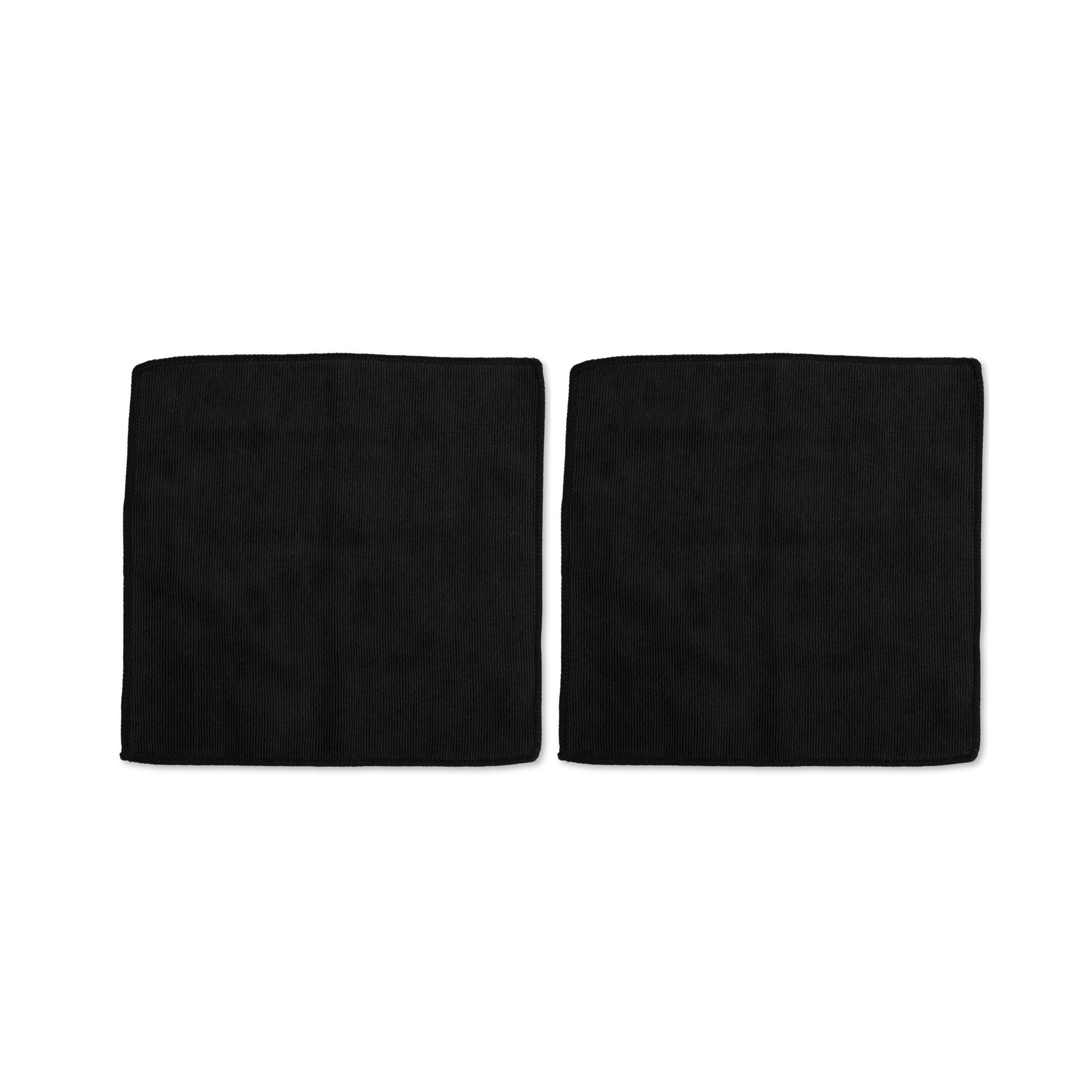
- Microfibre cloths. Two or three. One for the machine body, one for the steam wand, one for drying. Don't use abrasive sponges. We sell a two-pack sized for the job.
- A thin needle or pin. For clearing the tiny holes in your portafilter basket and the steam wand tip when they clog.
- A knock box. Optional but useful - keeps spent grounds out of your sink and your drain trap. Our espresso grounds knock box saves the mess.
Browse the full cleaning and maintenance collection for everything in one place.
Cleaning the 7-Piece EspressoWorks Machine (AEW-1000)
The 7-Piece is our 15-bar machine. Manual control dial, separate grinder, no built-in cleaning programme. The routine is mostly hands-on, with one full descale cycle every few weeks.
After Every Brew
Unplug the machine and let it cool. Loosen the steam wand nozzle, rinse under running water, and wipe the pipe. Detach the steam wand plastic piece, water tank, drip tray, and heating tray. Wash, dry, set aside. Rinse the portafilter and baskets - if the basket holes look clogged, use a needle to pop the grounds out. Wipe down the housing. Don't use alcohol or solvent-based cleaners on the body.
The Deep Clean and Descale Cycle
Every 4-6 weeks in hard water, every 2-3 months in soft, run a full descale. Fill the water tank with descaling liquid and water to the MAX line. Place the frothing cup under the steam wand, control dial on the centre dot. Press ON/OFF, wait for the POWER light to turn red, then for the green READY light. Turn the dial to ESPRESSO and run about two cups through. Back to centre, wait five seconds. When READY goes green again, turn to STEAM for two minutes, then back to centre. Press and hold ON/OFF for three seconds. Wait fifteen minutes. Restart, run ESPRESSO to flush. Fill with fresh water and run three full flushes to clear any descaler residue.
For the full setup and troubleshooting, the 7-Piece FAQ page covers everything. You can also download the user manual for the complete reference.
Cleaning the 10-Piece Set with Its Milk Reservoir (AEW-3000)
The 10-Piece is our 19-bar machine with the integrated milk reservoir. That extra hardware is what lets you press one button for a cappuccino or latte macchiato. It also means there's a quick-clean cycle to run after every milk drink, or you'll have soured milk in the system within a day.
Quick-Clean the Milk Frother After Every Use
The single most important habit on this machine. Fill the milk reservoir with water instead of milk. Fold out the milk nozzle. Press ON/OFF and let it preheat - the control panel flashes while it warms. Place a cup below the milk nozzle. Once the panel stops flashing, press CLEAN. The cycle runs automatically. Pour out the cup when it's done.
The Intensive Clean Cycle
Every few weeks, run the deep cycle. Fill both the water tank and the milk reservoir with water. Fold out the milk nozzle. Press and hold CLEAN for 4-5 seconds - the blue lights will flash. The cycle runs for about fifteen minutes. When CLEAN stays solid, press it again for one second to trigger the second cycle (another five minutes). Two beeps confirm it's done.
When the Yellow Light Comes On
Yellow indicator means it's time to descale. Run the same intensive cycle as above, but with descaling liquid in the water tank instead of plain water. Flush thoroughly with fresh water afterwards - three full tanks is a good benchmark.
If a button or light isn't behaving, the 10-Piece troubleshooting page covers what each indicator means.
Cleaning the 30-Piece Pro and Its Built-In Burr Grinder (AEW-6000)
The 30-Piece Pro is built around an integrated conical burr grinder and a digital LCD display, so it has the most automation of any of our machines. The cleaning programmes are built into the menu and tell you exactly where you are in the cycle.
Daily and Weekly Cleaning
After every use, rinse the portafilter and baskets, wipe the steam wand, wipe the housing. Empty the drip tray. The water tank, bean hopper, and drip tray are hand-wash only - not dishwasher-safe.
Quick Clean and Deep Clean Cycles
Two built-in cycles. The quick clean takes about four minutes. Fill the water tank, press CLEAN within three seconds of turning the machine on, then press START/STOP. The deep clean takes about seven. Fill the water tank, press and hold CLEAN for three seconds until the button flashes, then press START/STOP. The LCD walks you through both.
Cleaning the Built-In Burr Grinder
Once a week if you're using it daily. Rotate the top burr clockwise to unlock and lift it out. Brush the top burr with the included grinder brush. With the top burr removed, brush the lower burr inside the machine - a thin stick pries out any grounds wedged between the blades. Use the other end of the brush to push compacted grounds out of the grinder chute.
Full setup details and button references are in the 30-Piece FAQ page. Download the user manual for the complete cleaning reference.
How and When to Descale Your Espresso Machine

Cleaning and descaling are not the same thing. Cleaning removes coffee residue from the parts you can see. Descaling removes mineral buildup from the parts you can't - the boiler, the pipes, the internal pump.
The schedule: in hard water, descale every 4-6 weeks. In soft water, every 2-3 months. Heavy use shortens both intervals.
Don't use vinegar. This is one of the most common mistakes in home espresso. Vinegar's acetic acid attacks rubber gaskets and silicone seals over repeated use, and the smell lingers in the tubing for weeks. Your next ten espressos will taste like salad dressing. We've had customers ruin perfectly good machines this way.
Use a vinegar-free descaling liquid designed for espresso machines, or food-grade citric acid at one to two tablespoons per quart of water. Both rinse cleanly and won't touch your seals.
Once the cycle finishes, run at least three full tanks of fresh water through the system before brewing another shot. Leftover descaler ruins the next ten drinks faster than limescale would.
One preventive note: filtered water roughly halves how often you'll need to descale. A basic carbon filter on your jug or tap is cheap insurance. Distilled water is the opposite extreme and doesn't work either - some machines need a baseline of minerals to register water properly. Filtered tap is the right answer.
Five Cleaning Mistakes That Wreck Espresso Machines
The five things we see most often when machines come back to us prematurely.
Descaling with vinegar. It bears repeating because it's still the most common cause of seal failure and lingering off-flavours in home machines. Use a proper descaler.
Skipping the steam wand. Milk residue plus warm metal equals bacteria. The wand needs a wipe and a quick steam burst after every milk drink. Not occasionally. Every time.
Using distilled water. Distilled water has had its minerals stripped out. Many machines rely on those minerals to detect water presence and to heat consistently. Filtered tap water is what you want.
Leaving spent grounds in the portafilter. Coffee pucks dry, harden, and bake themselves into the basket holes within an hour. Knock them out the moment your shot finishes.
Ignoring the descale light. That yellow indicator isn't a suggestion. Limescale buildup compounds quickly - the longer you leave it, the harder it is to remove, and the more damage gets done in the meantime.
Frequently Asked Questions
How often should I descale my espresso machine?
Every 4-6 weeks in hard water, every 2-3 months in soft water. If your machine has a yellow descale indicator, treat that as your reliable signal - it's calibrated to your actual usage.
Can I use vinegar to descale?
We strongly recommend against it. Vinegar can damage rubber gaskets and silicone seals, and the smell hangs around in the tubing for weeks. Use a vinegar-free descaling liquid or food-grade citric acid instead.
Why does my espresso suddenly taste bitter?
Usually one of three things: old coffee oils built up in the brew head, clogged portafilter basket holes, or a machine overdue for a descale. Run a full clean cycle first and see if it resolves before you blame the beans.
Can I put my portafilter in the dishwasher?
No. Dishwasher heat and detergent can damage the seals and dull the finish. Hand-wash under hot running water and use a small brush for stuck grounds.
---
The difference between a three-year machine and a ten-year machine isn't the brand on the front or the bars of pressure inside. It's whether someone wiped the steam wand after every milk drink, ran a descale when the light came on, and kept the brew head free of old coffee oil.
None of that takes long. Five minutes a day, fifteen on a weekly clean, half an hour every couple of months for the full descale. Pick the schedule that matches your usage, stock up on the right cleaning supplies, and the next ten years of espresso is yours.