If your mornings run on pod coffee, your first pulled shot is going to taste noticeably different. Richer body, proper crema, a concentrated flavour a pod can't replicate - and you made it yourself.
Here's the honest part: your first shot probably won't be perfect. That's not a problem, it's how espresso works. The variables are specific - grind size, dose, tamp, extraction time - and dialling them in takes a few attempts. Once you understand what each one does, you know exactly what to adjust and why.
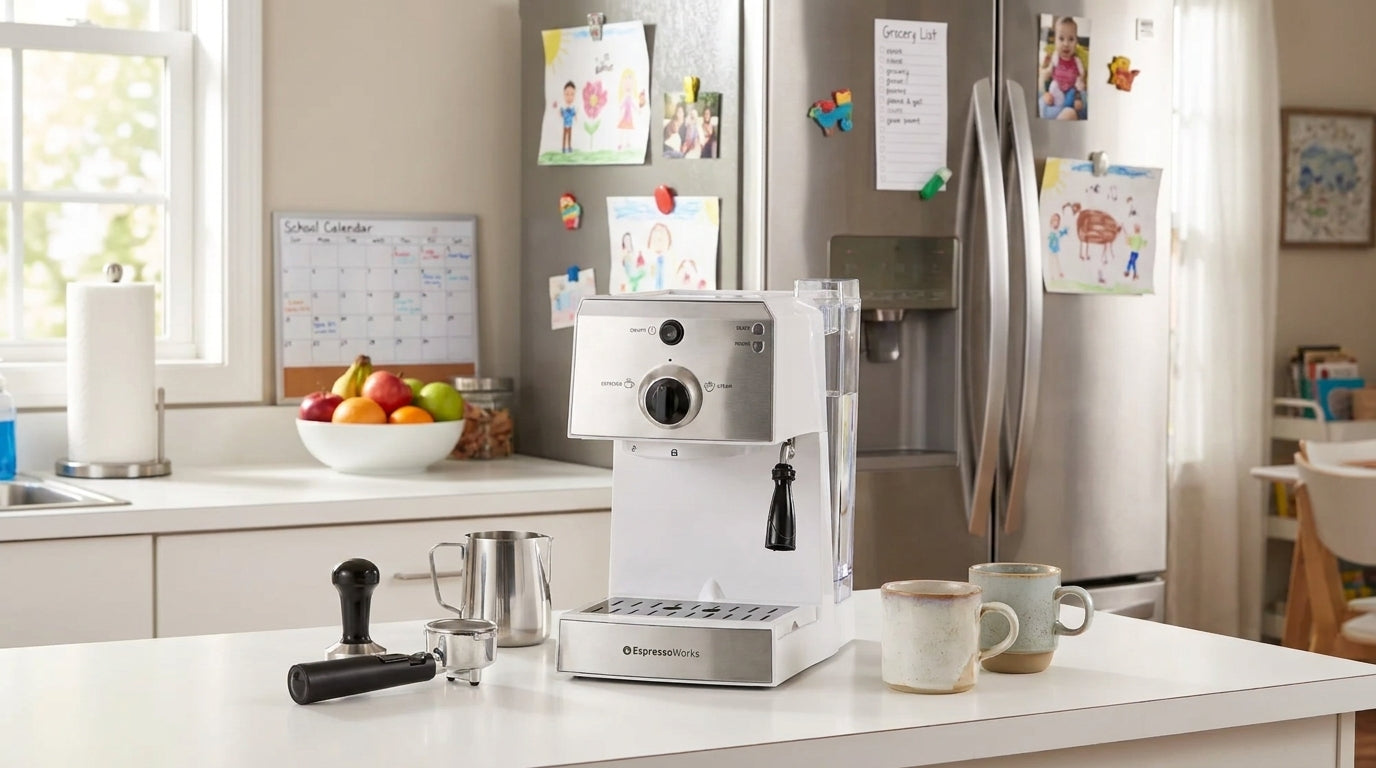
This guide takes you from unboxing to first shot using the EspressoWorks 7-Piece Set as the reference machine. It ships with everything you need: the machine, electric grinder, portafilter, tamper, frothing pitcher, and two ceramic cups. No separate purchases required.
Everything You Need Is Already in the Box
Open the box and everything has a job to do.
The machine runs a 15-bar pump - the same extraction pressure found in commercial café machines. That's what pulls real espresso with a crema layer on top, rather than strong, concentrated coffee. The Advanced Thermoblock System heats to brew temperature in 45 seconds from cold. No long warm-up wait before your first cup of the day.
We include the electric grinder in every set because freshly ground beans make a direct, measurable difference to crema quality and flavour. Pre-ground coffee starts going stale within hours of opening the bag. Grinding fresh, right before you brew, is one of the things that actually separates a good shot from a flat one.
The portafilter is the handled basket that locks into the machine and holds your ground coffee during extraction. It comes with both a single and double shot basket - use the double for everything in this guide. The tamper is what you use to compress those grounds into a firm, level puck before locking in and brewing. The stainless steel frothing pitcher holds the milk you'll steam with the built-in wand once your espresso shot is consistently dialled in.
Grind Size and Dose - Get These Right First

Grind size is where espresso either works or doesn't. Too coarse, and water rushes through without extracting enough flavour - your shot comes out sour and thin. Too fine, and the water struggles to push through, the shot runs bitter or blocks entirely. Learning to adjust grind size is how you fix both problems, and we'll cover the exact steps in the troubleshooting section.
For espresso, aim for fine - the texture of table salt. Not talc-fine powder, and not the coarse, gritty texture you'd use for a pour-over. If you pinch the grounds between your fingers, they should clump slightly and hold their shape.
Start your grinder at a medium-fine setting and adjust one step at a time from there. For a double shot, load 18 grams of ground coffee into the portafilter basket - the included measuring spoon gets you close enough to start. Once you have a kitchen scale, weighing your dose to the gram is the fastest way to pull a consistent shot every time. Small grind adjustments make a bigger difference than you'd expect, so change by one step and pull another shot before adjusting again. Give the machine a moment between back-to-back shots too - the Thermoblock needs a few seconds to restabilise at brew temperature before the next extraction.
One less thing to manage: espresso extracts best at around 93°C / 200°F, and the machine handles that automatically. If your tap water is heavily chlorinated, filtered water is worth trying - flat-tasting water produces flat-tasting espresso.
How to Tamp Correctly (And How Hard Is Hard Enough)

Once your 18 grams are in the basket, you're ready to tamp. This step compresses the grounds into a firm, even puck - and that puck controls exactly how water flows through during extraction. An uneven puck channels water through the gaps and bypasses sections of the grounds entirely. The result is an uneven extraction, no matter how dialled-in your grind is.
The technique: rest the portafilter on a flat, stable surface. Place the tamper flat across the top of the grounds - no angle, no rocking. Press straight down, then give a slight twist at the end to polish the surface smooth. That's the whole motion.
Aim for around 30 lbs of pressure - roughly the force of a slow, controlled press-up. Here's the thing about tamping: more force doesn't produce better espresso. Levelness and consistency do. A level tamp at 20 lbs outperforms a hard, lopsided one every time. Focus on keeping the tamper flat, not on pressing harder. We've written a full guide to tamping technique if you want to go deeper, including the bathroom scale calibration method.
The included tamper is sized to fit the portafilter. No separate purchase, no guesswork.
Pulling Your First Shot - What to Watch For
Lock the portafilter into the machine and press the brew button. The 15-bar pump takes over from here.
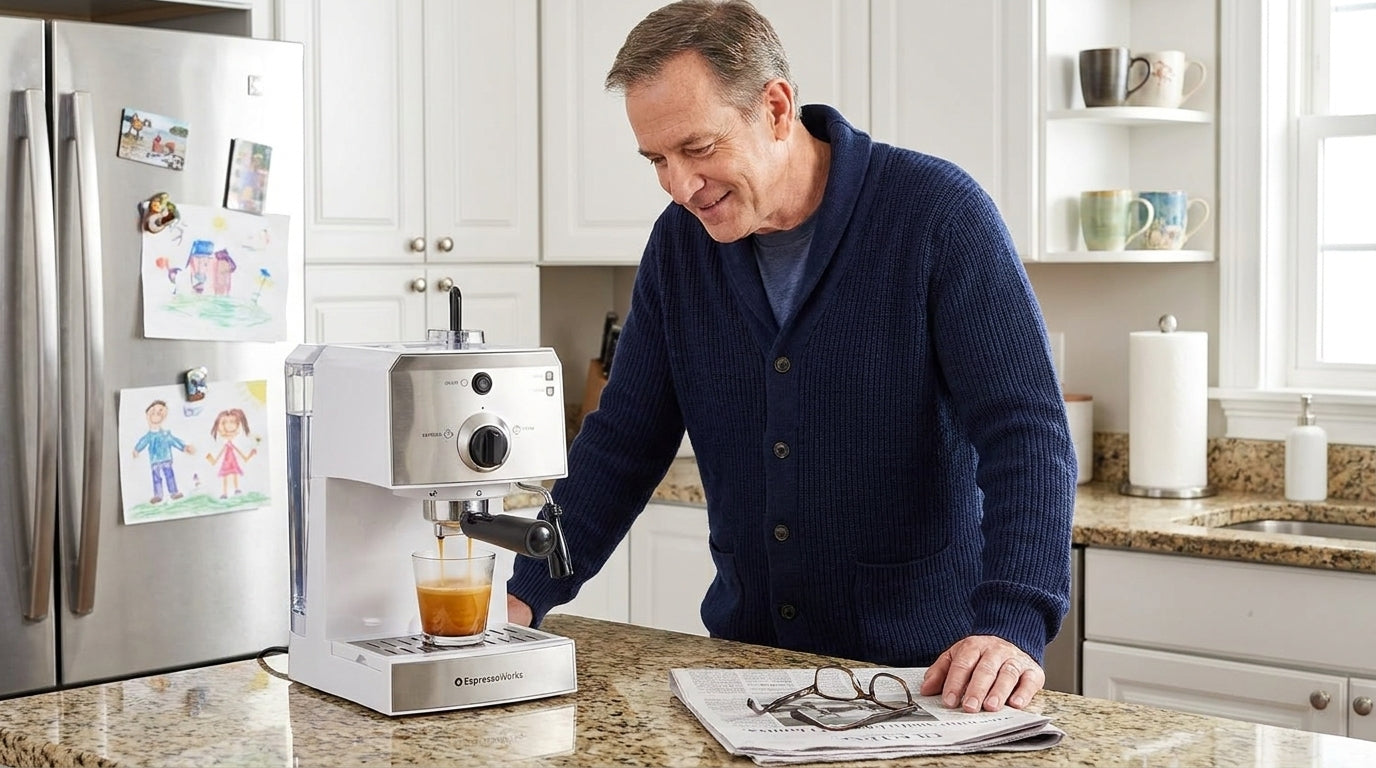
Watch the stream as it starts. A well-extracting shot begins almost black and thick, then gradually brightens into a warm amber-brown as the extraction progresses. That colour transition is what you're looking for. From first drop to full cup, the shot should take 25-30 seconds and yield around 60ml.
Once it's in the cup, check the surface. Good crema is reddish-brown and often tiger-striped - darker lines running through the foam. It sits 3-5mm thick and holds its shape rather than dissolving in the first few seconds. That layer tells you the extraction worked.
If the shot runs in under 20 seconds, the water moved too fast - grind finer or add a gram to your dose. If it takes over 35 seconds to reach 60ml, the water is struggling through - grind coarser or reduce your dose slightly. One adjustment at a time.
Your first shot probably won't hit all those numbers at once. That's not failure, it's how espresso works. Most people pull a consistent, crema-topped shot within 3-5 attempts once they know which variable to change - and the next section walks you through exactly that.
Why Your Espresso Tastes Sour or Bitter (And How to Fix It)
Every bad shot has a cause, and every cause is fixable. Before adjusting anything, set one rule for yourself: change one variable per shot. Adjust grind size and dose at the same time, and you won't know which one made the difference.
Sour shot means under-extraction - water moved through too fast and didn't pull enough flavour. Grind one step finer and pull another shot. Still sour? Add 1-2 grams to your dose and try again. If sourness persists after both adjustments, check your tamp - an uneven puck lets water channel through gaps before it's had time to extract properly.
Bitter shot means over-extraction - water sat too long and pulled harsh compounds. Start by grinding one step coarser. Still bitter? Reduce your dose by 1-2 grams. If the bitterness continues, check your extraction time - it should land in the 25-30 second window. A shot running past 35 seconds is almost always over-extracting.
Thin or weak crema is most often a grind issue (too coarse) or a bean freshness problem - beans that are too old or too freshly roasted both produce weak foam. No crema at all usually points to pre-ground, stale coffee. That's exactly why we include the grinder in every set. Freshly ground beans make the difference you can see on the surface of every shot.
Your First Milk Drink Once the Shot Is Dialled In
Once your shot is consistently landing in the 25-30 second window, the steam wand is the natural next step. Cappuccinos, lattes, and flat whites all start from the same place.
Cappuccino: 1 shot, plus roughly equal parts steamed and frothed milk - around 60ml of each. Short, concentrated, with a thick foam layer on top.
Latte: 1-2 shots, plus around 120ml of steamed milk and a thin layer of microfoam across the surface. Bigger and milkier, with the espresso coming through rather than dominating.
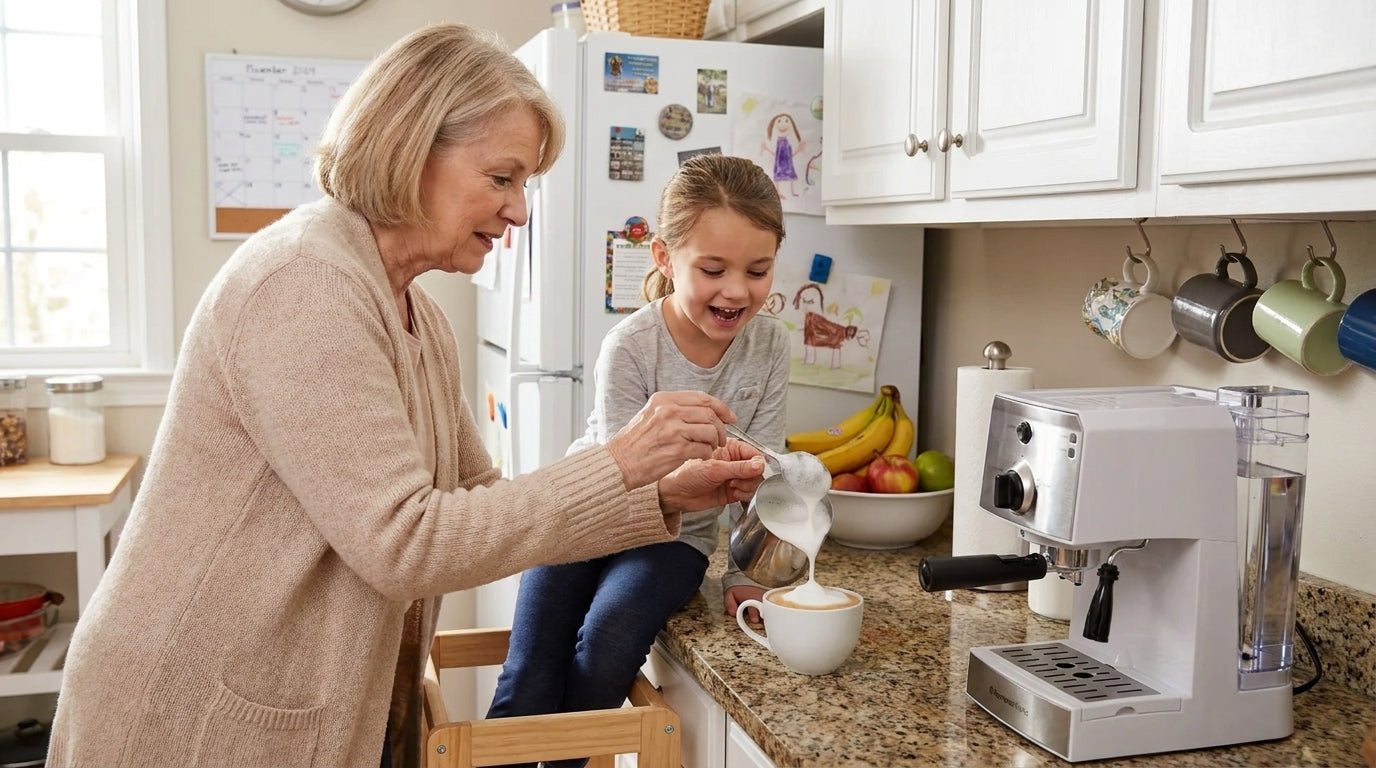
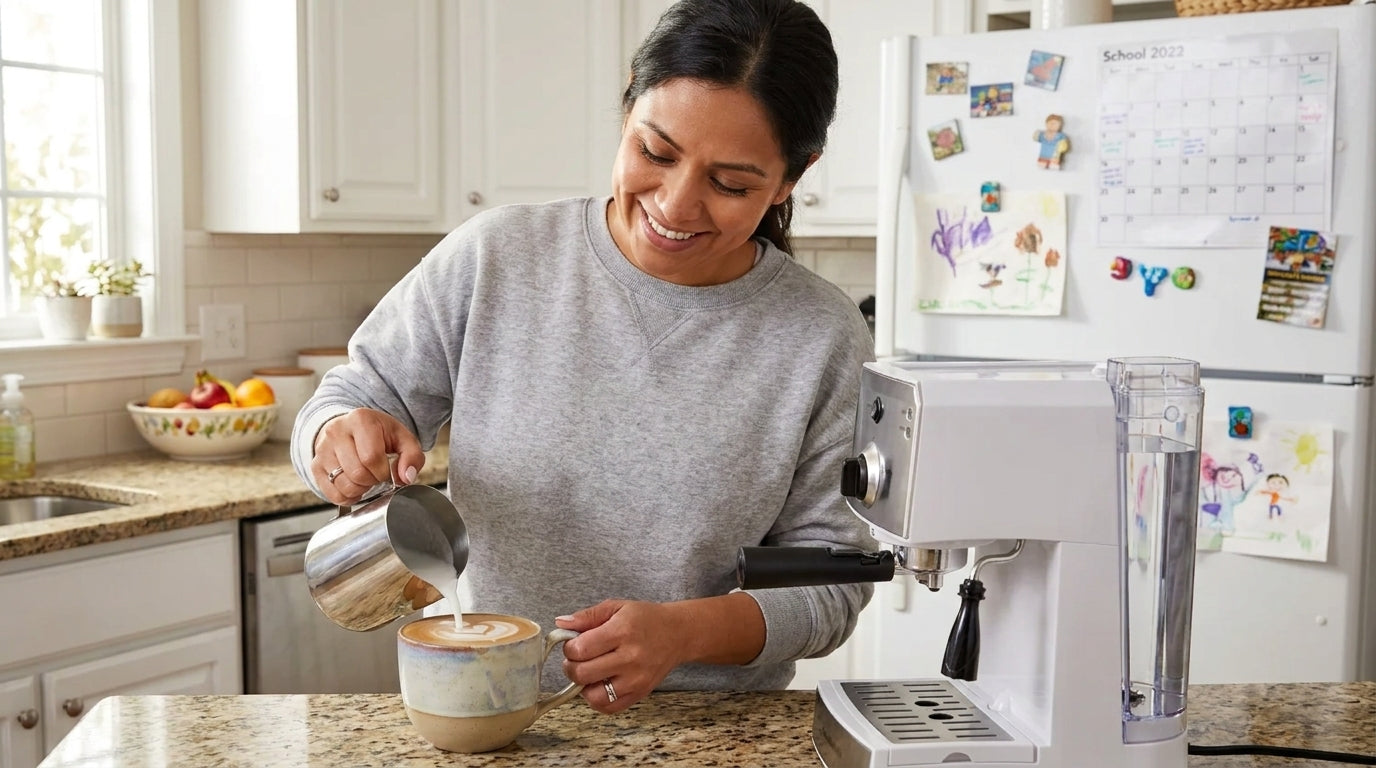
For both drinks, the technique is the same: fill the stainless steel pitcher with cold milk, submerge the steam wand tip just below the surface, and angle the pitcher slightly so the milk moves in a slow circular motion as it heats. Aim for around 65°C / 150°F - hot enough to feel it through the pitcher walls, but not scalding. The included pitcher is sized for single drinks, which makes it easier to control the steam while you're learning the motion.
Here's the reassuring part: milk is forgiving. Even foam that doesn't look perfect tastes good poured over a well-pulled shot. Focus on the espresso first. The milk follows.
Frequently Asked Questions
How much coffee goes into one espresso shot?
A single shot takes around 9 grams; a double takes 18 grams. This guide uses the double throughout - 18 grams in the double shot basket. The included measuring spoon gets you close, and a kitchen scale locks it in precisely.
How do I know when my shot is done?
Watch the clock and the cup. A double shot extracts in 25-30 seconds and yields around 60ml. When the stream turns pale and watery, the extraction is finished.
Why isn't my crema thick?
The three most common causes: grind too coarse, beans that are too old or too freshly roasted, or a dose under 18 grams. Grind finer first and confirm your dose before changing anything else.
How hard should I tamp?
Around 30 lbs - roughly the pressure of a slow press-up. Levelness matters more than force: an uneven tamp channels water through the gaps and wrecks extraction faster than light pressure ever will.
Can I use pre-ground coffee?
Yes, the machine will pull a shot. That said, pre-ground coffee goes stale within hours of opening the bag - and because espresso requires a fine grind, the grounds oxidise faster than they would for filter or French press. Stale grounds are the single most common reason for flat, pale, or absent crema. The grinder is included in every set specifically because freshly ground beans make a direct, measurable difference.
Do I need to use filtered water?
Tap water works in most areas. If your shots taste flat despite a dialled-in grind and dose, heavily chlorinated water could be the cause. Filtered water is a quick variable to rule out.
---
Four variables. Grind fine, dose 18 grams, tamp level, extract in 25-30 seconds. Get those right consistently, and everything else follows.
Most people pull a dialled-in shot within 3-5 attempts - not because espresso is simple, but because once you understand what each variable does, you know exactly which one to change. Bad shots stop being frustrating. They become information.
The 7-Piece Set ships with every piece of equipment this guide covers - grinder, portafilter, tamper, and frothing pitcher included. Once your shot is landing consistently, the steam wand is the natural next step. A cappuccino is two minutes away. Start with the shot. The rest follows quickly.