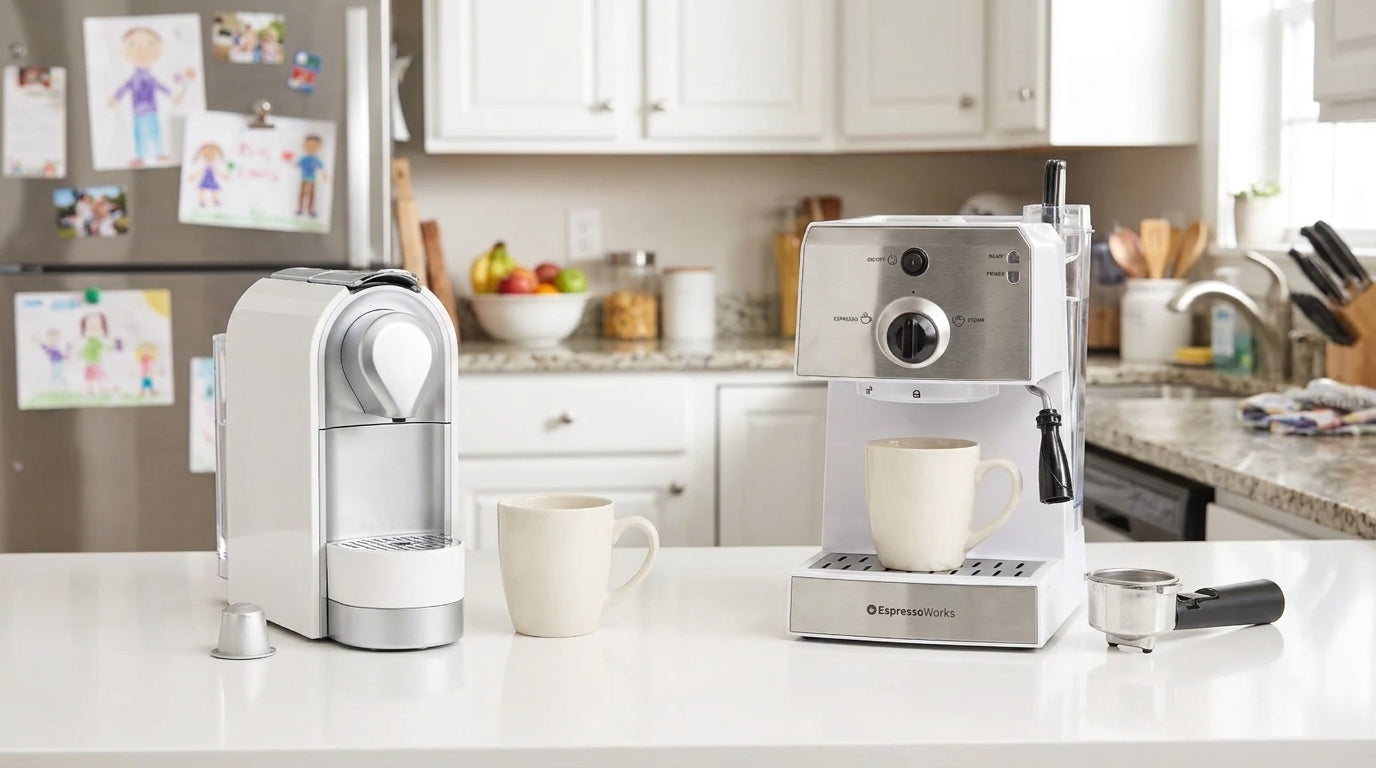
Nespresso works. Pod in, button pressed, espresso-style coffee in about 30 seconds - no grinding, no tamping, no mess. For low-effort mornings and offices full of people with different tastes, that consistency is genuinely hard to argue with.
Here's the question worth asking, though: is it the best coffee you could be making, for what you're spending? Because those two things - convenience and quality - don't have to be as far apart as you might think.
This article covers the real cost per cup over 12 months, what the taste difference actually feels like side by side, the environmental footprint of single-use capsules, and how easy it is to switch to a real espresso machine without a steep learning curve.
What Nespresso Gets Right
The zero learning curve is real. There are no grind settings to adjust, no tamping pressure to get right, no extraction time to monitor. You pick a capsule, press a button, and get the same result every single time. That predictability has genuine value - particularly on a Tuesday morning at 6am when decision fatigue is already real.
The machine footprint is compact, and the setup is complete in one purchase. No separate grinder taking up counter space, no accessories to track down.
Shot-to-shot consistency is also worth crediting. With a Nespresso, you don't get bad cups. You get the same cup, reliably, every morning. For households where multiple people with different coffee habits share one machine, that's a real advantage.
The capsule catalogue is broader than most people expect - dozens of blends across the Original and Vertuo lines, covering everything from a sharp ristretto to something longer and more mellow.
For low-effort mornings and office kitchens, it's a strong system. Where it starts to cost you - literally and in the cup - is what the next few sections cover.
Is Nespresso Actually Real Espresso

The short answer: not quite.
Espresso has a technical definition - extraction under pressure, minimum 9 bars, typically 15 bars in home machines. That pressure forces hot water through finely ground coffee in 25-30 seconds, producing a concentrated shot with a thick, stable crema layer on top.
Nespresso machines generate high pressure on paper, but the pod system removes most of what that pressure is actually for. Grind size, dose, and tamp are fixed inside the capsule. There's no extraction control, and no way to adjust for the bean, the roast, or your preference. The pressure is there; the variables that let you use it aren't.
Freshness is the other piece. Nespresso pods use pre-ground, nitrogen-sealed coffee - which extends shelf life significantly, but doesn't match the flavour that comes from beans ground minutes before extraction. Ground coffee loses aromatic compounds fast. A nitrogen seal slows that process rather than solving it.
In the cup, the result is espresso-style - stronger than filter, with some crema - but with lighter body and less flavour complexity than a shot pulled through fresh grounds. That's not a taste preference. It's what the extraction physics produces.
The 15-bar pump in every EspressoWorks machine extracts through freshly ground coffee - the same pressure standard used in commercial café machines, applied to beans you've ground seconds earlier. That combination is what produces a thick, stable crema and the kind of full-bodied shot that a sealed capsule can't replicate.
The Cost Per Cup Over 12 Months
The taste argument matters. The cost argument is harder to ignore.
Nespresso Original pods cost between $0.70 and $1.10 each. Vertuo pods push higher. Fresh-ground espresso beans sit at $0.15 to $0.25 per double shot, depending on the beans you buy. At two cups a day, the gap is significant.
| Nespresso pods | Fresh-ground espresso | |
|---|---|---|
| Cost per cup | $0.70-$1.10 | $0.15-$0.25 |
| 2 cups/day, 12 months | $511-$803/year | $109-$182/year |
| Equipment needed | Nespresso machine + pods | EspressoWorks set (grinder included) |
The annual difference: between $330 and $690 per year, depending on which pods you're buying and which beans you switch to.
The 7-Piece Set costs $199.99 and includes the grinder, so there's no separate purchase before your first shot. At two cups a day, the machine pays for itself in roughly 4-8 months. After that break-even point, the savings are yours to keep.
Year one: After subtracting the $199.99 machine cost, you finish $130-$490 ahead of where you'd be on pods.
Year two and beyond: The full $330-$690 in annual savings, every year.
The numbers don't improve for pods over time. They compound against you. If you're curious about the other ways making coffee at home saves money beyond the pod comparison, we've broken that down separately.
What the Taste Difference Actually Feels Like
Numbers aside, this is what people notice first.
The body is different. A shot pulled through freshly ground beans has a weight and thickness in the mouth that pod espresso doesn't produce. You feel it on your tongue - a roundness and density that stays with you after you swallow. Pod shots are thinner, cleaner, and flatter by comparison. Not bad, but noticeably lighter.
The crema tells you something too. A properly extracted espresso produces a thick, golden-brown crema that holds for a minute or more. Pod crema is lighter in colour, thinner, and disappears faster. That's because the crema's richness comes from fresh CO2 in recently roasted, recently ground coffee - two things a sealed capsule has less of by design.
Then there's flavour complexity. Freshly ground coffee gives you the full range of what the bean has to offer - bright acidity, deep chocolate notes, fruity undertones, a sweet finish. Pod coffee delivers the middle of that range reliably, but the top and bottom notes fade in pre-ground, sealed coffee. You get consistency. You lose character.
Put simply: the first espresso most people pull on an EspressoWorks machine won't be their best. The second or third will be better. By day five, they're making something that tastes noticeably richer, more complex, and more satisfying than any pod they've had. That's not marketing - that's the physics of fresh extraction.
Milk Drinks, Customisation, and What You Can Actually Make
This is where the gap widens fast.
A standard Nespresso machine makes espresso-style shots and lungo. That's it. For milk drinks, you need a separate frother - the Aeroccino runs $80-$100, or you can buy a Nespresso model with one built in at a higher price point. Even then, the frother heats and froths milk in one mode. You get foam. You don't get control over texture.
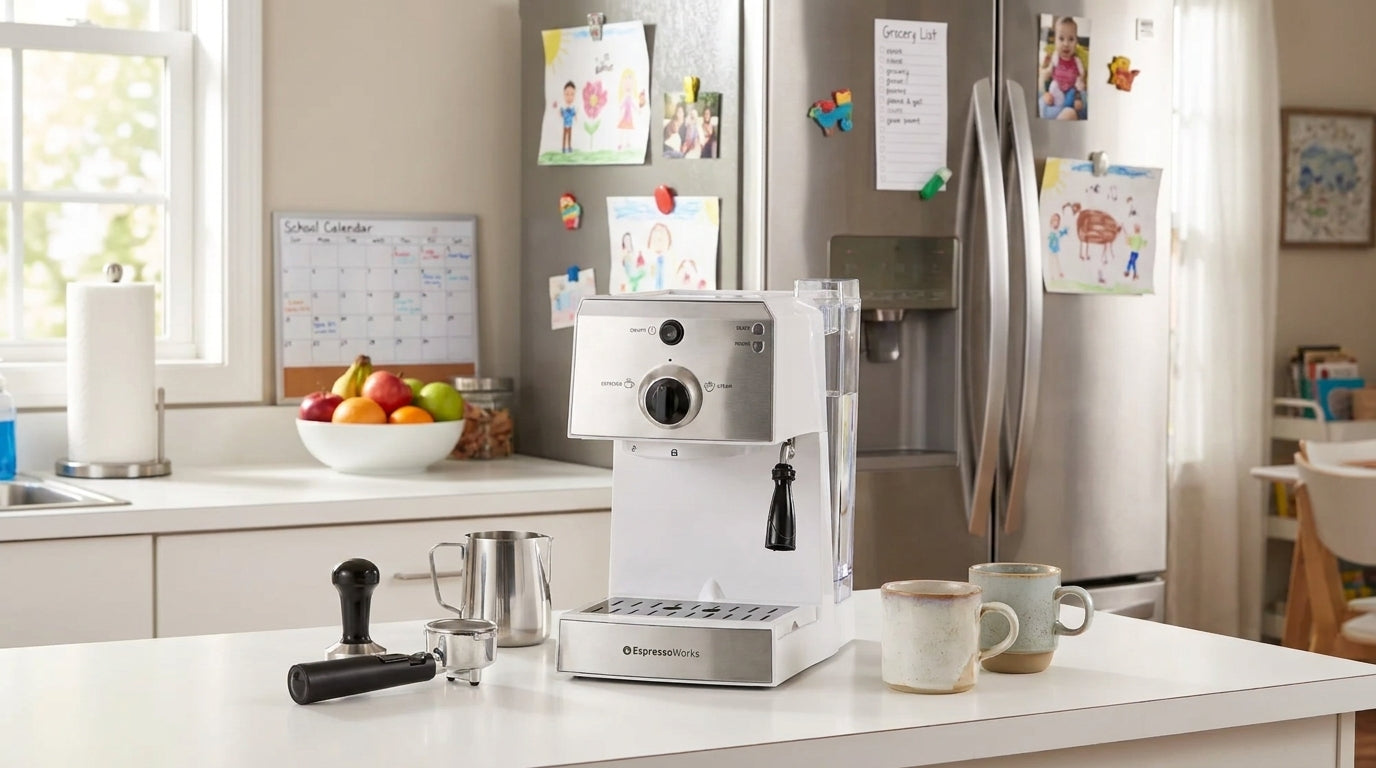
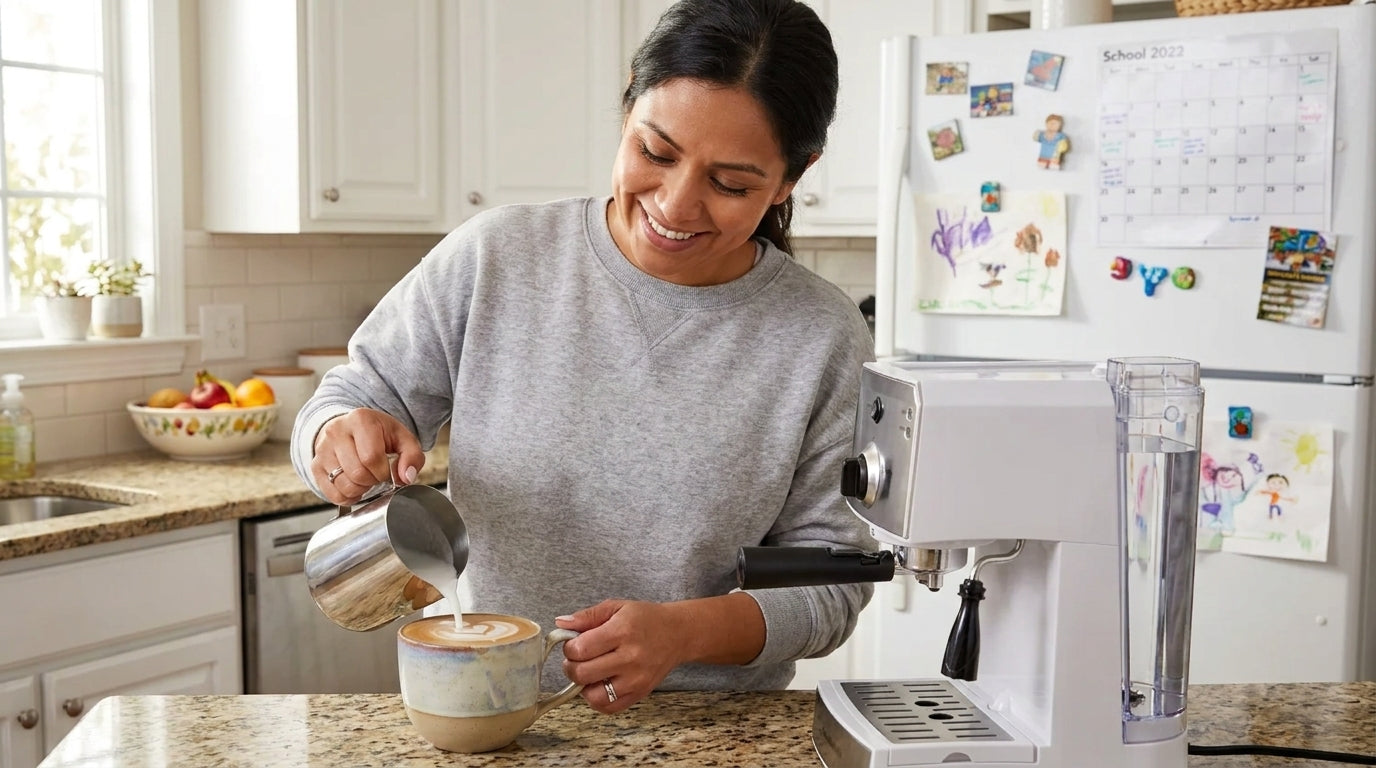
Every EspressoWorks machine ships with a built-in steam wand. That means you're making lattes, cappuccinos, and flat whites from day one, with full control over foam density and milk texture. Thick, dry foam for a cappuccino. Silky microfoam for a flat white. Hot chocolate. Anything that involves heated, textured milk.
Then there's grind control. With pods, every variable is locked inside the capsule. With an espresso machine and grinder, you adjust the grind size to change the extraction. Finer for a more intense, concentrated shot. Coarser for something lighter. Different beans, different roasts, different results - all controlled by you. That flexibility is the difference between drinking what someone else decided you should taste and dialling in exactly what you want.
The Environmental Cost of Pod Coffee
The convenience of single-serve comes with a waste problem.
Each Nespresso pod is a single-use aluminium or plastic capsule. Nespresso runs a recycling programme, and the aluminium pods are technically recyclable - but participation rates are low. Most pods end up in general waste, where aluminium takes over 200 years to decompose and the plastic components take longer.
The scale matters. Billions of coffee pods are sold globally each year. Even with improved recycling access, the volume of single-use packaging per cup of coffee is hard to justify when the alternative is a bag of beans and a compost bin.
With whole bean espresso, your waste is coffee grounds (compostable, and useful in gardens) and a paper or foil bag every two to three weeks. No single-use capsule per drink. No recycling programme to opt into. The environmental cost per cup drops to close to zero packaging waste.
This isn't the only reason to switch, but for buyers who factor environmental impact into purchasing decisions, it's a meaningful one.
How to Switch From Nespresso Without the Learning Curve

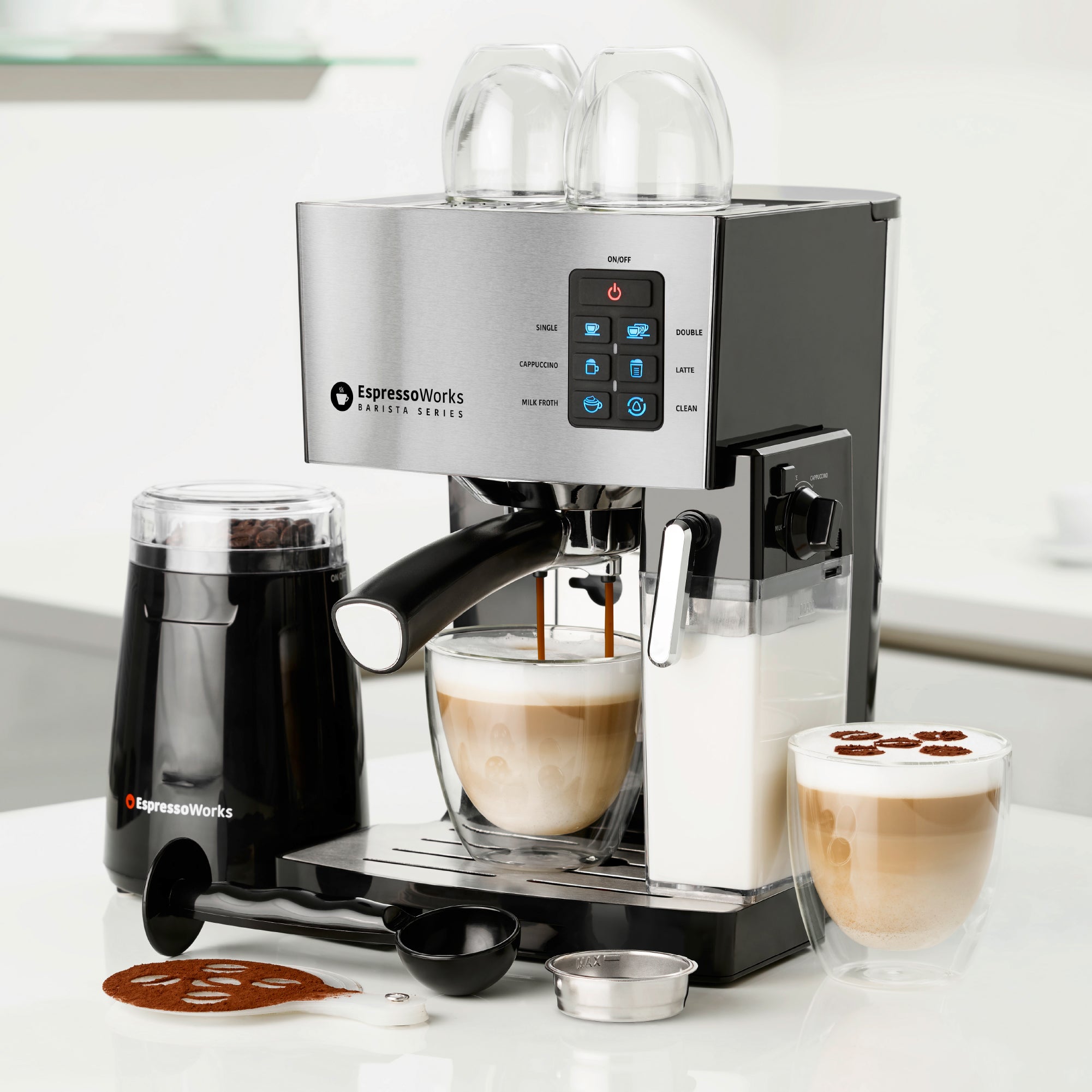
The most common concern we hear: "I like how easy Nespresso is. Won't a real espresso machine be complicated?"
The short answer: the learning curve is days, not weeks.
Here's what the switch actually looks like. You open the box. Everything's inside - machine, grinder, portafilter, frothing pitcher, cups, tamper. The Advanced Thermoblock heats to brew temperature in 45 seconds, which is comparable to a pod machine's warm-up. The daily process is: grind, tamp, lock, press. That's four steps versus Nespresso's two (pod in, press button).
Those extra two steps take about 30 seconds. What they give you is control over your grind, your dose, and your extraction - which is where all the flavour differences we covered above come from.
Your first shot might not be perfect. Your grind might be slightly too coarse or too fine, and your tamp pressure will take a session or two to feel consistent. That's normal. By your third or fourth morning, the muscle memory settles in and the process feels natural. By the end of the first week, most people have their grind dialled in and are pulling shots they prefer to any pod they've tried.
One thing that doesn't change: the 45-second heat-up. You still walk into the kitchen, press a button, and the machine is ready before you've finished getting the milk out.
Frequently Asked Questions
Is Nespresso real espresso?
Not technically. Espresso requires extraction under pressure through freshly ground coffee, with control over grind size, dose, and tamp. Nespresso produces espresso-style coffee - stronger than filter, with some crema - but the fixed variables inside the pod limit the body, complexity, and crema quality compared to a properly extracted shot.
How much will I save switching from Nespresso to an espresso machine?
At two cups a day, between $330 and $690 per year in bean savings alone. The 7-Piece Set costs $199.99 and pays for itself in 4-8 months. After that, the full annual savings are yours.
Is an espresso machine harder to use than Nespresso?
Two extra steps: grinding and tamping. That adds about 30 seconds to the process. The EspressoWorks Thermoblock heats in 45 seconds - comparable to a pod machine. Most people have the routine down within three to four mornings.
Can I make lattes and cappuccinos with Nespresso?
Not without a separate milk frother (the Aeroccino runs $80-$100). Every EspressoWorks machine has a built-in steam wand, so lattes, cappuccinos, flat whites, and hot chocolate are included from day one.
Are Nespresso pods recyclable?
Nespresso's aluminium pods are technically recyclable through their own programme, but participation rates are low and most pods end up in landfill. Whole bean espresso produces compostable grounds and minimal packaging waste.
What's the best espresso machine to replace a Nespresso?
The 7-Piece Set at $199.99 is the direct replacement. It includes everything - machine, grinder, portafilter, pitcher, cups, and tamper - and heats in 45 seconds. Same convenience, better coffee, lower cost per cup. Browse all our espresso machines to compare the full range.
---
Nespresso is a good system. It's consistent, it's compact, and it's effortless. If those three things are all that matter, keep using it.
But if you're spending $500-$800 a year on pods, if you've noticed the flavour ceiling, or if you want milk drinks without buying a separate frother - the maths and the coffee both point the same direction. The 7-Piece Set costs $199.99, includes everything you need, and pays for itself within months. You'll pull better shots, make drinks a pod machine can't, and spend less doing it.
That's the whole comparison. The rest is up to you.