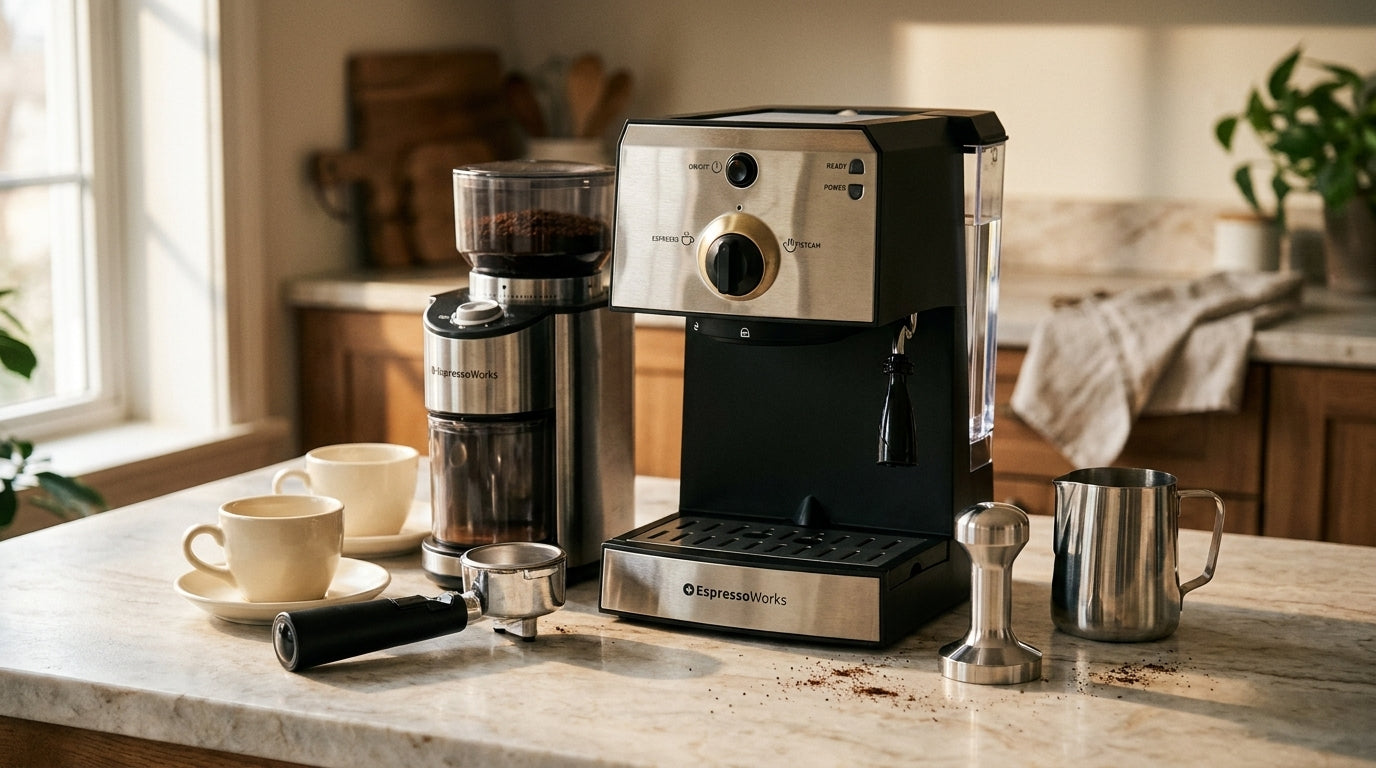


An espresso martini is one of the few cocktails where the coffee quality is the whole game. Fresh espresso gives you a thick foam layer, a clean bitter edge, and a drink with real depth. Instant or cold brew gives you something flat - the foam doesn't form without the CO2 and dissolved oils that come from a freshly pulled shot.
The classic 3-ingredient recipe is below - exact ratios in both ml and oz, the shaking technique that builds the foam, three variations worth making, and a batch method for serving rounds at a party without losing quality.
The Classic Espresso Martini Recipe
Ingredients (makes 1 cocktail)
- 50ml (1¾ oz) vodka
- 25ml (¾ oz) Kahlúa or coffee liqueur
- 30ml (1 oz) freshly pulled espresso - 1 standard shot, cooled for 1-2 minutes
- Plenty of ice (fill your shaker two-thirds full)
- Optional: 10ml (⅓ oz) simple syrup
You'll also need
- Cocktail shaker
- Hawthorne strainer and fine mesh sieve
- Coupe or martini glass, chilled for 5 minutes in the freezer before you start
These ratios keep the espresso front and centre. The vodka at 50ml gives the drink its backbone without smothering the coffee. Kahlúa is the standard choice for coffee liqueur - smooth, syrupy, and widely available. The simple syrup is optional. Try it without first. Most people find the Kahlúa adds enough sweetness on its own.
One practical note before you start: pull your espresso shot and give it 1-2 minutes to cool. Piping hot espresso melts the ice too fast and dilutes the drink before you've even shaken it. It doesn't need to be cold - room temperature is the target. If you want to dial in the shot itself, we've covered that separately.
How to Make an Espresso Martini at Home

Your glass is chilling. Your shot is pulled and cooling. Here's the technique from first shake to final garnish.
Shake It Hard and Fast
Fill your shaker two-thirds full with ice - the volume matters, don't be light-handed. Add the vodka first, then the Kahlúa, then the espresso last. Seal and shake as hard as you can for a full 15-20 seconds. You're looking for two physical cues: the outside of the shaker should feel ice cold in your hands, and condensation should form on the surface. Both tell you the drink is properly chilled and ready to strain. Short-shaking is the most common mistake and it shows up directly in the foam.
Pour and Strain
Fit the Hawthorne strainer onto the shaker, hold a fine mesh sieve over your chilled glass, and pour everything through both in one steady, uninterrupted motion. The double-strain catches any ice chips and keeps the foam clean. Don't stop mid-pour. Pausing breaks the foam layer before it has a chance to settle - you lose the thick, crema-like top entirely. One motion, start to finish.
The Three-Bean Garnish
Float three espresso beans on the foam in a triangle. Tradition holds the three beans represent health, wealth, and happiness. Place them on gently by hand, or rest them on a spoon and lower them onto the surface. Dropping from height sends them straight through the foam - and the foam is the first thing everyone sees when the glass hits the table.
Why Fresh Espresso Makes a Better Martini
The foam isn't magic. Fresh espresso contains dissolved CO2 - when you shake it hard with ice, that CO2 gets agitated and trapped in the liquid, building the thick crema-like surface on top. Instant coffee has none of it: no CO2, no dissolved oils, no crema. Shake it for 20 seconds and you pour a flat drink.
Cold brew is a more understandable swap. It's smoother and less acidic than a pulled shot, but extracted cold and slow - which strips out the volatile compounds that form crema. The foam will be noticeably thinner.
Temperature matters too. Pull the shot hot, let it cool for 1-2 minutes, then add it to the shaker. Piping hot espresso melts the ice before the shake can properly chill and aerate the drink - and you end up with a diluted cocktail regardless of how hard you shake.
Every EspressoWorks espresso machine pulls the 30ml shot this recipe is built around. The Thermoblock heats in under a minute, so the machine is ready before the vodka is measured.
Three Espresso Martini Variations Worth Making
Get the classic right first. Once you have it, these three variations are worth adding to the repertoire - same shaking method throughout, different character in the glass.
Salted Caramel Espresso Martini
Swap the Kahlúa for a salted caramel liqueur - Stolichnaya Salted Karamel works well here - or keep the Kahlúa and add 10ml of caramel syrup with a pinch of sea salt. Everything else stays the same. The result is sweet and buttery, with the salt cutting through the richness rather than disappearing into it. Optional: rim the glass with flaked sea salt before you pour.
Vanilla Espresso Martini
Add 10ml of vanilla simple syrup or 2-3 drops of vanilla extract to the classic recipe, or swap regular vodka for vanilla vodka. Either way, the vanilla rounds out the espresso's bitterness and adds warmth to the finish. It works especially well with a darker, chocolatey roast - the vanilla and roast character reinforce each other.
Irish Espresso Martini
Replace 25ml of the vodka with Baileys Irish Cream. Keep the Kahlúa and the espresso unchanged. The drink becomes creamier and sweeter, with less of the sharp edge the classic carries. Practical upside: the Irish cream adds body to the shake, so the foam layer tends to be slightly thicker and more stable than the standard version.
How to Batch-Make Espresso Martinis for a Party
Serving rounds at a party doesn't require making each drink from scratch. For 8 people, scale up to 400ml vodka, 200ml Kahlúa, and 240ml freshly pulled espresso. Halve it for 4, or multiply by 1.5 for 12.
One rule applies at every size: don't add the espresso to the batch in advance. Pre-mix the vodka and Kahlúa in a sealed pitcher the night before and refrigerate it - that combination holds for up to 3 days without any loss of quality. The espresso is different. The dissolved CO2 that drives the foam dissipates once the shot sits in liquid. Mix it in early and the foam is gone before the shaker comes out. Add the cooled espresso to the pre-batch just before the first round of drinks.
On the day, pull your espresso shots and let them cool to room temperature - about 10 minutes on the counter works. Even with the base batch ready, shake 2-3 portions at a time rather than filling the shaker completely. Over-filling reduces the agitation that builds the foam.
EspressoWorks machines handle sequential shots without a long wait between them. The Thermoblock reheats in under a minute, so pulling 8-10 shots back to back takes a few minutes. Cool them together in a jug, add to the batch, and the round is ready to shake. An espresso measuring glass helps you keep the volumes consistent across multiple shots.
Frequently Asked Questions
Can I use cold brew or instant coffee instead of espresso?
Instant coffee produces a flat drink - no CO2 means no foam, regardless of how hard you shake. Cold brew is a closer substitute but the foam will be noticeably thinner.
How do I get the foam on top?
The foam comes from dissolved CO2 in the espresso, released and trapped by a hard shake. Fill the shaker two-thirds with ice, shake for 15-20 seconds until the outside is cold and frosty, and strain in one uninterrupted pour. Stopping mid-pour breaks the foam before it has a chance to set.
What's the best vodka for an espresso martini?
A neutral, clean vodka is the right call for the classic recipe - one that supports the espresso and Kahlúa rather than competing with them. Tito's, Ketel One, and Grey Goose all fit that profile. Avoid heavily flavoured or harsh vodkas - they pull the drink away from the coffee. That said, if you're making the vanilla or salted caramel variation, vanilla vodka or a flavoured spirit makes sense there.
Can I make espresso martinis ahead of time?
Pre-batch the vodka and Kahlúa up to 3 days ahead and keep it refrigerated. Add fresh espresso shots only when you're ready to shake - pre-mixing the espresso dissipates the CO2 and kills the foam.
What glass should I use?
A coupe or martini glass, chilled in the freezer for at least 5 minutes before you pour. The wide rim shows off the foam layer and helps it hold its shape. A warm glass collapses it quickly.
---
The recipe is three ingredients, a hard shake with plenty of ice, a chilled glass, and three beans pressed gently onto the foam. None of that is complicated. The part that makes the real difference is the shot.
Fresh espresso, pulled hot and cooled for a minute or two before it goes in the shaker, is what separates a drink with a thick crema-like foam from one that comes out flat. Every EspressoWorks machine set ships with a grinder, so you're pulling fresh grounds from the day the box arrives. Start with the classic. The variations and the batch recipe are there when you're ready for them.