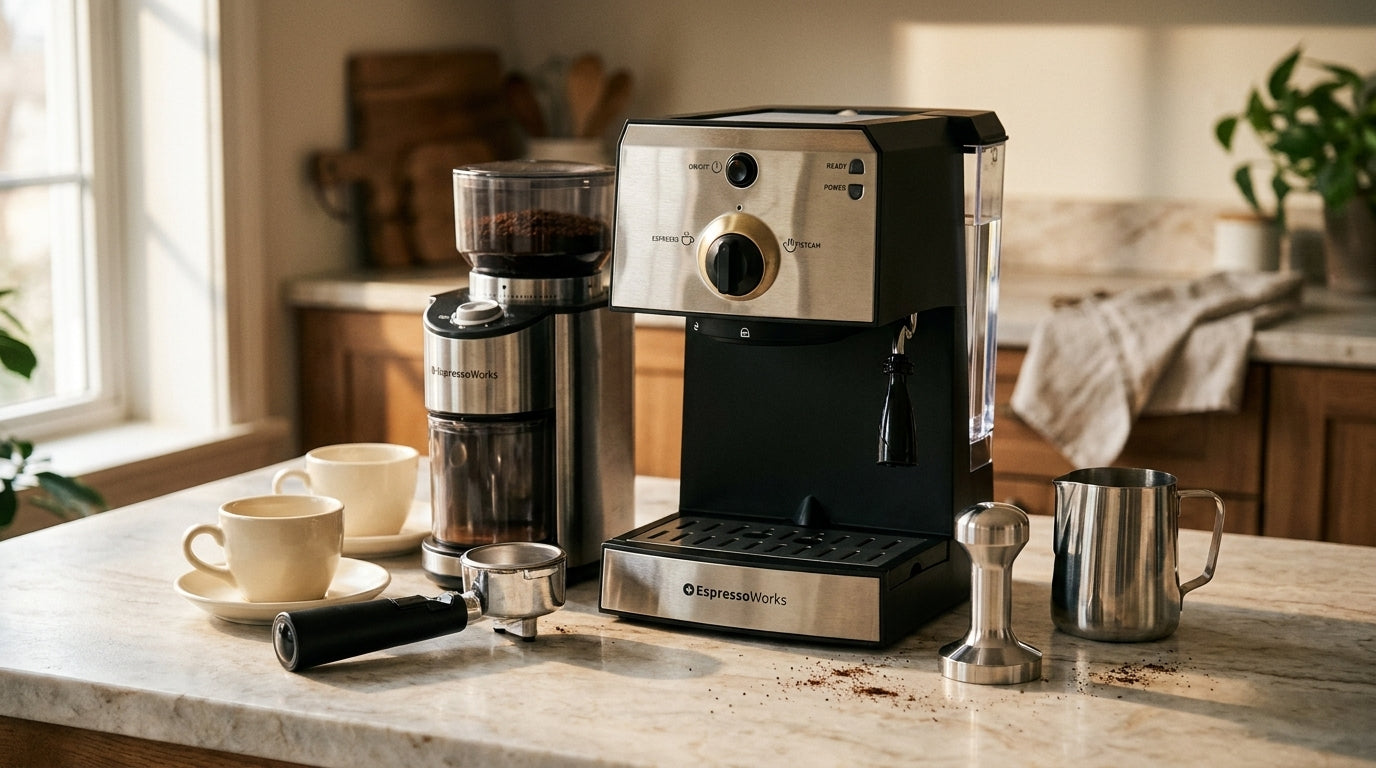


A latte and a cappuccino use the same three ingredients: espresso, steamed milk, and foam. The ratio is what separates them.
A latte runs roughly 1 part espresso to 4 parts steamed milk, finished with a thin layer of velvety microfoam on top. A cappuccino splits those three components equally - 1:1:1 - into a smaller, stronger, foam-forward drink.
That ratio difference changes everything: taste, texture, how much espresso flavour comes through, and how you work the steam wand to get the result you're after. The flat white - a third option that sits between the two - is worth understanding too.
What Goes Into a Latte
Start with 1-2 oz of espresso - one or two shots - then add 6-8 oz of steamed milk and finish with about a quarter-inch of microfoam on top. Total volume sits around 10-12 oz, which puts the espresso-to-milk ratio at roughly 1:4. The milk dominates, and that's the point.
Microfoam is different from the thick froth you'll find on a cappuccino. It's velvety and almost pourable - fine enough that it blends into the steamed milk below rather than forming a distinct layer on top. Run a spoon through a well-made latte and the foam disappears into the drink. One sip tastes the same as the next. That smooth, pourable surface is also what makes a latte the right canvas for latte art - the microfoam holds patterns that thicker cappuccino foam can't.
That high milk volume does two things. It softens the espresso flavour into something mild and round. And because steaming draws out the natural lactose in milk, the drink tastes gently sweet without any added sugar.
If you're new to espresso-based drinks at home, the latte is a good place to start. The larger milk volume absorbs minor inconsistencies in your steaming technique - a slightly too-deep wand position, a second or two of over-aeration, a tamp that isn't perfectly level. Those small errors would show up immediately in a smaller, foam-forward drink like a cappuccino. In a latte, the extra milk rounds them out. You'll get a drinkable result from your first attempt, and your technique will tighten up naturally as you repeat the process. One trade-off worth knowing: more milk means more calories per cup than a cappuccino made with the same number of shots.
What Goes Into a Cappuccino
Flip those proportions and the drink changes completely. A cappuccino uses 1-2 oz of espresso, 2 oz of steamed milk, and 2 oz of thick foam - roughly equal thirds across all three components. Total volume sits at 5-6 oz, about half the size of a latte.
The foam is nothing like the thin microfoam on a latte. It's thick, airy, and half to a full inch deep - with enough structure to hold its shape and sit as a distinct layer on top rather than blending in. Press a spoon gently into a cappuccino and the foam holds the indent. The espresso and steamed milk sit underneath it, concentrated and clearly flavoured, because there's far less milk to soften the shot.
Same shot count as a latte. Noticeably more intense taste.
The cappuccino doesn't have more caffeine - it has less milk standing between you and the espresso. That's the whole difference in a sentence.
How the Ratios Change What You Taste

Pour the same double shot into a latte and a cappuccino and you'll taste two completely different drinks. In a latte, that espresso disperses across 8 oz of milk - softened, rounded, gently sweet. In a cappuccino, the same shot sits in a 5-6 oz total volume, so every sip carries far more coffee character. The caffeine is identical. What changes is how much of that espresso you can actually taste.
The texture difference is distinct too. A latte drinks smooth and creamy throughout - the velvety microfoam blends into the steamed milk so there's no transition point. A cappuccino gives you two textures in one cup: the light, airy foam on top, then the richer, denser milk-and-espresso mix underneath. Neither is better. They're built for different preferences.
Sweetness follows the milk volume. The latte's 6-8 oz of steamed milk produces more natural lactose sweetness than the cappuccino's 2 oz. Both drinks draw sweetness from the steaming process - the latte has more milk doing that work, so the result tastes noticeably sweeter without adding anything.
Temperature matters more with a cappuccino than a latte. The foam layer insulates the surface, but the smaller volume loses heat quickly - faster than you'd expect. Pull the shot, steam the milk, drink it within a couple of minutes. A cappuccino that sits cooling on the counter tastes noticeably flatter than one you drink straight away.
The Steam Wand Is Where the Two Drinks Diverge
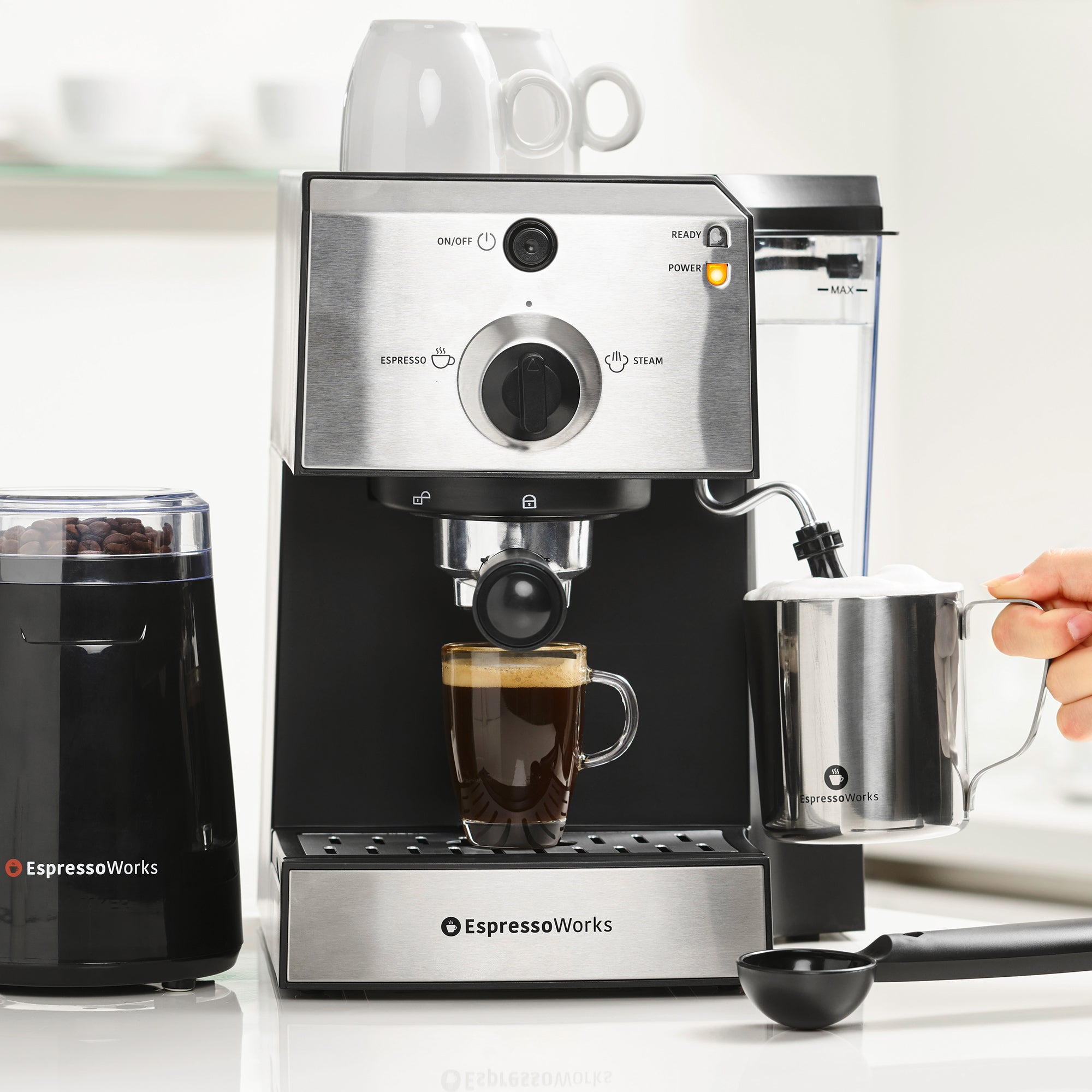
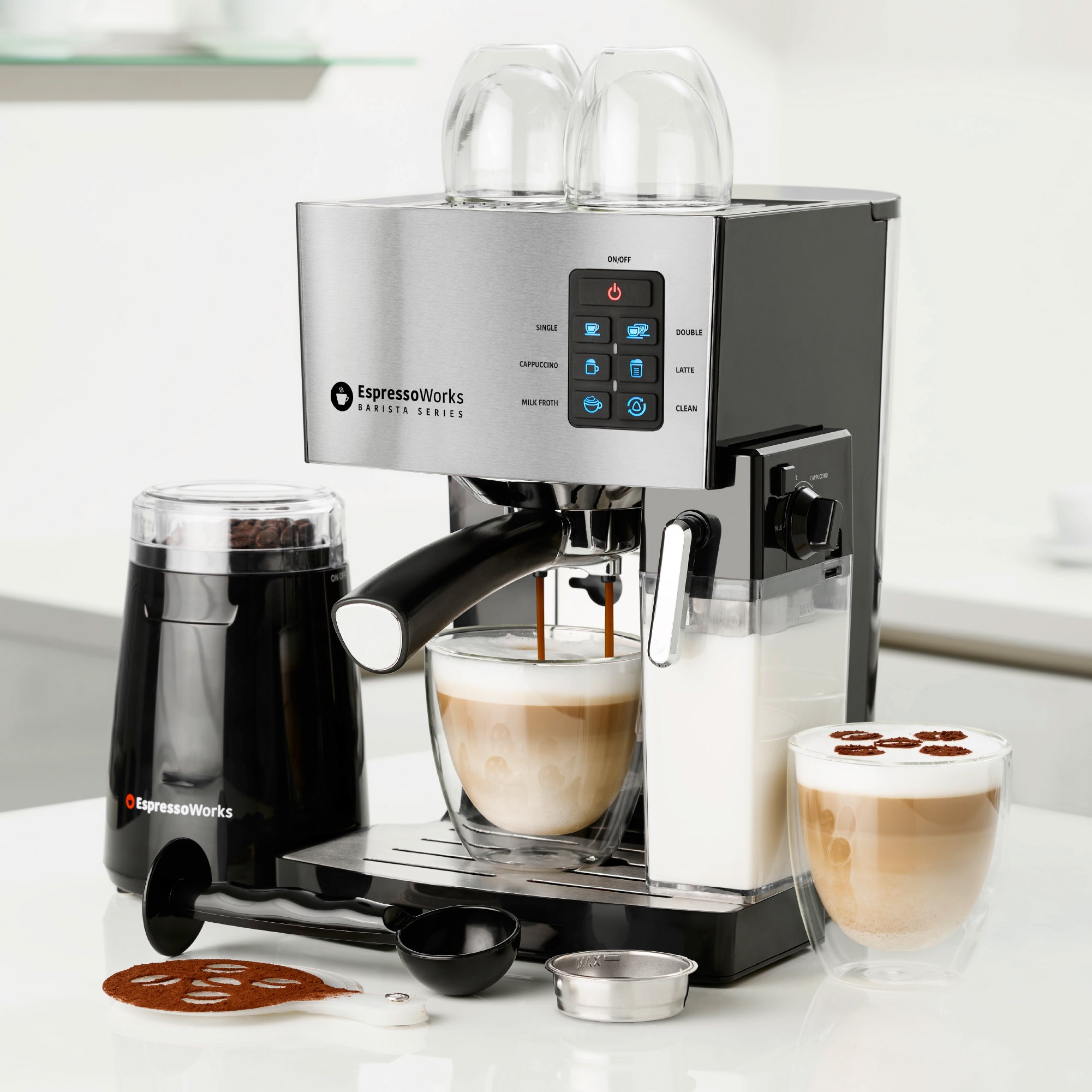
Pull the same espresso shot for both drinks. The steam wand is where they diverge.
Both drinks share one temperature rule: stop steaming at 140-155°F (60-68°C). Go higher and the milk proteins break down, the natural sweetness fades, and any foam you've built turns grainy. A clip-on thermometer takes the guesswork out - or use the touch test. The pitcher should feel too hot to hold comfortably against your palm before you stop steaming.
Steaming Milk for a Latte
Position the wand tip about half an inch below the milk's surface. Angle it slightly off-centre so the milk begins rotating in a steady circular swirl. Aerate for 3-5 seconds - you're listening for a soft, paper-tearing hiss rather than loud, splashy bubbling. Then submerge the tip deeper into the milk to heat the bulk of the liquid without incorporating more air.
Target: silky, pourable microfoam with no visible bubbles on the surface. The milk volume should barely increase. If the pitcher feels noticeably heavier with foam, you've gone too far for a latte.
Steaming Milk for a Cappuccino
Hold the wand tip at or just breaking the milk's surface for 8-10 seconds of active aeration before submerging - longer and more deliberate than the latte approach. You want more air, more aggressively. The milk will climb the sides of the pitcher as the foam builds.
Target: thick, stiff foam that holds a spoon indent cleanly. The milk roughly doubles in volume. That distinct foam layer you're building is what separates the cappuccino from every other milk drink.
For both drinks, finish the same way. Tap the pitcher firmly on the counter two or three times to pop any large surface bubbles, then swirl it in tight circles to integrate the foam with the steamed milk below. Skip the swirl and the foam will sit unevenly in the cup. For a deeper walkthrough of the full stretching and texturing phases, our complete guide to frothing milk covers all three methods.
Every EspressoWorks machine includes a built-in steam wand. The 7-Piece Set and 30-Piece Barista Pro run 15-bar pumps; the 10-Piece runs a 19-bar pump. All three produce consistent steam for either milk texture - lattes, cappuccinos, and flat whites, from day one. No separate frother, no workarounds.
Where the Flat White Fits In
The flat white fits neatly between the two. It uses 2 shots of espresso and 4 oz of steamed milk, with no distinct foam layer - just a paper-thin coat of microfoam on top. Total volume is 4-5 oz, closer to a cappuccino in size than a latte.
That tighter espresso-to-milk ratio means the coffee flavour comes through clearly, like a cappuccino. But the milk is textured like a latte - silky, pourable microfoam rather than thick, airy foam. The result is a small, strong, smooth drink.
If a standard latte feels too milky, a flat white fixes that without pushing you into foam territory. If you like the intensity of a cappuccino but want less foam, this is the drink. The steaming technique is the same as a latte - same 3-5 second aeration at the surface, same submerged tip to finish - scaled down to a smaller pour.
Latte, Cappuccino, or Flat White - How to Choose
All three drinks use the same machine, the same espresso shot, and the same steam wand. What differs is what you want from the cup.
If you prefer a mild, creamy coffee drink - or you're still building your steaming technique - start with the latte. It's the most forgiving of the three to make at home, and the easiest to customise with flavoured syrups if that's your thing.
If you want the espresso to come through clearly and you enjoy the contrast between thick foam and the richer liquid underneath, make the cappuccino. Smaller drink, stronger coffee flavour, lighter texture throughout.
If you find lattes too milky and cappuccinos too foam-heavy, the flat white sits right between them - café-strength espresso flavour with silky steamed milk and no thick foam layer.
None of these is better than the others. Start with the one that matches how you like your coffee to taste, and adjust from there. All EspressoWorks espresso machine sets include a built-in steam wand and a stainless steel frothing pitcher, so lattes, cappuccinos, and flat whites are all on the table from day one. One machine, one box, nothing extra to buy.